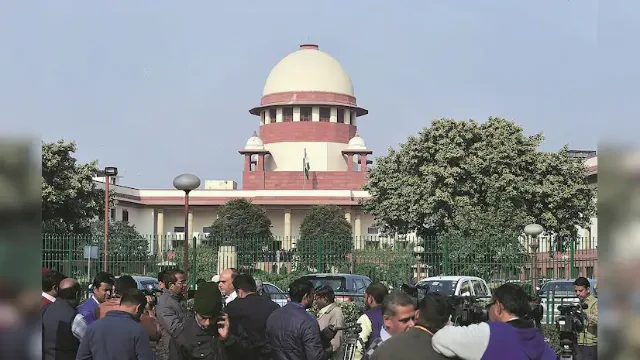
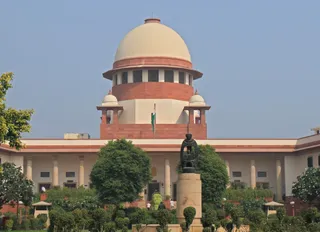

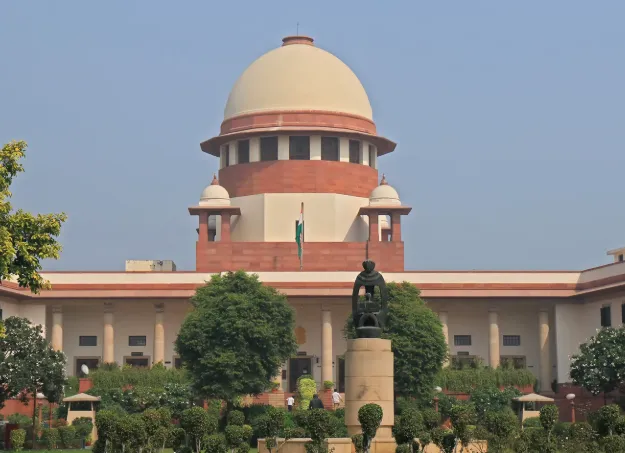
NEW DELHI, Oct. 27: The Supreme Court on Tuesday sought the Centre's response to a petition filed by the Digital News Publishers Association (DNPA) challenging provisions of India's Digital Personal Data Protection (DPDP) Act, 2023, and its accompanying rules, amid concerns that the legislation could restrict investigative journalism and undermine press freedom.
A three-judge bench headed by Chief Justice of India Surya Kant, and comprising Justices Joymalya Bagchi and V Mohana, issued notices to the government on the petition and an accompanying application seeking an interim stay on the challenged provisions.
The court has scheduled the next hearing for November 17.
The DNPA, which represents the digital operations of 21 major news organisations, has challenged nine provisions of the Act and three rules. Its members include leading national newspapers, television networks and digital news platforms.
At the centre of the dispute is the absence of a specific exemption for journalistic activities under the data protection framework.
The association argues that requiring journalists to obtain consent before collecting, processing or publishing personal information could make investigations into corruption, abuse of authority and other matters of public interest difficult.
Senior advocate Madhavi Divan, appearing for the publishers, told the court that such requirements could interfere with ordinary newsroom operations.
"If I have to ask for permission and consent, what is the point?" Divan asked, arguing that the legislation could effectively introduce prior restraints on reporting.
The publishers contend that investigative journalism frequently depends on examining information about individuals who may have no interest in consenting to its disclosure.
In investigations involving alleged corruption or misconduct, obtaining permission from the individuals under scrutiny could compromise the reporting process, reveal an investigation prematurely or prevent publication of information relevant to the public.
The DNPA has therefore questioned whether a data protection framework designed to safeguard individual privacy should apply to journalistic activities in the same manner as commercial processing of personal information.
Chief Justice Surya Kant acknowledged the need to balance competing constitutional interests and suggested that the petitioners could propose safeguards to the government and the court.
He emphasised the importance of protecting citizens' privacy while preserving the media's ability to report on matters of public concern.
The observations indicated that the court would examine how the legislation could accommodate both objectives rather than treating privacy and press freedom as mutually exclusive rights.
The DPDP Act establishes a framework governing the processing of digital personal data, including obligations relating to consent, notification and the handling of personal information.
Its implementation is governed by the Digital Personal Data Protection Rules, 2025, notified in November last year. The government has adopted a phased implementation schedule to allow organisations time to meet their compliance obligations.
The DNPA argues that the law's requirements concerning consent, notice and deletion of personal data could create significant difficulties for news organisations.
Journalists routinely collect and retain information for verification, background research and continuing investigations. The association maintains that applying the same requirements to these activities without appropriate safeguards could interfere with legitimate reporting.
The publishers have also questioned why certain activities, including research, archiving and statistical processing, receive exemptions under the legislation while journalism undertaken in the public interest does not have comparable protection.
According to the petitioners, earlier versions of India's proposed data protection legislation had recognised the need for specific safeguards for journalism, but the enacted framework does not contain an equivalent exemption.
The association's challenge extends beyond consent requirements.
It has raised concerns about provisions allowing the Central government to seek information from organisations processing personal data.
The publishers argue that such powers, without adequate protections for journalistic material, could potentially expose confidential sources and whistleblowers.
Protecting source confidentiality is particularly important in investigations involving corruption, financial wrongdoing and abuse of official authority, where individuals providing information may face professional or personal consequences if their identities become known.
The DNPA has warned that uncertainty over source protection could discourage people from sharing information with journalists.
Another objection concerns the government's authority to restrict public access to information under certain circumstances.
The petitioners argue that these powers could affect the dissemination of news and raise questions about safeguards against their misuse.
The association has also challenged aspects of the structure of the Data Protection Board of India, the statutory body responsible for examining violations and imposing penalties under the legislation.
It has questioned the Board's institutional independence, citing the executive-led process for selecting its members and the absence of a mandatory judicial member.
The petition additionally challenges amendments to the Right to Information (RTI) Act, 2005, introduced through the data protection legislation.
The DNPA argues that the changes could restrict access to personal information even where disclosure serves a larger public interest.
According to the association, the amendment risks weakening the balance between individual privacy and the public's right to know, particularly when information concerns public officials or the exercise of government authority.
The publishers have referred to the Supreme Court's electoral bonds judgment to support their argument that access to information is closely connected with the constitutional guarantee of freedom of speech and expression.
The RTI amendment is already the subject of separate legal proceedings. In February, the Supreme Court referred petitions challenging the provision to a three-judge bench.
Before approaching the court, the DNPA had raised its concerns with the government.
The association submitted a representation to the Ministries of Information and Broadcasting and Electronics and Information Technology on August 10, 2026. A meeting with ministry officials followed on August 25.
The petition indicates that the publishers remain dissatisfied with the safeguards available under the existing framework.
The case raises a significant legal question about how India's data protection regime should operate when the information being processed is relevant to journalism and public accountability.
Privacy protections are intended to prevent the misuse of personal information, but news organisations argue that their public-interest responsibilities sometimes require collecting and publishing information without the consent of the individuals concerned.
The Supreme Court has not ruled on the constitutional validity of the challenged provisions, nor has it granted the requested interim stay.
The Centre's response and the safeguards proposed by the petitioners are expected to form part of the court's examination when the matter returns for hearing on November 17.
SEO Keywords: DPDP Act Supreme Court, Digital News Publishers Association petition, DNPA data protection challenge, investigative journalism India, press freedom DPDP Act, Digital Personal Data Protection Act 2023, Supreme Court data privacy case 2026, Chief Justice Surya Kant, Madhavi Divan DNPA, journalism exemption data protection law, India press freedom, digital news publishers privacy law, RTI Act amendment DPDP, Data Protection Board of India, journalist source confidentiality, whistleblower protection India, privacy versus freedom of press, DPDP Rules 2025, Supreme Court November 17 hearing