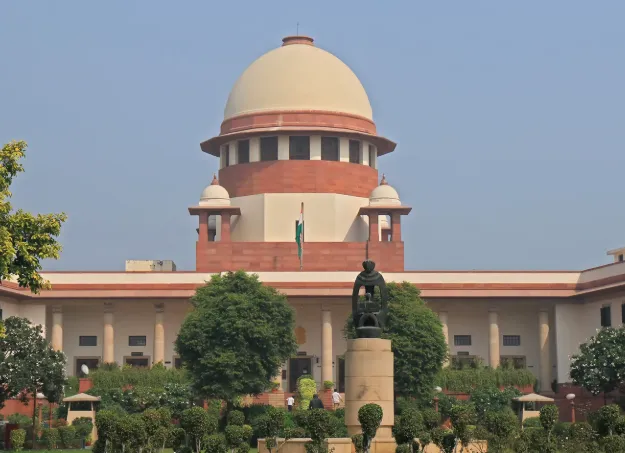

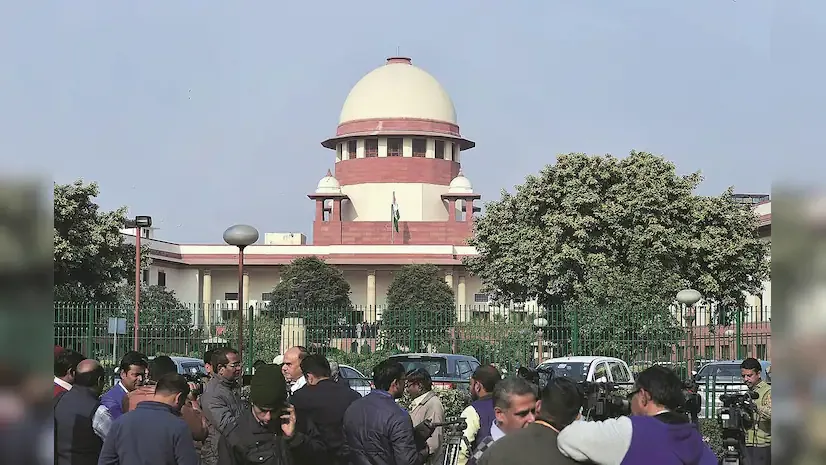
NEW DELHI, Oct. 27: The Supreme Court is examining the constitutional framework governing compulsory rural service for doctors, bringing renewed attention to the balance between the government's responsibility to provide healthcare in underserved areas and the professional rights of medical graduates.
The issue concerns policies requiring doctors to serve in rural or government healthcare facilities for a specified period, often as a condition attached to admission, subsidised medical education or postgraduate training.
Such requirements are intended to address shortages of medical professionals in remote areas, where public hospitals and primary healthcare centres frequently struggle to attract and retain qualified doctors.
However, compulsory service arrangements also raise questions about the freedom to practise a profession, the reasonableness of employment conditions and the extent to which governments can enforce obligations imposed during medical education.
A bench comprising Justices P S Narasimha and Alok Aradhe considered the issue on Tuesday while hearing a petition challenging Karnataka's compulsory rural service requirements.
The petition concerns a state government notification extending the one-year rural service obligation to medical students admitted against private seats in private and deemed universities.
The court observed that the absence of a clear national policy had created uncertainty over how such requirements should be framed and enforced across the country.
Appearing for the Centre, Additional Solicitor General Aishwarya Bhati told the bench that postgraduate medical students are required to undertake compulsory service on a rotational basis, but there is no comparable nationwide requirement for undergraduate medical students.
She explained that health falls within the jurisdiction of state governments and that several states have introduced service bonds requiring doctors to work in designated areas after completing their education.
A committee had also recommended that states adopt such bonds uniformly, she informed the court.
Senior advocate Raju Ramachandran, assisting the bench as amicus curiae, suggested that the Supreme Court could formulate constitutional guidelines based on Article 21, which protects the right to life, and the Directive Principles of State Policy.
The proposal would allow the court to identify the constitutional principles governing rural medical service without necessarily prescribing a uniform administrative system for every state.
Bhati, however, said the Centre could consult relevant stakeholders to develop a national framework. She cautioned that judicial directions on the issue could have implications for medical institutions across the country.
Justice Narasimha observed that the matter could have far-reaching consequences for healthcare delivery in India.
He asked the Centre to clarify whether compulsory rural service should be recognised, as a matter of principle, as necessary for improving access to healthcare.
The judge distinguished between the underlying need for rural medical service and the mechanisms used to enforce it.
According to the court's observations, the question of whether such service is necessary could be examined separately from whether governments should enforce the requirement through bonds, regulations or other arrangements.
Justice Narasimha also expressed concern about the growing role of private hospitals in healthcare delivery and the possibility that rural populations could be left without adequate medical services.
The Karnataka law at the centre of the dispute is the Karnataka Compulsory Service Training by Candidates Completed Medical Courses Act, 2012, along with rules framed in 2015.
Under the existing framework, MBBS graduates, postgraduate medical degree and diploma holders, and super-speciality candidates who studied in government institutions or occupied government seats in private or deemed universities are required to complete one year of compulsory public rural service.
The requirement is linked to the issuance of a no-objection certificate necessary for permanent registration with the Karnataka Medical Council.
The challenge raises a further question about whether similar obligations can be extended to students who have paid for private medical seats rather than received government-supported education.
The court's examination could therefore influence how states distinguish between categories of medical graduates when imposing compulsory service requirements.
The bench indicated that it may articulate constitutional principles to guide policymaking while leaving the detailed formulation of service requirements to state governments in consultation with the relevant regulatory commission.
Such an approach would recognise the role of states in administering healthcare while seeking greater consistency in the principles governing compulsory service.
The court has not yet decided whether mandatory rural service should be imposed nationally or whether Karnataka's challenged provisions are constitutionally valid.
The matter has been adjourned until next week.
The Centre has been asked to clarify whether it intends to formulate a national policy and identify the stakeholders it proposes to consult.
The next hearing is expected to provide greater clarity on the government's position and the possible role of the judiciary in establishing constitutional safeguards for compulsory rural medical service.