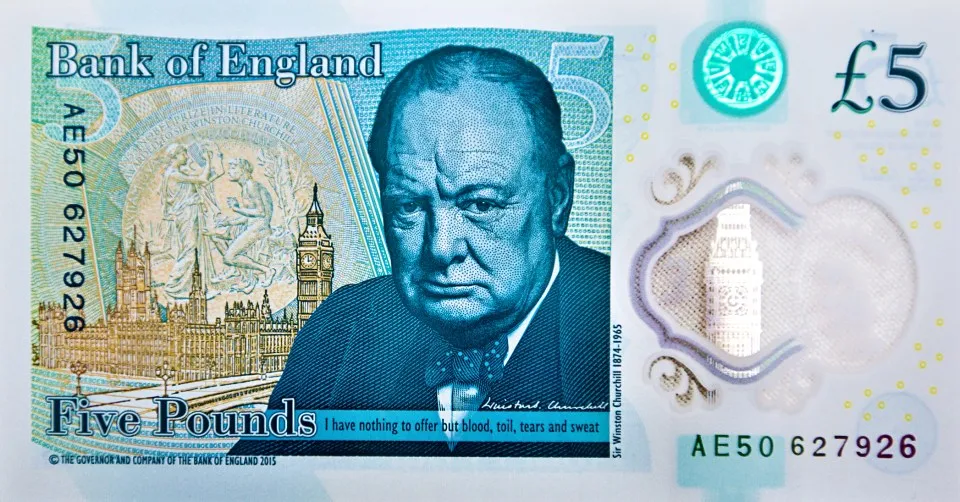
LONDON, Oct. 8: The Bank of England has announced plans to replace historical figures, including former British Prime Minister Winston Churchill, with images of four native wildlife species on future banknotes, marking a major change in the design of Britain’s currency.
An Atlantic puffin, a barn owl, a buff-tailed bumblebee and a European hedgehog have been selected to appear on the next generation of banknotes, following public consultations that showed strong support for nature-themed designs.
The decision means that prominent historical personalities currently featured on British currency will eventually give way to wildlife illustrations as the central theme of the redesigned notes.
Churchill, Britain’s wartime prime minister, has appeared on the £5 note for approximately a decade. Other denominations feature novelist Jane Austen, painter JMW Turner and mathematician Alan Turing, whose codebreaking work contributed to the Allied effort during the Second World War.
The Bank of England said the four animals were chosen to represent the diversity of Britain’s wildlife while also supporting improvements to banknote security.
The selection followed a two-stage public consultation process. An initial consultation held last year attracted approximately 44,000 responses, with nature emerging as the most popular theme for the redesigned currency.
Historical figures ranked third among the themes considered by respondents.
A second consultation helped determine which animals would appear on the notes. The central bank considered recommendations from wildlife experts alongside the views of approximately half a million members of the public.
The final selection includes four species commonly associated with Britain’s natural environment.
The Atlantic puffin is a seabird known for its distinctive colourful beak and breeding colonies along Britain’s coastline. The barn owl is widely recognised for its heart-shaped face, while the buff-tailed bumblebee is among the country’s familiar pollinating insects. The European hedgehog is a small nocturnal mammal found across parts of Britain.
Victoria Cleland, the Bank of England’s chief cashier, said the chosen animals would reflect the country’s wildlife while contributing to the security of its currency.
The redesign is also intended to make banknotes more resistant to counterfeiting, although the bank has not yet provided details of the specific security features that will accompany the new illustrations.
The central bank has not decided which animal will appear on each denomination.
It has also cautioned that introducing the new notes will take several years, meaning the existing designs featuring historical personalities will remain in use for the foreseeable future.
The announcement has attracted criticism from some political figures who oppose removing prominent historical personalities from British currency.
Reform UK leader Nigel Farage criticised the proposal earlier this year, describing the decision as “the definition of woke.”
The criticism reflects a wider debate over whether national currency should primarily commemorate historical achievements or represent other aspects of the country’s identity, including its natural heritage.
Despite those objections, the Bank of England proceeded with the wildlife theme after public consultation indicated stronger support for nature than for retaining historical figures as the central design subject.
The proposed changes concern the portraits on the reverse of the banknotes. The existing notes also feature King Charles III on the opposite side.
The bank has not announced any change to the monarch’s portrait as part of the wildlife redesign.
Banknote designs serve several purposes beyond identifying denominations. They incorporate anti-counterfeiting technology, help users distinguish between notes and provide a visible representation of national identity.
The Bank of England has periodically updated its currency designs to introduce new security features and reflect changing design priorities.
The planned wildlife series will continue that process while moving away from the longstanding practice of featuring notable historical personalities.
For now, the announcement establishes the four species that will appear on future notes, but important details remain unresolved, including the allocation of animals to denominations, the final artwork and the precise timetable for circulation.
The central bank expects the transition to take several years, allowing time for design development, security testing and production before the new banknotes enter circulation.