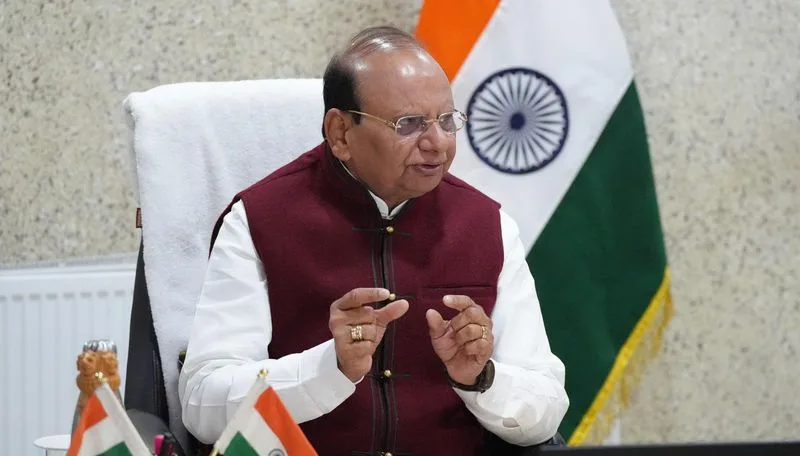
The Lieutenant Governor of Ladakh, Vinai Kumar Saxena, has notified the Ladakh Autonomous Hill Development Councils (Amendment) Regulation, 2026, paving the way for the creation of Hill Development Councils in all eight districts of the Union Territory. The regulation, promulgated by President Droupadi Murmu, was implemented in a record time of six days, with the Union Cabinet approving the amendments on October 14 and the President promulgating them on October 16.
The amended regulation rationalises the number of constituencies in each Hill Development Council, reducing the earlier 26 seats to a minimum of seven and a maximum of 24 seats. It also provides for the nomination of four members from among women and unrepresented communities to enhance inclusivity and public participation in local governance.
Saxena expressed gratitude to Prime Minister Narendra Modi and Union Home Minister Amit Shah for the regulation, saying it would strengthen grassroots democracy, enhance local representation, and promote inclusivity. The development follows the Ladakh administration's expansion of the Union Territory's district structure, with the creation of five new districts - Sham, Nubra, Changthang, Zanskar, and Drass - on April 27, raising the total number from two to seven.
The five districts were formally inaugurated on April 30, while Sankoo was announced as the eighth district on October 16. The L-G had also announced the creation of Ladakh Autonomous Hill Development Councils for all districts in the Union Territory.
The notification of the amendment regulation is seen as a significant step towards empowering local governance in Ladakh, with the Hill Development Councils expected to play a crucial role in addressing the unique challenges and opportunities faced by the region. With the creation of councils in all eight districts, the regulation aims to ensure that the voices of local communities are heard and their needs are addressed through inclusive and representative governance structures.
The Ladakh Autonomous Hill Development Councils (Amendment) Regulation, 2026, is a key initiative towards strengthening grassroots democracy in the Union Territory, and its implementation is expected to have a positive impact on the region's development and governance. The regulation's emphasis on inclusivity and public participation is also seen as a significant step towards promoting social justice and equality in the region.
As the Hill Development Councils begin to take shape, they are expected to work closely with the Ladakh administration to address the region's development challenges, including infrastructure development, economic growth, and social welfare. The councils will also play a crucial role in preserving the region's unique cultural heritage and promoting sustainable tourism.
The notification of the amendment regulation has been welcomed by local leaders and communities in Ladakh, who see it as a significant step towards empowering local governance and promoting inclusive development. As the region moves forward with the implementation of the regulation, it is expected to usher in a new era of grassroots democracy and participatory governance in Ladakh.
Key Features of the Ladakh Autonomous Hill Development Councils (Amendment) Regulation, 2026
- Reduction of constituencies in each Hill Development Council from 26 to a minimum of 7 and a maximum of 24 seats
- Nomination of four members from among women and unrepresented communities to enhance inclusivity and public participation
- Creation of Hill Development Councils in all eight districts of the Union Territory
- Emphasis on strengthening grassroots democracy, enhancing local representation, and promoting inclusivity
Implications of the Regulation
- Empowerment of local governance in Ladakh
- Inclusive and representative governance structures
- Addressing unique challenges and opportunities faced by the region
- Promotion of social justice and equality
- Preservation of the region's unique cultural heritage
- Promotion of sustainable tourism
The Ladakh Autonomous Hill Development Councils (Amendment) Regulation, 2026, is a significant step towards promoting grassroots democracy and inclusive governance in the Union Territory. As the regulation is implemented, it is expected to have a positive impact on the region's development and governance, and to empower local communities to take an active role in shaping their future.