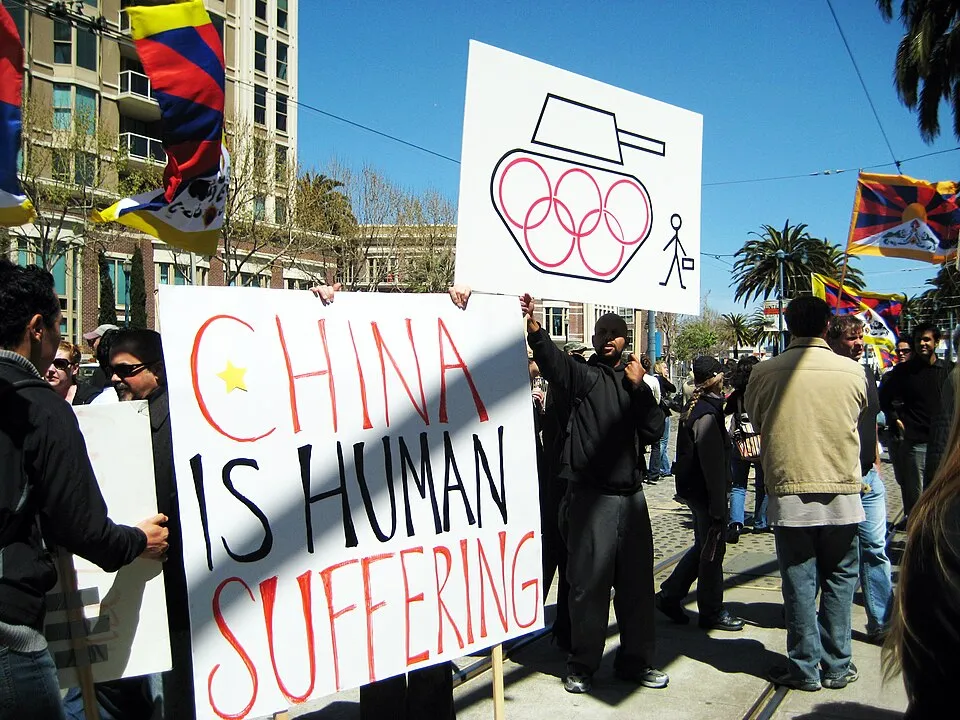
China wants the world to judge it by the scale of its economy, the reach of its technology and the weight of its military. Increasingly, that is also how many governments engage with Beijing. Trade negotiations, supply chains, artificial intelligence, strategic competition and the security balance in the Indo-Pacific dominate the conversation.
But there is another measure of China’s rise that deserves equal scrutiny: what happens to people who challenge the authority of the Communist Party.
For an international community increasingly dependent on China, human rights have become an uncomfortable subject. They are raised in diplomatic statements, discussed in international forums and occasionally become the centre of sanctions or political disputes. Then strategic priorities take over and the subject recedes.
That cycle should be challenged.
China’s growing power does not make questions about political freedom less relevant. It makes them more consequential. A state with enormous economic influence, advanced surveillance capabilities, a powerful military and an expanding diplomatic footprint has an impact far beyond its borders. The way that state treats dissent at home can no longer be regarded as a purely domestic matter.
The evidence of a shrinking political space is visible across several parts of Chinese society.
Political dissidents, lawyers, journalists and activists face restrictions that make organised opposition to the Communist Party extremely difficult. Independent civil society has little room to operate outside the boundaries established by the state. Surveillance has become an important instrument of political control, allowing authorities to monitor individuals and communities that might otherwise develop into centres of dissent.
The result is not simply the absence of political competition. It is the creation of an environment in which people learn to calculate the consequences of speaking openly.
That calculation is particularly stark in Xinjiang.
The treatment of Uyghur Muslims has generated some of the strongest international criticism of Beijing. Reports of detention facilities, forced labour, family separation and policies aimed at reshaping cultural and religious identity have led human rights organisations and governments to accuse China of grave abuses. Some governments have described the conduct as genocide, while others have characterised it as crimes against humanity.
Beijing rejects those accusations and maintains that its policies are connected to security and development.
But the disagreement over terminology should not obscure the underlying question: what happens when a government claims extraordinary authority over an ethnic and religious community in the name of security?
That question extends beyond Xinjiang.
Tibetan religious and cultural identity has also come under sustained pressure. Restrictions on religious practice and political expression have been accompanied by greater state involvement in institutions traditionally controlled by Tibetan religious authorities. The unresolved case of the Panchen Lama remains a powerful symbol of that struggle.
Hong Kong provides perhaps the clearest example of the consequences of Beijing’s changing approach to political dissent.
The National Security Law fundamentally altered the territory’s political environment. Pro-democracy activists, journalists, lawyers and civil society figures have been arrested or prosecuted. People who once operated openly in Hong Kong’s political life have been forced into prison, exile or silence.
The argument is not that Hong Kong should remain untouched by political change. Every political system evolves. The more important question is whether the freedoms that distinguished Hong Kong under the “One Country, Two Systems” framework have been substantially narrowed.
If peaceful political activism itself becomes a security concern, the distinction between maintaining public order and suppressing dissent becomes increasingly difficult to defend.
There is another dimension that deserves greater international attention: what happens beyond China’s borders.
Human rights advocates have raised allegations that Chinese authorities monitor, pressure or intimidate dissidents and diaspora communities overseas. Such claims, when substantiated, move the issue from domestic repression into the territory of international security and sovereignty.
A dissident living abroad should not have to fear that political activity will bring pressure from the government of the country they left. Journalists and scholars should be able to criticise a foreign government without becoming targets of intimidation. Democratic states have a responsibility to protect that space.
This matters particularly as China’s global influence expands.
Beijing is no longer simply a powerful Asian state whose internal affairs can be separated neatly from international politics. China is a central player in global trade, technology and security. Its choices affect supply chains, strategic stability and the balance of power across the Indo-Pacific.
That makes the argument for ignoring human rights in favour of engagement particularly weak.
Engagement is necessary. Countries will continue to negotiate with Beijing because they have no practical alternative on many issues. Climate policy, trade, technology, regional security and crisis management all require communication.
But engagement and accountability are not opposites.
A government can negotiate with China and still raise questions about political prisoners. It can seek economic cooperation while defending religious freedom. It can maintain dialogue over regional security while refusing to treat fundamental freedoms as bargaining chips.
Indeed, serious engagement requires precisely that balance.
There is also a danger in allowing geopolitical competition to turn human rights into a weapon used selectively. If democratic governments invoke rights only when confronting an adversary and remain silent when economic interests are at stake, the principle itself loses credibility.
The answer is not louder rhetoric. It is consistency.
China should be judged by the same basic standards applied to other governments: whether citizens can express political views without fear, whether religious communities can practise freely, whether journalists can work independently, whether lawyers can defend unpopular clients and whether people can challenge government policy without facing arbitrary punishment.
These are not Western demands. They are basic questions of human dignity and political freedom.
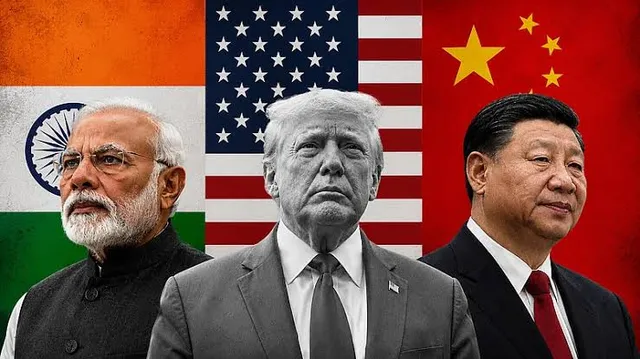
For India and the wider Indo-Pacific, the issue has an additional strategic dimension. A region seeking greater stability cannot afford to separate questions of power from questions of governance. The international system is shaped not only by military capabilities and economic strength but also by the political values governments are prepared to defend.
China’s rise will continue to be one of the defining developments of this century. The world will have to trade with it, compete with it and, on some issues, cooperate with it.
None of that requires looking away.
The central mistake would be to assume that China’s importance makes criticism impossible. The opposite is true. The greater a country’s influence becomes, the greater the international interest in understanding how that power is exercised.
Human rights should therefore not be treated as an item that appears briefly on the diplomatic agenda before disappearing behind trade and security.
For those living under restrictions, the crisis does not disappear when international attention moves elsewhere.
Only the headlines do.