NEW DELHI, Oct. 8
Prime Minister Narendra Modi has reiterated his government’s commitment to making India a developed nation by 2047, expressing confidence that the country can achieve the goal by the centenary of its independence.
“We will do it,” Modi said, reaffirming the ambition behind the government’s Viksit Bharat 2047 initiative.
The target forms part of India’s long-term development agenda, which seeks to raise living standards, expand economic opportunities and strengthen the country’s position in the global economy over the next two decades.
The ambition, however, remains a policy objective rather than an assured outcome. Achieving developed-country status would require sustained increases in productivity and per-capita income, alongside improvements in education, healthcare, infrastructure and employment.
Speaking at the Viksit Bharat Sankalp Sabha in New Delhi on Wednesday, Modi marked 25 consecutive years as a head of government, beginning with his appointment as Gujarat Chief Minister on October 7, 2001.
He used the occasion to outline a series of national ambitions, including making India one of the world’s three largest economies, expanding domestic manufacturing, increasing self-reliance, hosting the Olympic Games and advancing the country’s space capabilities.
The Prime Minister argued that achievements once considered difficult had become possible through sustained public effort and government policy. He cited his government’s claim that 25 crore people had emerged from poverty over the past decade as an example of progress.
Modi also identified caste-based political divisions as a major obstacle to national development, criticising what he described as attempts to divide voters along community lines for electoral advantage.
He argued that challenges involving electricity, water and public services affect citizens regardless of caste or community, and that solutions should therefore benefit the population as a whole.
Reflecting on his political career, Modi thanked voters, party workers, colleagues and critics for their contributions to his experience in public office.
He said the completion of 25 years as a head of government had strengthened his sense of responsibility towards citizens. He also credited India’s democratic institutions and Constitution for making his political journey possible.
The Prime Minister described public service as the central purpose of his career, saying he had entered political responsibilities through organisational work rather than an early ambition to hold elected office.
Modi also referred to Indian aviation and manufacturing ambitions, expressing hope that India would eventually become known internationally for aircraft produced domestically.
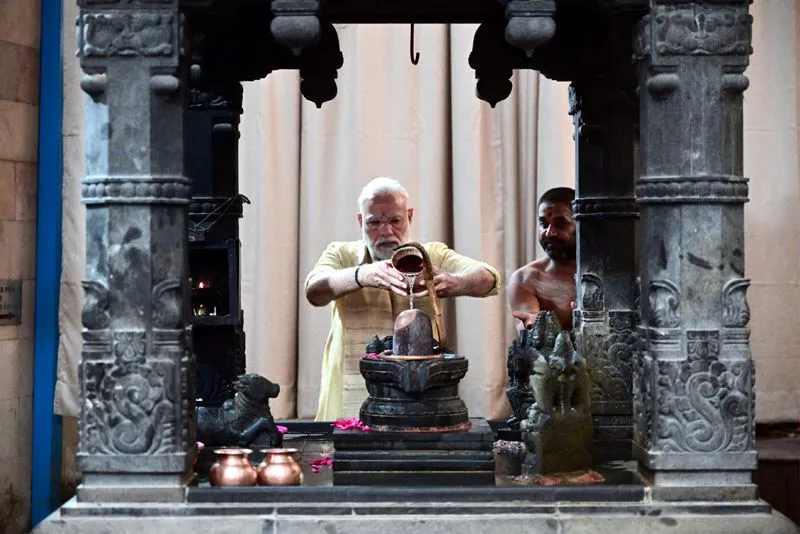
Earlier in the day, he visited the Shri Vinayaka Temple in Sarojini Nagar, New Delhi, where he offered prayers and marked the anniversary of his first appointment as Gujarat Chief Minister.
The 2047 development target remains one of the government’s principal long-term policy commitments. Its achievement will depend on economic performance and institutional outcomes over successive governments, including whether growth translates into higher household incomes, stronger public services and wider employment opportunities.