
NEW DELHI, Oct. 5
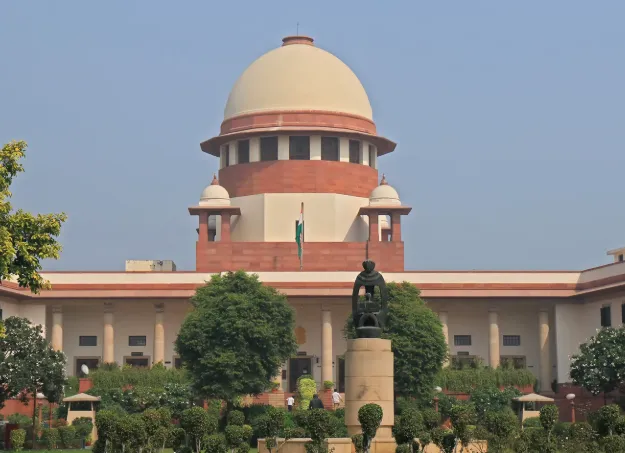
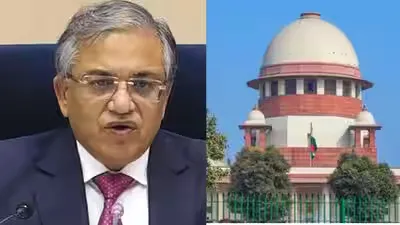
The Supreme Court on Monday said decisions of the Election Commission of India could be stayed or undone if they were found to have been taken without unanimity or a majority, but refused to draw conclusions against Chief Election Commissioner Gyanesh Kumar solely on the basis of a newspaper report.
A three-judge Bench headed by Chief Justice of India Surya Kant issued notice to the Election Commission on allegations that Kumar had taken decisions without consensus from the two other Election Commissioners, Sukhbir Singh Sandhu and Vivek Joshi.
The court said it needed the Election Commission’s official response before deciding whether the Chief Election Commissioner had individually exercised powers that legally belonged to the multi-member Commission. NDTV
The proceedings arose from a Public Interest Litigation filed by Patna resident Rakesh Kumar Singh.
The petition asked the Supreme Court to determine whether Kumar had been exercising powers vested in the Election Commission as a whole and, if so, to declare such actions unauthorised and take appropriate legal action.
The Bench made an important observation on how decisions within the three-member Election Commission are expected to be taken.
It said decisions must be either unanimous or supported by a majority and that, at this stage, the court would presume that the Commission had followed that requirement.
However, the judges made clear that the presumption could change after the Election Commission placed its records before the court.
If it emerged that particular decisions had been taken neither unanimously nor by a majority, those decisions could be put on hold.
The court also indicated that decisions taken in violation of the law could ultimately be undone.
The controversy stems from a media report claiming that Election Commissioners Sandhu and Joshi had formally raised objections on at least 14 occasions over a period of 10 months.
The reported disagreements related to electoral rolls, voter registration and technology systems used by the Election Commission.
The Election Commission has disputed the suggestion that these exchanges represented institutional dissent over its final decisions.
According to the poll body, queries, suggestions and inputs raised during the drafting and deliberative stages are part of the Commission’s normal administrative process and should not automatically be interpreted as disagreement with final decisions.
The ECI has also maintained that decisions concerning the schedule for the Special Intensive Revision, or SIR, of electoral rolls were unanimous.
During Monday’s hearing, the Supreme Court repeatedly stressed the distinction between allegations contained in a media report and facts established through official records.
When the petitioner relied upon the newspaper report, the Bench questioned whether that material alone could justify judicial intervention.
A newspaper report could turn out to be entirely accurate, partly accurate or incorrect, the court observed. It therefore wanted a formal response from the Election Commission before reaching any conclusion.
The court said it required certified information showing whether the disputed decisions had actually been taken unanimously or by a majority.
That evidence will be central to the next stage of proceedings.
The case raises a broader institutional question about the balance between the position of the Chief Election Commissioner and the collective authority of the Election Commission.
While the CEC heads the constitutional body, the Commission currently consists of three members, and its decision-making framework requires differences between members to be resolved through the prescribed process.
The petitioner’s argument is that if powers belonging to the full Commission were exercised by the CEC alone, such decisions would lack legal authority.
The Supreme Court has not accepted that allegation as established.
Instead, its decision to seek the ECI’s response leaves the factual question open while signalling that the court is prepared to examine the Commission’s internal decision-making records.
The Bench’s observations are therefore significant in two directions.
First, it declined to act against Gyanesh Kumar merely because allegations of internal dissent had appeared in the media.
Second, it made clear that if official records eventually establish that legally required collective decision-making was bypassed, the resulting decisions would be vulnerable to judicial intervention.
The immediate focus will now shift to the Election Commission’s response.
That submission is expected to clarify whether the decisions cited by the petitioner were approved unanimously, decided by majority or taken in some other manner.
Until those records are before the court, the Bench has declined to presume wrongdoing.
But it has also left little ambiguity about what could follow if a violation is established: decisions that did not meet the legal requirement for collective approval can be stayed or undone.