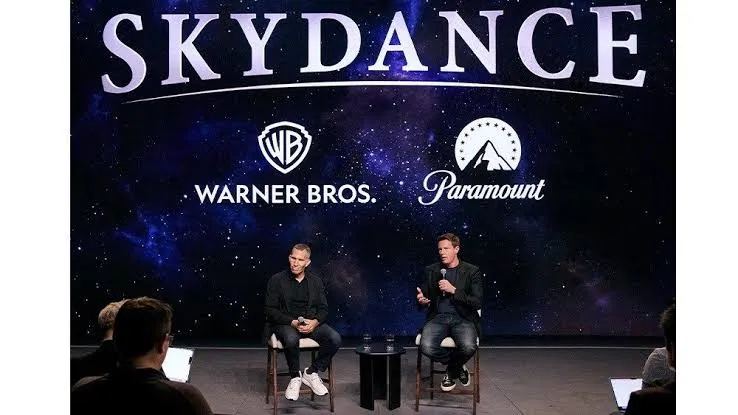
Skydance Chief Executive David Ellison has warned employees that difficult decisions lie ahead following the Paramount–Warner Bros. Discovery deal, signalling a potentially challenging period for staff as the companies prepare for organisational changes.
The warning has brought employee uncertainty into focus as the media businesses confront questions about overlapping operations, management structures and the costs of combining their activities.
For employees, the central concern is whether the transaction will lead to job reductions, departmental consolidation or changes in reporting responsibilities.
The warning came at the combined company’s first employee town hall on Tuesday, hours after Paramount completed its $110 billion acquisition of Warner Bros. Discovery.
Ellison described the transaction as the culmination of a three-year effort to bring the businesses together. He acknowledged the difficulties involved in completing the deal and thanked employees from both organisations for their patience during the process.
The merger brings together major film studios, streaming platforms and television networks under one corporate structure. These include Warner Bros., Paramount Pictures, HBO Max, Paramount+, Pluto TV and Discovery+, alongside CBS, CNN, HBO, HGTV, TLC and Discovery Channel.
The enlarged company will compete across theatrical releases, television programming, streaming and digital entertainment at a time when traditional media groups face growing competition from technology platforms.
Ellison and co-chief executive Ynon Kreiz have identified four priorities for the business: strengthening storytelling, developing technological capabilities, improving competitiveness and building trust.
Ellison said the company intends to invest heavily in content creation and technology rather than relying solely on the greater scale created by the acquisition.
He identified Disney and Netflix as major entertainment competitors but also pointed to Amazon and YouTube, reflecting the growing competition for viewers’ attention across traditional and digital platforms.
Technology will be central to the company’s plans, with Ellison describing it as a core business capability rather than a separate initiative.
The strategy comes alongside substantial financial expectations attached to the merger.
Ellison previously told investors that combining the two companies could generate approximately $6 billion in cost savings. The company has said workforce reductions are not expected to account for most of those savings.
Nevertheless, the scale of the integration has raised concerns about potential redundancies, particularly where the two businesses maintain overlapping administrative, technical and operational functions.
Ellison acknowledged that changes would have consequences for employees and said management would seek to make decisions promptly while considering their impact.
The company has not announced a detailed timetable for possible workforce reductions or specified which departments might be affected.
Under the new leadership arrangement, Kreiz will oversee integration and daily operations, while Ellison will concentrate on creative direction and technology strategy.
That division of responsibilities is intended to allow the company to manage the immediate operational demands of the merger while developing its longer-term entertainment and technology businesses.
Combining the two organisations will also require decisions about the future of their streaming platforms, production operations and corporate structures. The company has not provided a detailed plan for how individual services or divisions will be reorganised.
The acquisition creates one of the world’s largest entertainment groups, with extensive film libraries, established franchises, television networks and direct-to-consumer platforms.
Its commercial prospects will depend partly on whether management can achieve the promised savings while maintaining investment in programming and retaining the creative talent needed to compete.
For employees, the immediate uncertainty concerns how quickly the new leadership will begin restructuring and how widely any changes will extend across the combined business.
Ellison’s remarks indicate that management intends to move ahead with integration rather than maintain the two companies’ existing structures indefinitely.
The coming months will show how the leadership balances its financial targets with its stated commitment to expanding content production and technological capabilities.