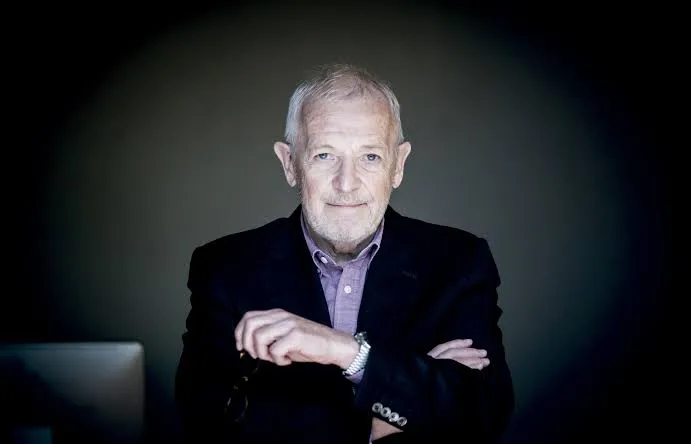
STOCKHOLM, Oct. 6
Belgian-born physicist Francis Halzen has won the 2026 Nobel Prize in Physics for his leading role in building the IceCube Neutrino Observatory and discovering high-energy neutrinos originating beyond Earth, work that established a new way of observing some of the most violent phenomena in the universe.
The Royal Swedish Academy of Sciences awarded the prize to Halzen “for decisive contributions to the IceCube Neutrino Observatory and the discovery of high-energy neutrinos of astrophysical origin.”
Halzen, 82, is a professor at the University of Wisconsin-Madison and has spent decades developing techniques to detect neutrinos — extraordinarily elusive subatomic particles that can travel enormous distances through space and pass through matter almost without interacting with it.
His work helped transform neutrinos into a tool for astronomy, allowing scientists to study parts of the universe that cannot be fully understood using conventional telescopes that observe visible light or other forms of electromagnetic radiation.
The breakthrough centred on an ambitious idea: use the vast quantities of transparent ice beneath the South Pole as a natural detector.
Halzen’s research into detecting neutrinos in Antarctica dates to the 1980s. The concept eventually developed into IceCube, an observatory embedded deep within the Antarctic ice rather than positioned above the ground like a traditional telescope.
Neutrinos are electrically neutral and have extremely small masses. Because they interact only weakly with matter, enormous numbers can pass through Earth — and through the human body — without leaving a detectable trace.
That makes them exceptionally difficult to observe. But the same property makes them scientifically valuable.
Light and other electromagnetic radiation can be absorbed, scattered or blocked as they travel through matter. Neutrinos can escape from dense and violent cosmic environments and travel across the universe largely undisturbed.
Scientists therefore regard them as messengers carrying information directly from environments where some of the universe’s most energetic processes take place.
IceCube detects them indirectly.
When a high-energy neutrino occasionally interacts with matter in the Antarctic ice, the collision can produce electrically charged particles. Those particles generate tiny flashes of light that can be detected by sensitive instruments buried deep beneath the surface.
By analysing the pattern and timing of those signals, researchers can reconstruct information about the incoming neutrino, including its direction and energy.
The IceCube experiment ultimately demonstrated that some extremely energetic neutrinos reaching Earth originated from astrophysical sources rather than from processes occurring within Earth’s atmosphere.
That discovery gave scientists a new method of exploring the high-energy universe.
Mark Pearce, chair of the Nobel Committee for Physics, said Halzen had led an international group of scientists and engineers in developing an instrument that made a new form of astronomy possible.
His scientific vision and persistence, Pearce said, had opened the way for researchers to study the universe through particles that had previously been extraordinarily difficult to detect. Nobel Prize
The significance of IceCube extends beyond the detection of neutrinos themselves.
Traditional astronomy has relied heavily on electromagnetic radiation — including visible light, radio waves, infrared radiation, X-rays and gamma rays. Modern astronomy increasingly combines those observations with other cosmic messengers, including gravitational waves and neutrinos.
This approach, known as multi-messenger astronomy, allows researchers to study the same cosmic event through fundamentally different signals.
High-energy neutrinos are particularly useful because they can point scientists towards extreme astrophysical environments capable of accelerating particles to enormous energies.
IceCube has therefore provided researchers with another way to investigate some of the most energetic objects and events in the cosmos and to explore questions about where high-energy cosmic particles originate.
Halzen’s recognition also represents the culmination of a project that initially demanded both scientific ambition and considerable patience.
Detecting a sufficient number of astrophysical neutrinos required an observatory operating on an enormous scale because neutrinos interact with matter so rarely. Antarctic ice provided both the volume and transparency necessary to make the approach practical.
The resulting observatory turned part of the Antarctic ice sheet into one of the world’s largest scientific instruments.
Halzen said after the announcement that the Nobel Prize had come as a surprise and credited the researchers who joined the project when its prospects were far from certain.
The Nobel Prize in Physics carries prize money of 12 million Swedish kronor, roughly $1.2 million.
Halzen succeeds John Clarke, Michel H. Devoret and John M. Martinis, who shared the 2025 Physics Nobel for experiments demonstrating macroscopic quantum mechanical tunnelling and energy quantisation in an electrical circuit.
The physics announcement is the second Nobel science award of the week. The 2026 Nobel Prize in Physiology or Medicine was announced on Monday, while the Chemistry Prize is scheduled for Wednesday. The Literature and Peace prizes will follow later in the week, with the Economics award due next Monday.
For Halzen, the award recognises more than the detection of a difficult-to-observe particle. IceCube demonstrated that neutrinos could become practical instruments for observing the cosmos.
By turning kilometres of Antarctic ice into a telescope, Halzen and the international IceCube team gave astronomers another way to look at the universe — not through the light it emits, but through particles capable of travelling almost untouched from some of its most extreme environments.