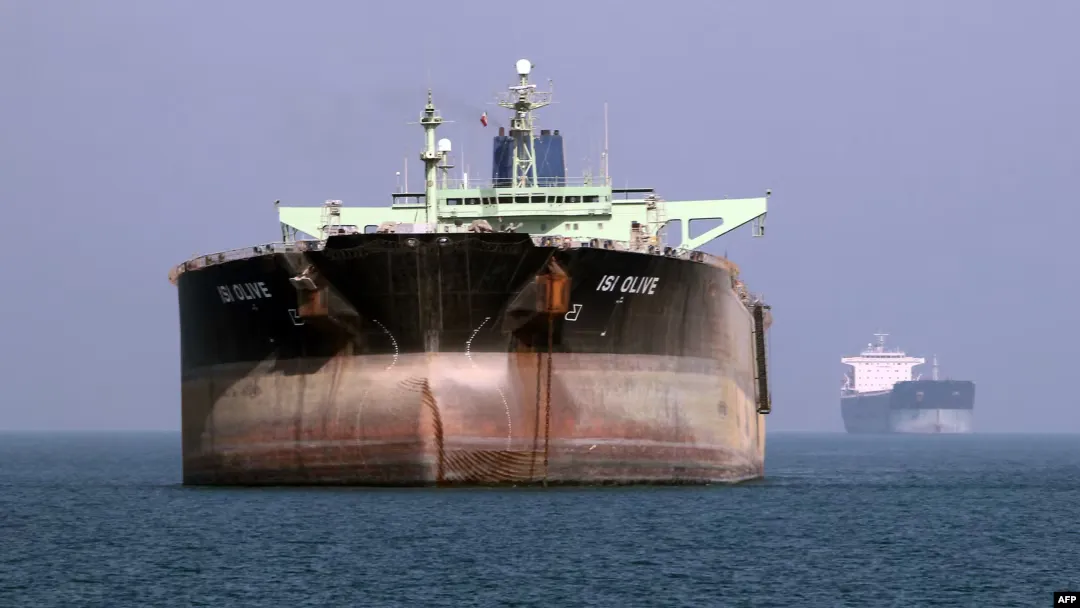
Iran’s oil trade continues to rely on a network of tankers, intermediaries and offshore cargo transfers to move crude through Asian waters despite sanctions aimed at restricting Tehran’s petroleum exports.
Waters near Malaysia, particularly around the Strait of Malacca and Singapore Strait, have become an important location for ship-to-ship transfers involving oil cargoes whose origins can be difficult to establish.
The activity illustrates the challenges facing sanctions enforcement authorities as Iranian oil continues to reach international markets through complex shipping arrangements.
The vessels involved are often described as a shadow fleet, a term used for tankers operating through opaque ownership structures, irregular tracking practices or other arrangements that make their commercial activities difficult to monitor.
The offshore trade is concentrated around the Eastern Outer Port Limits (EOPL), approximately 45 miles off the eastern coast of Malaysia’s Johor state. The area lies outside Malaysia’s territorial waters but within its exclusive economic zone, creating practical and jurisdictional challenges for enforcement.
Iranian tankers reportedly use the location to transfer crude to other vessels, which subsequently transport the cargo to buyers, predominantly smaller independent refineries in China.
These refineries, commonly known as teapots, are major purchasers of discounted Iranian crude. Their demand has helped sustain Iranian exports despite restrictions imposed by Washington.
Ship-to-ship transfers are not inherently illegal. They are a routine part of the global petroleum industry, allowing cargo to move between vessels or into floating storage facilities without requiring a conventional port.
The concern arises when such transfers are used to conceal the origin of sanctioned oil or obscure the identity and movements of vessels involved in transporting it.
Some tankers associated with the trade reportedly manipulate their automatic identification system signals, operate under false flags or conceal identifying markings. These practices make it more difficult for maritime authorities and sanctions investigators to reconstruct cargo movements.
The network also depends on businesses providing essential maritime services, including fuel, repairs, provisions, mooring equipment and personnel experienced in managing transfers between large tankers.
These supporting services have become a focus of US enforcement efforts.
In August, US Treasury Secretary Scott Bessent announced additional sanctions targeting businesses and intermediaries accused of facilitating Iranian oil shipments, including vessel brokers, marine fuel suppliers and financial service providers.
Washington’s approach reflects an assessment that restricting tankers alone may not be sufficient to disrupt the trade if vessels can continue obtaining the services needed to operate.
However, the effectiveness of the expanded sanctions remains uncertain.
Energy analysts have questioned whether restrictions on maritime service providers can substantially reduce Iranian exports when companies can change ownership structures, use intermediaries or shift operations to other locations.
Malaysia’s position adds another complication.
The country maintains significant economic relationships with the United States and China while also retaining diplomatic ties with Iran. It does not automatically recognise unilateral American sanctions as binding under Malaysian law.
Consequently, providing services to an Iranian vessel is not necessarily unlawful in Malaysia, although companies involved may face exposure to US financial sanctions.
That distinction creates a difficult commercial decision for maritime businesses operating in the region.
Companies accepting work from sanctioned vessels may earn higher fees but risk losing access to dollar-denominated transactions, international banking relationships and other financial services.
Malaysia’s maritime industry also faces reputational and operational risks because legitimate shipping activity takes place alongside vessels suspected of sanctions evasion.
Older tankers, uncertain insurance arrangements and poorly documented cargo transfers can increase concerns about collisions, oil spills and liability in heavily trafficked waters.
The Strait of Malacca and surrounding sea lanes are among the world’s busiest maritime corridors, connecting energy producers in West Asia with major Asian economies.
An accident involving an inadequately insured tanker could impose substantial costs on other shipping operators and coastal authorities.
Local maritime professionals have also raised concerns about the consequences of denying basic supplies to seafarers, many of whom are foreign nationals employed aboard vessels without control over their owners’ commercial decisions.
Meanwhile, the possibility of shifting transfers to waters near Penang, Malacca or Indonesia complicates attempts to concentrate enforcement on a single maritime location.
For Iran, the network provides continued access to export revenue at a time when US sanctions and the wider regional conflict have placed pressure on its economy.
For China, discounted Iranian crude remains attractive to independent refiners, although purchases can expose companies and intermediaries to sanctions-related risks.
For Malaysia, the issue presents a balance between maritime regulation, commercial activity and its relationships with major trading partners.
The continued movement of Iranian oil through the region illustrates the limits of sanctions enforcement when a trade network extends across multiple jurisdictions and relies on numerous small service providers.
Even if authorities succeed in disrupting activity at the Eastern Outer Port Limits, the mobility of tankers and the availability of alternative offshore transfer locations could allow parts of the trade to continue elsewhere.
The central challenge for Washington is therefore not simply identifying sanctioned vessels but disrupting the commercial and logistical networks that enable them to operate.