ABU DHABI, Oct. 6
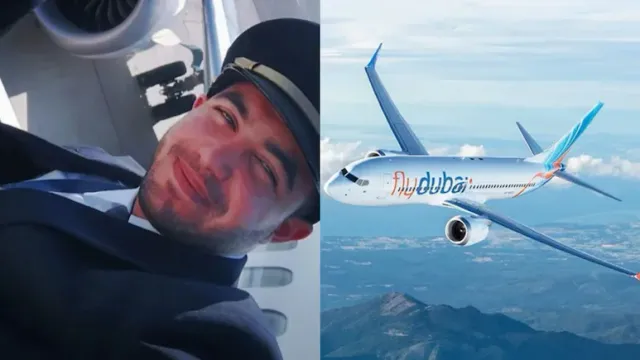
Captain Smit Machchhar, the Indian pilot who helped prevent an apparent attempt to crash a flydubai passenger jet bound for Tel Aviv, suffered a depressed skull fracture during the cockpit attack and underwent emergency surgery in Saudi Arabia before being transferred to the United Arab Emirates for advanced treatment.
The 38-year-old pilot sustained the serious head injury after his Omani co-pilot allegedly attacked him with a crash axe inside the cockpit. The flight was carrying more than 170 passengers and crew when the incident occurred.
Despite heavy bleeding and multiple injuries, Machchhar managed to unlock the cockpit door, allowing crew members and passengers to enter and overpower the co-pilot. The aircraft was subsequently stabilised and diverted to Prince Sultan bin Abdulaziz International Airport in Tabuk, Saudi Arabia.
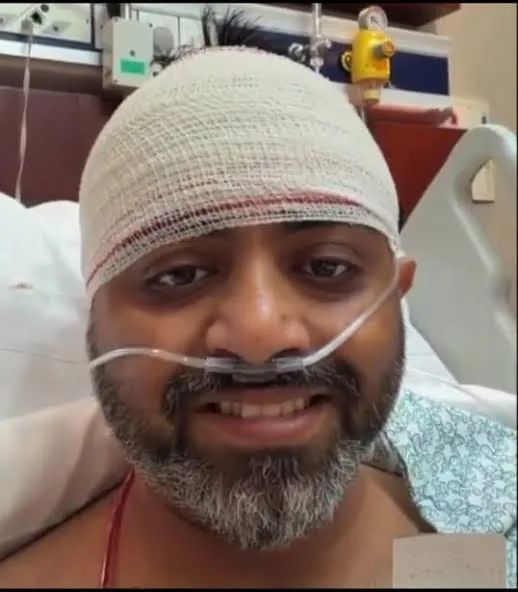
Medical examinations showed that Machchhar had suffered a depressed skull fracture, in which a broken section of the skull is pushed inward towards the brain. Doctors in Saudi Arabia carried out emergency treatment and reconstructed the damaged part of his skull.
Such an injury can be particularly dangerous because displaced bone can press against or damage brain tissue and frequently requires urgent surgical intervention.
Machchhar also suffered injuries to his limbs, chest and upper abdomen during the attack.
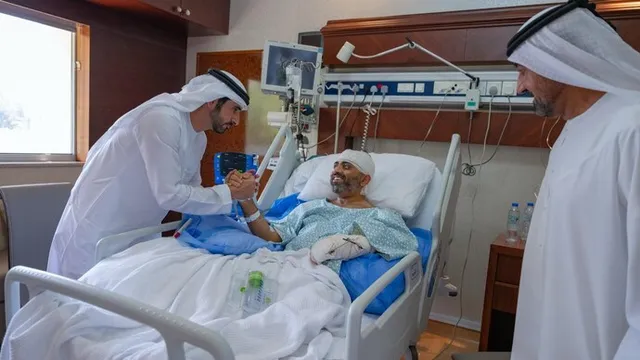
After receiving emergency treatment in Saudi Arabia, he was airlifted last week to Abu Dhabi for further medical care. He is being treated at a military hospital, where a team of specialists is monitoring his recovery.
His condition has shown improvement, according to people familiar with his treatment. Doctors have described his recovery as positive and said he is responding well to treatment.
Machchhar’s family has been permitted to meet him at the hospital and is receiving regular updates about his condition.
The severity of his injuries provides further detail about the struggle inside the cockpit of flydubai flight FZ1073, which was travelling from Dubai to Tel Aviv when the emergency unfolded.
About two-and-a-half hours into the flight, the aircraft plunged nearly 18,000 feet. It initially transmitted an emergency signal before switching its transponder to squawk code 7500, the internationally recognised code indicating an unlawful interference or hijacking.
Israeli authorities subsequently activated emergency procedures as the aircraft approached the region. Fighter jets were scrambled amid concern that the passenger aircraft could be under hostile control.
Israeli Prime Minister Benjamin Netanyahu later said the Omani co-pilot, identified as Hamad Al-Hammami, had stabbed Machchhar before apparently attempting to crash the aircraft.
The precise circumstances surrounding the alleged attack and the co-pilot’s intentions remain part of the investigation.
Machchhar has since described how, despite being badly wounded and lying on the cockpit floor, he realised the aircraft was rapidly losing altitude and made a final effort to reach the cockpit door.
During a video conversation with Prime Minister Narendra Modi last week, Machchhar said he was still being attacked when he understood that he needed to act.
“I was lying on the floor injured, but I told myself to go for one last push to open the door from inside,” he said.
Once the door was opened, other people aboard the aircraft were able to enter the cockpit and help bring the situation under control.
Machchhar stressed that he was not alone in preventing the situation from deteriorating further, acknowledging the role played by others who entered the cockpit.
“Others came in and also played a role,” he said, adding that while he was fighting for his own life, he was also determined not to allow others aboard the aircraft to die.
The aircraft eventually made an emergency landing at Tabuk, avoiding what could have developed into a far more serious aviation security incident.
The latest medical information also puts the captain’s actions during the emergency into sharper perspective. A depressed skull fracture is a major traumatic injury, yet Machchhar remained conscious and was able to act while the aircraft was rapidly losing altitude.
His immediate medical treatment became the priority after the aircraft landed in Saudi Arabia. Doctors reconstructed the damaged area of his skull before he was considered stable enough to be transferred to Abu Dhabi.
He remains under specialist medical supervision, and no timeline has been given for his discharge from hospital.
There has also been no confirmed assessment of when, or whether, he will be medically cleared to return to commercial flying. Recovery from a serious head injury can require extended neurological monitoring and rehabilitation, with any decision on aviation duties dependent on subsequent medical evaluations.
For now, Machchhar’s condition is reported to be improving as investigators continue examining the circumstances behind the cockpit attack and the events that led flight FZ1073 to lose thousands of feet of altitude before being diverted safely to Saudi Arabia.