LEH, Oct. 3
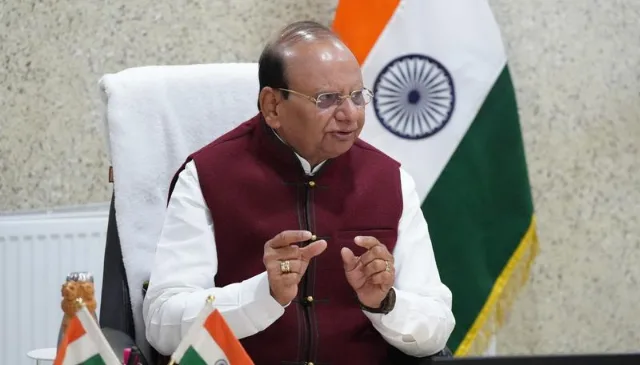
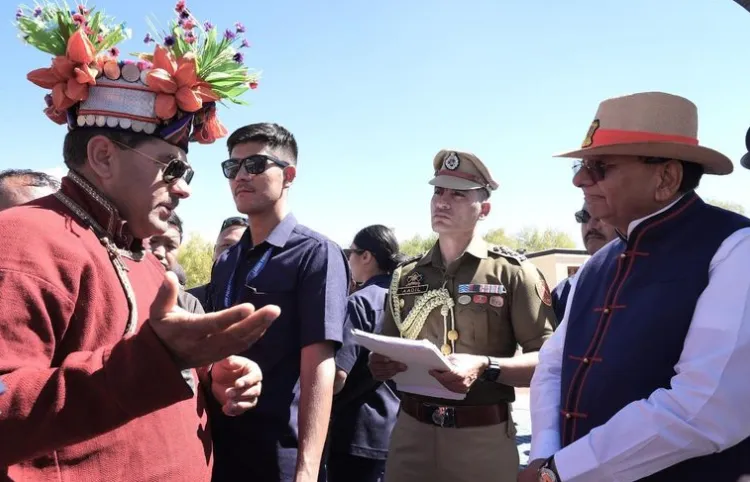
Ladakh Lieutenant Governor Vinai Kumar Saxena on Saturday met nearly 200 Nambardars, or village heads, from across the Union Territory and assured them that issues raised by local communities, including acute water shortages, would receive priority attention from the administration.
The interaction at Lok Niwas in Leh was aimed at strengthening grassroots governance and creating a more direct channel between village communities and the Ladakh administration.
Saxena described Nambardars as an important link between the government and residents, noting that their close engagement with communities gives them first-hand knowledge of local problems, aspirations and development requirements.
He said such direct interactions would continue and that feedback from village heads would help the administration identify gaps in public services and determine priorities based on local needs.
During the meeting, the Nambardars raised concerns about acute water shortages affecting several villages across Ladakh and sought the Lieutenant Governor’s intervention.
Saxena assured them that the water issue would be taken up on priority.
Water availability remains particularly important for Ladakh’s scattered settlements because of the region’s high-altitude cold-desert environment and dependence on limited water resources.
The administration has been pursuing several interventions related to water conservation and management, some of which Saxena said had benefited from suggestions received directly from village representatives.
Recalling his visits to different parts of Ladakh, the Lieutenant Governor said Nambardars had frequently been his first point of contact and had provided useful information about challenges faced by local communities.
Their suggestions, he said, had contributed to projects and initiatives including Him Sarovar, rock check dams, measures against land degradation and efforts to divert previously untapped glacier streams.
The interaction also highlighted the traditional role played by Nambardars in connecting remote communities with the administration.
Apart from conveying grievances, village heads assist in communicating information about government schemes and identifying development requirements at the local level.
Saxena asked them to continue bringing issues involving water availability, environmental conservation, protection of land, employment and livelihood opportunities to the government’s attention.
He said their inputs could help the administration identify problems earlier and design interventions more closely aligned with the needs of individual villages.
Nawang Tsering, president of the All Ladakh Goba Association, also thanked the Lieutenant Governor for the recent increase in monthly emoluments paid to Nambardars.
Their monthly payment has been raised from ₹1,500 to ₹5,000, benefiting 247 Nambardars across Ladakh.
Saxena said the increase should not be viewed only as additional financial assistance.
He described it as recognition of the role village representatives play in participatory governance and in ensuring that government services and welfare programmes reach communities at the grassroots.
The meeting assumes added significance because of Ladakh’s geography.
Settlements are spread across a vast mountainous region, and conditions can vary considerably between villages. Direct feedback from local representatives can therefore provide the administration with information that may not always emerge through conventional administrative channels.
Saxena said Lok Niwas would remain accessible to Nambardars so they could directly raise concerns affecting their communities with the administration.
The approach is intended to create a continuing mechanism for engagement rather than limit consultations to individual meetings.
Greater involvement of village representatives could also help authorities monitor how government programmes are functioning after implementation.
For example, infrastructure or water-management projects can be assessed not merely by whether they have been completed but by whether they are actually addressing the problems experienced by residents.
The emphasis on Nambardars consequently places local knowledge alongside formal administrative planning.
Saxena expressed confidence that continued cooperation between the administration and village representatives would improve coordination and strengthen the delivery of services across Ladakh.
The immediate priority emerging from Saturday’s interaction is the water shortage reported by several villages.
But the wider objective is to establish Nambardars as a more effective two-way channel through which the administration can understand local problems while communities receive information and support from the government.
With 247 Nambardars spread across Ladakh and their emoluments recently increased, the administration is seeking to strengthen that grassroots network as part of its approach to village-level governance and grievance redressal.