LEH, Sept. 30
The Ladakh administration has approved four new water infrastructure projects worth ₹3.20 crore in Kargil district and released another ₹5 crore for water works in the border village of Hunderman, as it seeks to improve drinking and agricultural water supplies in areas dependent heavily on seasonal sources.
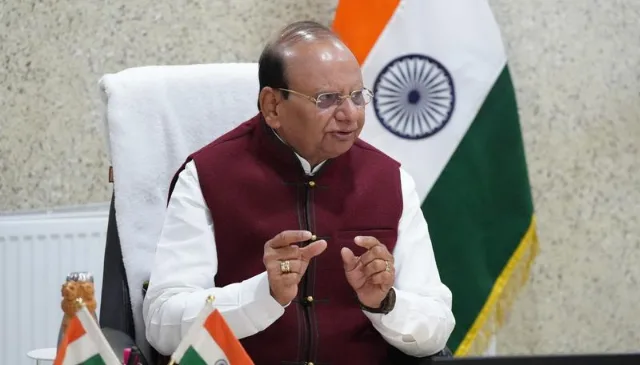
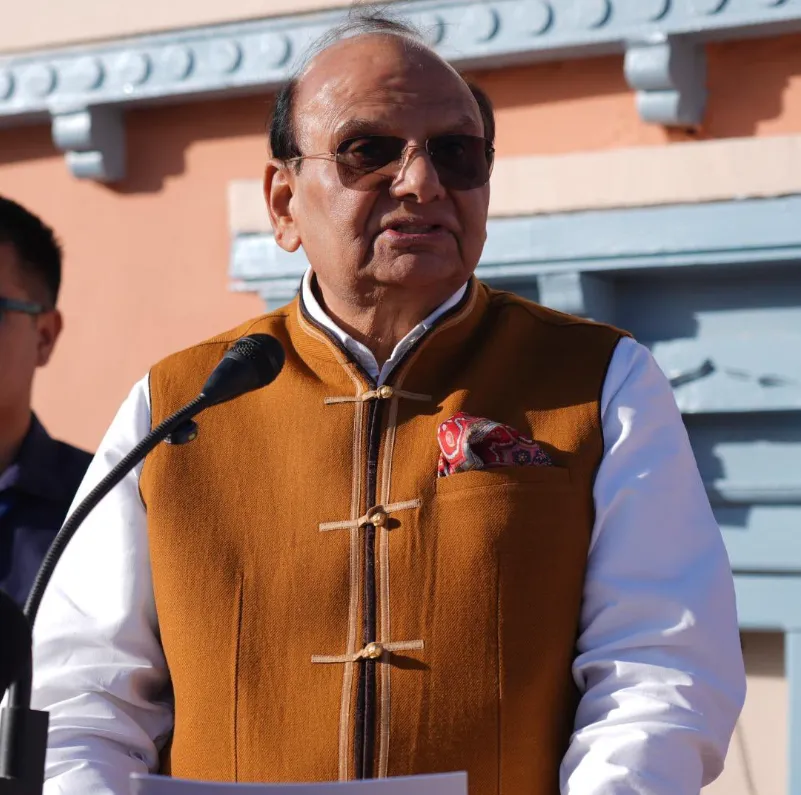
Lieutenant Governor Vinai Kumar Saxena approved the four projects, which will focus on diverting, storing and making better use of available water, including seasonal snowmelt.
The projects include construction of a tunnel at Apati Nallah and an earthen channel that will divert snowmelt from Musbar Nallah to Sharcha Nallah.
Two new earthen ponds will also be constructed at Barchay and Apati under Project Him Sarovar, an initiative aimed at capturing and storing water for use when natural availability declines.
The approvals follow a review chaired by Saxena at Lok Niwas on September 12, when he directed the Public Health Engineering and Irrigation and Flood Control Department to prepare Detailed Project Reports for the four schemes.
The department subsequently completed the DPRs, allowing the administration to clear the projects.
In a separate decision, ₹5 crore has been released for developing water infrastructure at Hunderman, a village near the India-Pakistan border in Kargil district.
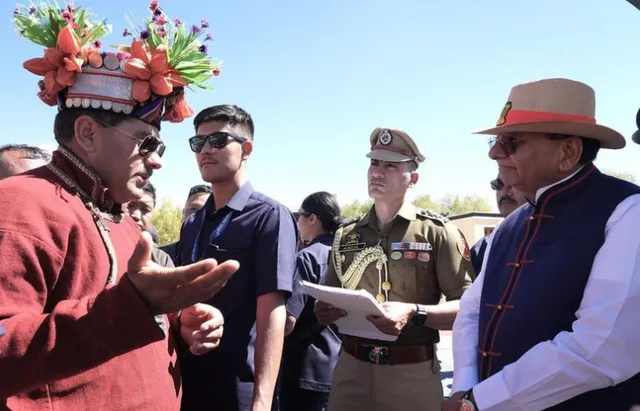
The funding follows a recent visit by Saxena to Hunderman, where residents raised concerns about inadequate water supply.
The administration has not provided details of the individual works that will be undertaken at Hunderman under the ₹5 crore allocation. The funding has been released specifically for developing the village’s water infrastructure.
The combined measures address one of Ladakh’s persistent development challenges.
Water availability across the high-altitude region is shaped by difficult terrain, limited natural resources and a heavy dependence on snow and glacial melt. Supplies can vary considerably with the seasons, creating difficulties for households as well as agriculture.
In such conditions, the ability to capture water when it becomes available and retain it for later use can be as important as finding additional sources.
The newly approved projects in Kargil have been designed around that requirement.
The proposed channel between Musbar Nallah and Sharcha Nallah will seek to redirect seasonal snowmelt that might otherwise not be fully utilised. The earthen ponds at Barchay and Apati will provide additional storage, while the Apati Nallah tunnel will form another component of the district’s water-management infrastructure.
The administration expects the projects to improve supplies for both domestic consumption and agriculture.
For rural communities in Ladakh, those two requirements are closely connected. Limited water availability can affect household needs while also restricting cultivation during the region’s relatively short agricultural season.
Saxena said water security remained a priority for the Union Territory administration and called for available sources to be conserved, stored and used efficiently.
The approach reflects a broader effort to adapt infrastructure to Ladakh’s environmental conditions rather than rely solely on conventional water-supply systems.
Snowmelt is a critical resource across the region, but much of it becomes available during particular periods of the year. Infrastructure capable of diverting and storing that water can extend its usefulness beyond the immediate melt period.
Project Him Sarovar is intended to use that principle by creating water-storage facilities suited to Ladakh’s terrain and climatic conditions.
The Barchay and Apati ponds approved under the programme will add storage capacity at the local level. Their eventual effect will depend on the volume of water captured, seasonal conditions and how the stored water is distributed for drinking and agricultural requirements.
Hunderman presents a different infrastructure challenge.
Its location close to the border and away from larger urban centres makes reliable basic services particularly important. Residents raised their water concerns directly with the Lieutenant Governor during his visit, leading to the subsequent release of ₹5 crore.
The allocation is substantially larger than the combined estimated cost of the four newly approved Kargil schemes, although the administration has not yet provided a breakdown of how the Hunderman funding will be spent.
The latest decisions also show the administration moving from identifying water shortages to preparing and approving specific projects.
In the case of the four Kargil schemes, the process moved from the September 12 direction to prepare DPRs to formal approval after the technical documentation was completed.
Implementation will now determine how quickly the projects begin contributing to local water supplies.
Ladakh’s geography makes water management an increasingly important part of development planning. Settlements are widely dispersed, agriculture depends on a relatively narrow growing season and many communities rely on water originating from snowfall at higher elevations.
That places greater importance on small-scale diversion and storage infrastructure capable of adapting seasonal flows to local demand.
The four projects approved in Kargil are built around that principle, combining diversion works with new storage capacity rather than depending on a single intervention.
For Hunderman, the ₹5 crore allocation provides a separate opportunity to address a problem residents identified as a local priority.
Together, the measures commit ₹8.20 crore to new and improved water infrastructure in Kargil district, with the immediate objective of making seasonal water resources more reliable for communities that depend on them.