

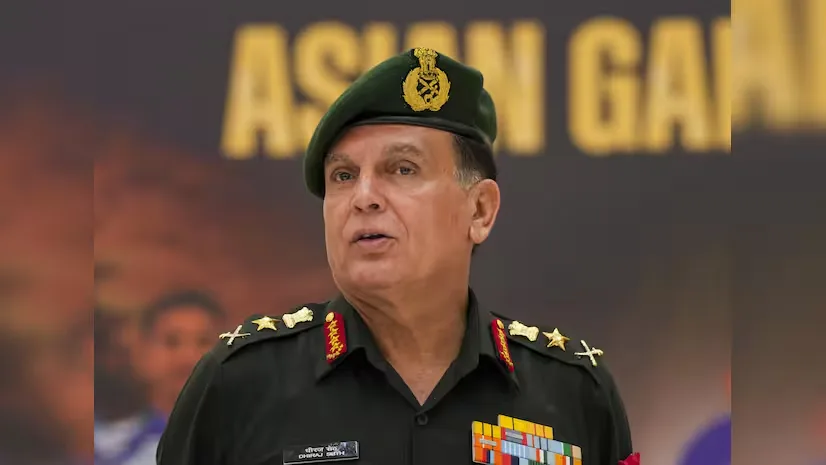
NEW DELHI, Oct. 27: Chief of the Army Staff General Dhiraj Seth visited forward areas in Uttarakhand on Tuesday to review operational preparedness and infrastructure development along the India-China border, amid renewed concerns over Chinese military activity along the Line of Actual Control (LAC).
The Army Chief visited Mana and Joshimath, two strategically important locations in Uttarakhand's border region, where he assessed the readiness of military formations responsible for safeguarding the northern frontier.
During interactions with troops, General Seth emphasised the importance of maintaining sustained operational vigilance to respond effectively to evolving security challenges, according to an Indian Army statement.
The visit focused on operational preparedness and ongoing infrastructure projects in Uttarakhand, which forms part of the middle sector of the India-China boundary.
The middle sector, covering the border areas of Uttarakhand and Himachal Pradesh, has traditionally experienced fewer military confrontations than the western sector in Ladakh and the eastern sector in Arunachal Pradesh.
However, the relatively stable security situation in the middle sector does not diminish its strategic importance. The region contains sensitive mountain approaches, high-altitude military positions and routes connecting India's border districts with areas under Chinese control.
Mana, located near the international boundary in Chamoli district, is among the country's prominent frontier settlements. Joshimath serves as an important military and logistical centre supporting deployments in the higher Himalayan regions.
The Army Chief's review comes against the backdrop of renewed tensions between India and China, particularly in Arunachal Pradesh.
Indo-Tibetan Border Police Director General Shatrujeet Kapur recently confirmed an ongoing face-off in the eastern sector of the India-China border.
The Ministry of External Affairs also acknowledged concerns over Chinese military movements during a briefing on October 23.
The ministry said the situation along the border becomes disturbed periodically when Chinese forces depart from established patrolling patterns.
The statement followed reports of Chinese military activity in disputed areas of Arunachal Pradesh during the summer.
Residents of frontline villages reportedly observed Chinese soldiers and markings in areas where the boundary remains undemarcated.
The developments have renewed attention on the continuing differences between India and China over the alignment of the LAC.
Although the two countries have maintained diplomatic and military communication mechanisms to manage border disputes, disagreements over territorial claims and patrolling rights remain unresolved.
The LAC is not a mutually agreed, fully demarcated boundary. Differing perceptions of its alignment have repeatedly contributed to confrontations between Indian and Chinese forces.
The latest reports from Arunachal Pradesh illustrate how such disagreements can generate fresh tensions even when diplomatic engagement continues.
Against this background, the Army Chief's visit to Uttarakhand reflects the military's emphasis on maintaining preparedness across the entire northern frontier rather than concentrating exclusively on locations experiencing immediate confrontations.
Infrastructure development remains an important component of that preparedness.
In high-altitude border regions, roads, communications networks and logistical facilities are essential for sustaining military deployments and enabling the movement of personnel and equipment.
The challenging Himalayan terrain makes reliable connectivity particularly important during periods of heightened military activity and adverse weather conditions.
Improved infrastructure can also support civilian connectivity in remote border settlements, although the Army has not disclosed specific projects reviewed during General Seth's visit.
The Indian Army has not announced any change in troop deployments or operational posture in Uttarakhand following the inspection.
Nor has it reported a new confrontation in the middle sector.
The visit therefore represents a review of military readiness and infrastructure development rather than confirmation of a fresh security incident in Uttarakhand.
For India, maintaining a credible military presence across the Himalayan frontier remains necessary while border negotiations with China continue.
The developments in Arunachal Pradesh also demonstrate that diplomatic engagement has not eliminated the possibility of localised tensions arising from competing territorial perceptions and military patrol movements.
General Seth's inspection of Mana and Joshimath places renewed attention on the importance of preparedness in the comparatively quieter middle sector, particularly as the security situation along other stretches of the India-China border remains sensitive.