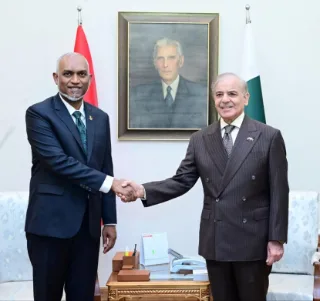

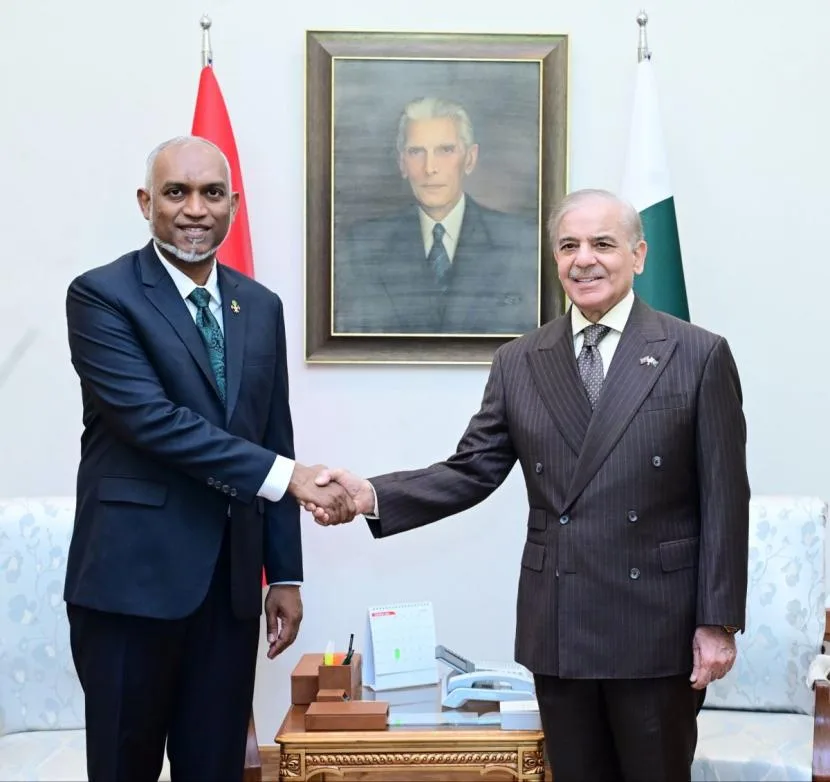
ISLAMABAD, Oct. 21: Pakistan and the Maldives have signed 20 memorandums of understanding (MoUs) to deepen cooperation across defence, maritime security, technology and trade, during Maldivian President Mohamed Muizzu’s landmark visit to Islamabad.
The MoUs, agreed during a three-day visit that began after Muizzu arrived in Pakistan on Tuesday, cover collaboration in areas including information technology, cybersecurity and artificial intelligence. Pakistan and the Maldives also signed agreements touching on combating illicit trafficking and narcotics, social protection, health cooperation, food regulatory coordination, recruitment of health professionals and vocational training, as well as youth and sports development.
The announcements were made during and after meetings between Prime Minister Shehbaz Sharif and President Muizzu, culminating in a joint press conference at which both leaders outlined the pace and scope of implementation.
Defence and maritime focus
Among the most prominent components of the signed MoUs are those relating to defence cooperation and maritime security. The text of the Rediff report does not provide the operational details of the arrangements, but it indicates that the agreements are intended to strengthen bilateral coordination on security-related challenges in the region.
The MoUs were signed in the presence of leaders from both countries, with the visit occurring against a broader backdrop of expanding Pakistan–Maldives engagement and linked to the 60th anniversary of diplomatic relations established in 1966.
Trade target and capacity-building
At the press conference, Sharif said the two sides agreed to increase bilateral trade from USD 13.9 million to USD 200 million over the next two years. He also framed the target as an attempt to reflect what he described as the “true strength” of economic cooperation.
Sharif further said Pakistan would provide 1,00,000 olive cuttings and 1,00,000 seeds for a 5 million tree plantation drive in the Maldives, alongside technical expertise for the Maldives’ efforts to establish data centres.
Education, health and people-to-people links
The agreements were complemented by references to longstanding educational and professional ties between the two countries. Sharif said many Maldivian students are studying in Pakistan, particularly in healthcare-related fields, and that 250 Pakistani doctors and paramedics are serving in the Maldives.
The Rediff report also notes that Muizzu was conferred an honorary doctorate in politics by the International Islamic University Islamabad.
Broader cooperation packages
Beyond defence and technology, the report lists additional MoUs and pacts signed by the two governments. These include cooperation in agriculture, fisheries, environment, education, tourism and arts and culture.
There were also institutional and governance-linked arrangements, according to the report: cooperation between police academies, and agreements involving the Civil Services Commission of Maldives with Pakistan’s Federal Public Service Commission and the Civil Service Academy.
Visit history and diplomatic context
Muizzu’s visit is described as the first by a Maldivian president in 11 years. It comes after a previous state visit in 2015 by former president Abdulla Yameen Abdul Gayoom.
The report says Muizzu was received at the Prime Minister’s House with a guard of honour, and that he planted a sapling at the venue. Prayers were offered for the progress and prosperity of both nations, as per a statement issued by the Prime Minister’s office.
Implementation and next steps
Sharif told Muizzu that he would work personally with the Maldivian side to translate the signed MoUs into action, emphasising “prompt decision-making and speedy implementation.”
With the agreements spanning both security and economic development, the central question now is how quickly the programmes—particularly those touching on defence, maritime security and emerging technologies—will move from signing to practical cooperation, and what measurable outcomes will follow the new trade target.