
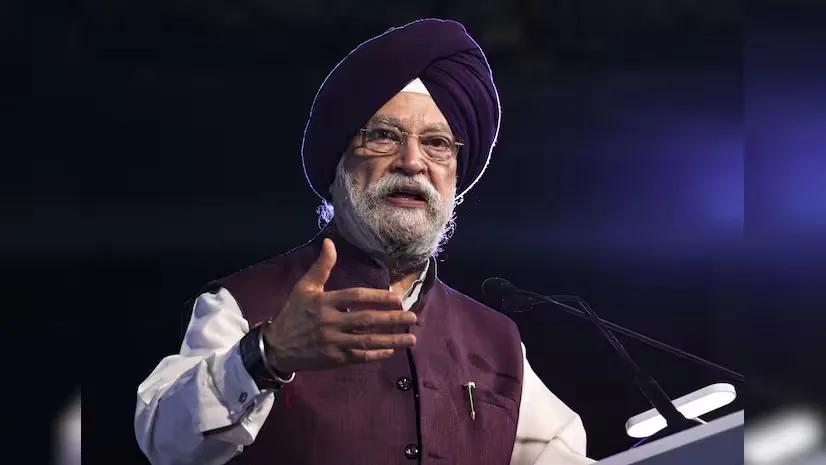
PANAJI, Oct. 27: Union Petroleum and Natural Gas Minister Hardeep Singh Puri on Tuesday dismissed suggestions that India was facing international pressure to stop purchasing Russian crude oil, asserting that the country's energy procurement decisions would continue to be determined by commercial considerations and national requirements.
Speaking at the 29th Energy Technology and Innovation Meet in Goa, Puri said Indian refiners would purchase crude oil from suppliers offering competitive prices and suitable grades, irrespective of geopolitical developments.
The minister maintained that India was not particularly purchasing Russian oil at present, but clarified that sourcing decisions were based on commercial factors rather than pressure from any foreign government.
"I have never felt any pressure," Puri said, responding to questions about India's Russian oil imports.
He explained that negotiations with suppliers depended on the type of crude available, prevailing market prices and the terms offered by sellers.
"At the point of negotiation, whoever is supplying a particular grade, we will buy from them. Prices come down sometimes," he said.
Puri's remarks come amid continuing international scrutiny of India's energy trade with Russia, particularly as Western countries seek to restrict Moscow's oil revenues following its invasion of Ukraine.
India's purchases of Russian crude have attracted attention because of the sanctions and other restrictions imposed by Western governments on Russian energy companies and associated trade.
However, New Delhi has consistently maintained that its energy policies must account for domestic consumption requirements, affordability and the need to maintain uninterrupted supplies.
The minister also referred to restrictions imposed on Russian oil companies Rosneft and Lukoil, noting that buyers had alternative sourcing options, including suppliers in the United Arab Emirates.
His comments indicated that Indian refiners could adjust their purchasing arrangements according to changing market conditions and the availability of crude from different countries.
Puri said India had diversified its energy investments and procurement sources, citing investments in Saudi Arabia and other international locations.
Such diversification is intended to reduce dependence on individual suppliers and provide greater flexibility when international markets face disruptions.
As one of the world's major energy-consuming economies, India remains particularly exposed to changes in global crude oil prices and supply conditions.
A substantial proportion of the country's crude oil requirements is met through imports, making access to reliable and competitively priced supplies important for domestic fuel availability and economic stability.
Changes in international oil prices can affect transportation costs, industrial activity and the broader economy. For refiners, the availability of suitable crude grades and favourable contractual terms also influences purchasing decisions.
Puri emphasised that India's energy security could not be compromised because of geopolitical tensions or volatility in international markets.
He also drew attention to the complexity of global petroleum trade, where crude oil procurement depends on several interconnected factors rather than the political relationship between the buyer and seller alone.
Refineries must consider crude quality, processing requirements, transportation arrangements, commercial terms and the reliability of deliveries when selecting suppliers.
The minister's statements reinforce the distinction between India's commercial approach to oil procurement and the diplomatic pressures surrounding international energy trade.
While sanctions on Russian companies can affect the availability and commercial terms of particular supplies, Puri maintained that India retains the flexibility to purchase oil from alternative producers.
His remarks also underline the government's position that securing affordable energy remains a priority as India seeks to manage domestic demand and international price fluctuations.
The minister did not announce any new agreement to purchase Russian crude, nor did he disclose specific import volumes or future procurement commitments.
Instead, he reiterated that Indian refiners would continue assessing available supplies on their commercial merits.
The comments suggest that India's immediate approach will remain focused on maintaining a diversified network of crude oil suppliers rather than committing to purchases from, or excluding, any particular country.
For New Delhi, the central consideration remains the ability to secure adequate energy supplies at competitive prices while navigating an increasingly uncertain international market.