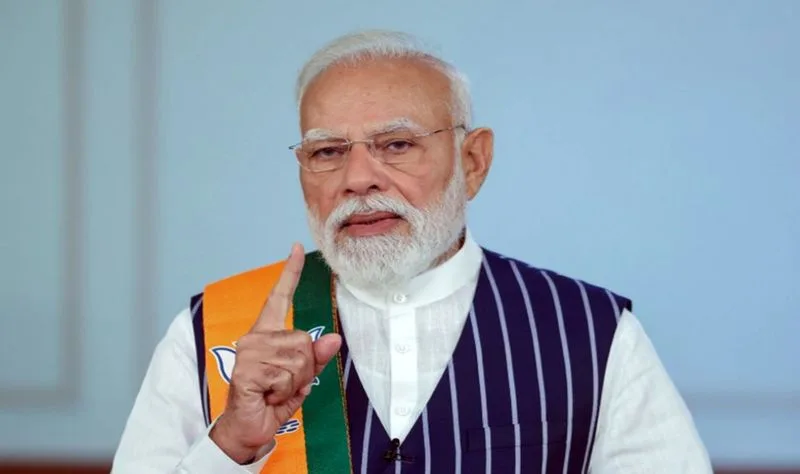
PM Highlights Success of e-Sanjeevani Telemedicine Service
In his monthly radio address, Prime Minister Narendra Modi showcased the achievements of the e-Sanjeevani telemedicine service, which has facilitated nearly 50 crore teleconsultations, demonstrating India's ability to leverage digital technology to enhance access to essential services in remote and underserved areas.
The Prime Minister attributed the programme's success to technological capabilities, the dedication of medical professionals, and the trust of citizens. He cited several examples to illustrate the impact of e-Sanjeevani, including the case of a pregnant woman in Ladakh, Kunzang Dolma, who received medical assistance through the service after developing complications. Additionally, a 12-year-old boy in Nagaland's Peren district received help for an ear infection and fever, while a man in his sixties in Lakshadweep, Kunhi Koya, consulted a doctor in Kavaratti for medical assistance.
These instances, according to Modi, demonstrate how telemedicine can connect local health workers and patients with specialists who might otherwise be difficult to reach. The Prime Minister also mentioned the case of Oho-Tahane, a Jarawa child on Baratang Island in the Andaman and Nicobar Islands, who was diagnosed with pneumonia and received guided treatment through e-Sanjeevani.
Promoting Local Artisans and Traditional Farming Practices
In his address, Modi also urged citizens to prioritize products made by local artisans during festival shopping, emphasizing that this would boost the 'Vocal for Local' campaign and contribute to the realization of a self-reliant India. He noted that the spirit of 'Vocal for Local' is taking Indian products to global markets, citing examples such as 'makhana' from Bihar being exported to Greece and 'arhar dal' from Karnataka being exported to the Maldives.
The Prime Minister stressed the importance of good packaging in promoting local products, stating that it can make a significant difference in attracting customers. He also highlighted the revival of traditional farming practices in Punjab, particularly the 'Kheti Virasat Mission' initiative, which aims to promote organic farming and natural cotton farming in the Malwa region.
Community-Led Conservation Efforts
Modi also spoke about community-led conservation efforts, such as the revival of the Heval river in Uttarakhand's Tehri Garhwal district. The local administration and villagers came together to launch a drive to save the river, which included rainwater harvesting measures, efforts to recharge groundwater, and the planting of a large number of trees. These efforts have resulted in the rejuvenation of the Heval river and dozens of natural water sources.
The Prime Minister's address emphasized the importance of community participation and traditional practices in promoting sustainable development and environmental conservation. By highlighting the successes of initiatives such as e-Sanjeevani and 'Vocal for Local', Modi encouraged citizens to support local artisans and contribute to the growth of a self-reliant India.
In conclusion, the Prime Minister's monthly radio address showcased the potential of digital technology, community-led initiatives, and traditional practices in driving positive change and promoting sustainable development in India. As the country continues to navigate the challenges of remote and underserved areas, the success of programmes like e-Sanjeevani and the 'Vocal for Local' campaign offers a promising glimpse into the future of India's healthcare and economic development.