



MADRID, Oct. 28: At least 46 people were killed and several others injured when two high-speed passenger trains collided near Toledo in central Spain on Wednesday morning, in one of the country's deadliest railway disasters in recent years.
The collision occurred at approximately 9 a.m. local time on the Madrid–Andalusia high-speed railway line, prompting an emergency response and the suspension of services connecting the Spanish capital with parts of southern Spain.
Spain's railway infrastructure operator, ADIF, confirmed that a rear-end collision had occurred between two trains and announced the suspension of traffic on the affected route.
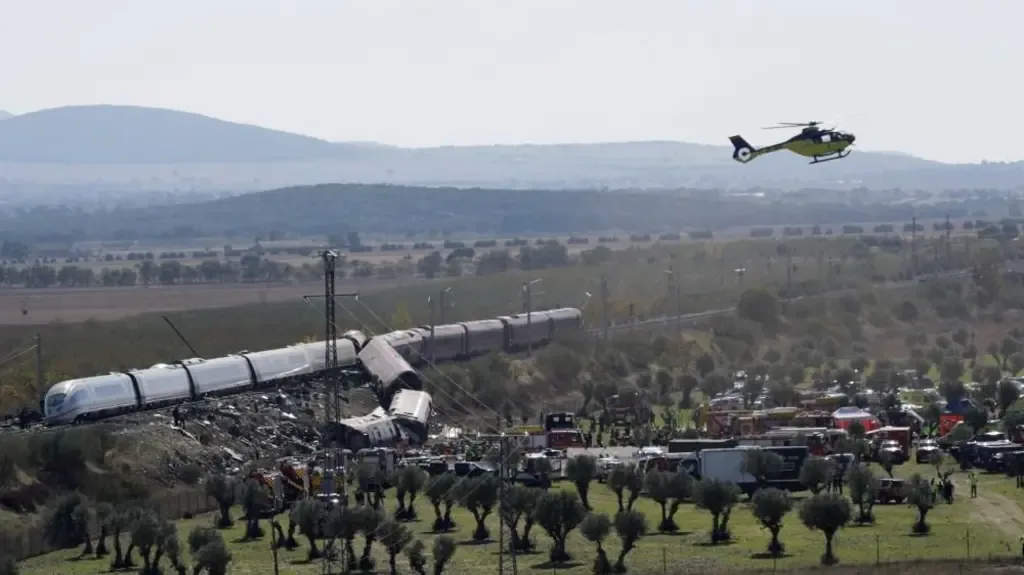
A southbound Renfe AVE train struck the rear of a stationary Iryo passenger train. The force of the impact caused carriages to derail and tumble down an embankment, leaving rescue teams facing a difficult operation at the crash site.
According to regional government spokesperson Esther Padilla, the Renfe train was carrying 397 passengers, while 147 people were aboard the Iryo service. Together, the two trains were carrying 544 passengers.
The number of injured passengers was not immediately established in the available reports.
Emergency teams, including firefighters, medical personnel, police and civil protection workers, were deployed to the accident site near Urda, approximately 130 kilometres south of Madrid.
The collision occurred at kilometre 118 of the Madrid–Seville railway line, between the towns of Mora, Orgaz and Urda. The location, in a rural area of Toledo province, complicated access to the damaged carriages.
Spanish media reported that between 100 and 120 people had been injured, although the figures remained provisional as rescue teams continued searching the wreckage.
Early investigations have focused on a possible signalling failure and human error during the management of train movements.
According to reports citing Spanish transport officials, the railway's automatic safety system experienced a technical malfunction, requiring traffic controllers to switch to manual operations.
Several trains were reportedly stopped following the malfunction. When services were subsequently authorised to resume, the Iryo train remained stationary while the Renfe service continued along the same track.
Investigators are examining whether a railway operator failed to warn the approaching Renfe train that another train was still occupying the line.
Other preliminary accounts suggest that the Renfe train may have passed a stop signal after receiving authorisation to proceed from the control centre.
The circumstances have raised questions about the operation of the railway's signalling and train-protection systems, particularly the procedures followed when automatic controls become unavailable.
However, investigators have not issued a final determination of responsibility, and the reported sequence of events remains subject to official verification.
Renfe confirmed that its AVE service, which departed Madrid's Puerta de Atocha station at 8 a.m. for Seville, was involved in the collision.
The state-owned operator activated its crisis-management arrangements and a programme providing assistance to railway accident victims and their families.
Iryo, the privately operated railway company whose train was struck, said it had activated its emergency protocols and was cooperating with the authorities.
Spanish Prime Minister Pedro Sánchez expressed shock over the disaster and said he was maintaining contact with Transport Minister Óscar Puente and Castilla-La Mancha regional president Emiliano García-Page.
Sánchez said emergency services were working with the relevant authorities to assist those affected and ensure their safety. He also expressed solidarity with the victims and their families.
The accident has renewed scrutiny of Spain's high-speed railway network, which experienced another major disaster earlier this year.
In January, a derailment and subsequent collision near Adamuz in Córdoba province killed dozens of people, prompting concerns about railway safety and infrastructure reliability.
Wednesday's crash is the second major fatal accident on Spain's Madrid–Andalusia high-speed railway corridor in 2026.
The latest collision has placed particular attention on the safeguards governing railway operations when signalling equipment fails. Automatic train-protection systems are designed to reduce the risk of collisions by monitoring train movements and enforcing speed restrictions or stop instructions.
When those systems are unavailable, the safety of train movements depends on established backup procedures and accurate communication between traffic controllers and train operators.
Investigators will need to determine whether those procedures were followed and whether technical or operational failures contributed to the collision.
Rail traffic between Madrid, Ciudad Real and Andalusia remained suspended following the accident, with passengers advised to seek alternative arrangements.
Authorities have not announced when normal services will resume.
The reported death toll of 46 makes the collision one of Spain's deadliest railway disasters in recent years. With recovery operations and investigations continuing, officials have warned that casualty figures may change.