
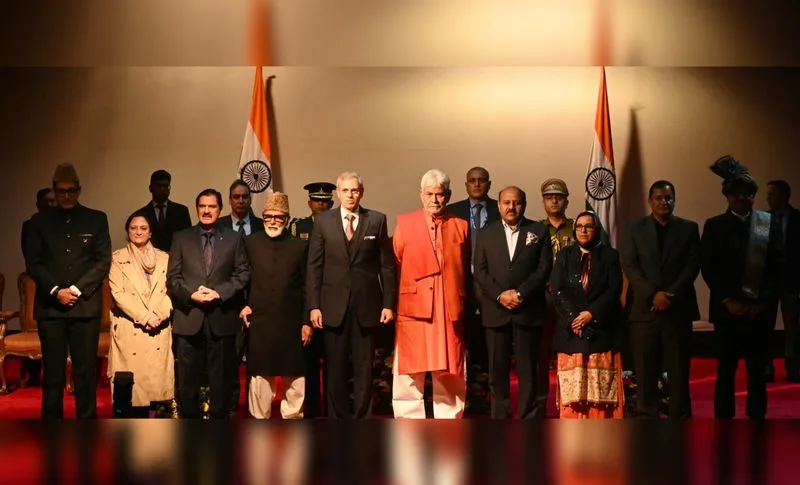
SRINAGAR, Oct. 28: Jammu and Kashmir Chief Minister Omar Abdullah expanded his Council of Ministers on Tuesday, inducting four senior National Conference leaders and dropping Independent MLA Satish Sharma in a reshuffle that has shifted the Cabinet's regional composition decisively towards the Kashmir Valley.
Lieutenant Governor Manoj Sinha administered the oath of office to Ali Mohammad Sagar, Mir Saifullah, Shameema Firdous and Altaf Ahmad Wani, popularly known as Altaf Kalloo, at Lok Bhavan in Srinagar.
All four newly inducted ministers belong to the National Conference and represent constituencies in Kashmir. Their inclusion has taken the strength of the Council of Ministers, including the Chief Minister, to nine, the maximum permitted under the rules governing Jammu and Kashmir as a Union Territory.
The reshuffle has left seven ministers from Kashmir and two from Jammu. Deputy Chief Minister Surinder Kumar Choudhary and Javaid Ahmed Rana are now the only representatives of the Jammu region in the Cabinet.
Satish Sharma, an Independent legislator representing the Chhamb constituency in Jammu district, was removed to accommodate the new appointments. He did not attend the swearing-in ceremony.
Ahead of the expansion, all existing ministers had submitted their resignations to facilitate the reconstitution of the Council of Ministers.
The changes mark the first expansion of the Omar Abdullah-led government, which recently completed two years in office.
Among the new ministers, Ali Mohammad Sagar is one of the National Conference's most experienced legislators. A seven-time MLA, he has maintained an unbeaten record in Assembly elections since entering electoral politics in 1983. Sagar took his oath in Urdu, while the other three ministers took theirs in English.
Mir Saifullah, who won the Trehgam Assembly constituency in the 2024 elections, also brings previous ministerial experience to the government. The former Kupwara legislator is serving his fourth term in the Assembly.
Shameema Firdous, a three-time legislator from Habbakadal and head of the National Conference's women's wing, has entered the Council of Ministers for the first time. Her induction makes her the second woman in the Cabinet alongside Sakina Itoo.
Altaf Ahmad Wani, the MLA from Pahalgam in south Kashmir, has also become a minister for the first time. A two-time legislator who previously served in the Legislative Council, Wani thanked National Conference president Farooq Abdullah and the Chief Minister for giving him the responsibility.
The swearing-in ceremony was attended by Chief Minister Omar Abdullah, Assembly Speaker Abdul Rahim Rather, senior leaders of the ruling alliance and opposition legislators from the BJP and PDP.
The expansion also confirmed that the Congress, despite being an ally of the National Conference, would remain outside the government.
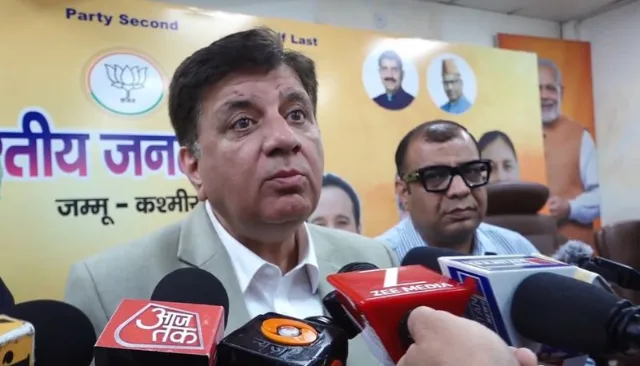
Jammu and Kashmir Pradesh Congress Committee president Tariq Hamid Karra reiterated that his party would not accept a ministerial position until full statehood was restored to Jammu and Kashmir.
Karra said discussions had taken place between the coalition partners whenever Cabinet expansion was considered, but Congress had consistently maintained its position.
The party's decision allowed the National Conference to fill the remaining ministerial positions without accommodating its coalition partner.
The regional distribution of Cabinet positions has emerged as one of the significant political aspects of the reshuffle. With seven members from Kashmir and only two from Jammu, the composition has raised questions about geographical representation in the Union Territory's government.
The exclusion of Satish Sharma has further reduced Jammu's presence in the Council of Ministers. Sharma, who represented the Chhamb constituency as an Independent, had been part of the government before Tuesday's changes.
National Conference president Farooq Abdullah welcomed the expansion and expressed hope that the newly inducted ministers would work to address public grievances.
Following the oath-taking ceremony, Chief Minister Omar Abdullah visited the offices of the four ministers at the Civil Secretariat, congratulating them on their appointments.
He expressed confidence that their political experience and commitment would contribute to the government's development agenda and help improve public service delivery.
The newly inducted ministers, in turn, pledged to work collectively under the Chief Minister's leadership.
Wani said he would make every effort to address public concerns and remain accessible to people seeking assistance.
Firdous described her appointment as an important responsibility, acknowledging the scale of work facing the government.
Sagar said the new ministers would be expected to meet public expectations, while Saifullah pledged to work for people across all districts of Jammu and Kashmir rather than limiting his attention to his own constituency.
The reshuffle gives Omar Abdullah a full-strength Council of Ministers for the next phase of his government's tenure. It also brings experienced National Conference legislators into executive roles while retaining the party's existing leadership structure.
However, the concentration of ministerial positions in Kashmir and the absence of Congress from the government remain important political features of the expansion.
With all nine positions now filled, the government will have limited scope for further inductions without another reshuffle.
The immediate focus will shift to the allocation of portfolios and the performance of the expanded ministerial team, particularly in addressing development priorities, administrative challenges and public expectations across both Jammu and Kashmir.