

NEW DELHI, Oct. 28: The Central Government is facilitating stronger partnerships between startups and industry to accelerate the commercialisation of indigenous technologies and ensure that scientific innovations developed in India reach wider markets, Union Minister Dr Jitendra Singh said on Wednesday.
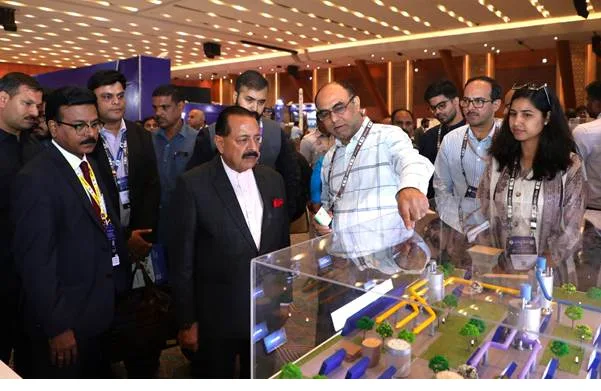
Speaking during a visit to the Emerging Science, Technology and Innovation Conclave (ESTIC) 2026 at Bharat Mandapam in New Delhi, Singh emphasised the importance of connecting research institutions and technology developers with established businesses capable of taking promising innovations beyond the laboratory.
The Minister of State (Independent Charge) for Science and Technology said India's expanding innovation ecosystem offered significant opportunities for startups to collaborate with industrial partners, develop practical applications and scale up their products and technologies.
He urged industry leaders, investors, scientific institutions and entrepreneurs to take advantage of these opportunities and work together to strengthen the country's innovation-led growth.
The three-day conclave, being held from October 27 to 29, has brought together startups, researchers, government departments and technology developers to showcase indigenous innovations and explore opportunities for collaboration.
The exhibition features 50 selected deep-tech startups, 13 departmental stalls and 10 departmental technologies, highlighting developments across emerging and strategically important technological sectors.
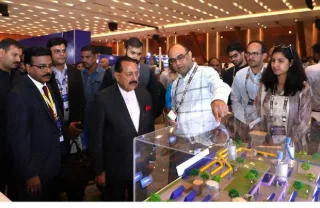
During his visit, Singh examined several innovations with potential applications in electronics, industrial automation, robotics and sustainable materials.
Among the technologies displayed were indigenous solutions suitable for flight controllers, Internet of Things devices, smart equipment and automated industrial systems.
Such technologies could contribute to the development of domestic manufacturing capabilities and reduce reliance on imported components in selected applications.
The exhibition also featured bio-based packaging materials and reusable products designed for specialised applications, reflecting the growing role of scientific research in developing environmentally sustainable alternatives.
Singh said the challenge was not limited to developing new technologies but also involved ensuring that promising innovations found practical applications and reached users.
For this, he stressed the need for sustained cooperation among startups, research institutions, industry and government agencies.
Startups often possess specialised technological capabilities and the flexibility to develop new solutions, while established industries can provide manufacturing infrastructure, investment, distribution networks and access to customers.
Closer collaboration between the two can help bridge the gap between research and commercial deployment.
The Minister encouraged prospective technology adopters to engage directly with innovators at the conclave, identify suitable applications and explore partnerships capable of supporting larger-scale production.
He also called upon investors and industry representatives to support indigenous technology developers in bringing commercially promising products to market.
The government's emphasis on startup-industry collaboration forms part of its broader effort to strengthen India's domestic technological capabilities, particularly in emerging sectors where research, product development and manufacturing require sustained investment.
The approach also reflects the importance of developing technologies that can be adopted by Indian industries rather than remaining confined to research laboratories or demonstration projects.
Singh has repeatedly called for closer coordination between scientific institutions and the private sector, arguing that the economic and social benefits of research depend on its successful translation into practical solutions.
At ESTIC 2026, the range of technologies on display demonstrated the potential for such cooperation across multiple sectors, from industrial electronics and automation to sustainable materials.
The conclave provides a platform for innovators to present their technologies directly to potential investors, manufacturing partners and institutional users.
However, the commercial success of these technologies will depend on further development, investment, market demand and the ability of participating organisations to establish viable partnerships.
No specific new commercial agreements or investment commitments were announced in the account of Singh's exhibition visit.
The Minister linked the push for stronger innovation partnerships to the government's Viksit Bharat 2047 vision, which places technological capability, entrepreneurship and domestic industrial development among the country's long-term priorities.
He said greater cooperation among stakeholders could accelerate technology adoption, strengthen India's scientific and industrial capabilities and create new opportunities for innovation-driven economic growth.
The government's immediate focus, he indicated, is to help promising Indian technologies move beyond research and development by connecting their creators with organisations capable of producing, financing and deploying them at scale.