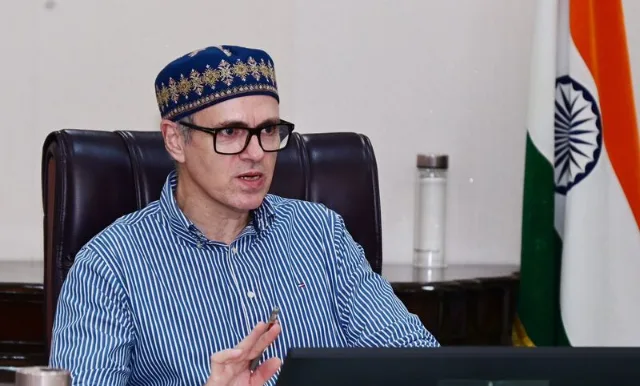

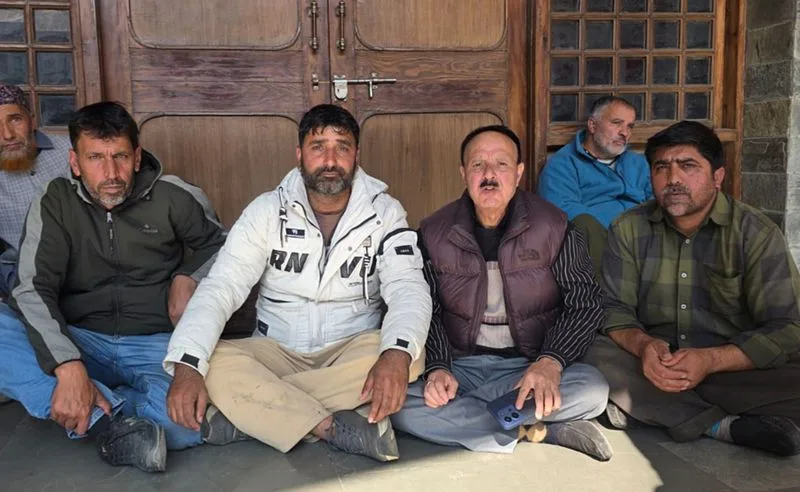
SRINAGAR, Oct. 28: Jammu and Kashmir Chief Minister Omar Abdullah's Cabinet expansion has triggered discontent within the ruling National Conference (NC), with several senior leaders expressing disappointment over their exclusion and party workers staging protests in Srinagar and Anantnag.
The developments have brought internal differences within the party into the open, with senior legislators questioning the criteria for ministerial appointments and representatives from the Pir Panjal region raising concerns over inadequate regional and community representation.
Among those expressing dissatisfaction was senior NC leader and MLA Abdul Majeed Larmi, who became emotional while speaking about his exclusion from the Council of Ministers.
Larmi said he had been informed that his name was under consideration for a ministerial position and believed his seniority and political experience justified his inclusion. However, he claimed that a senior party leader subsequently informed him that his name had been removed from the list.
He also questioned the decision to induct Altaf Ahmad Wani, popularly known as Altaf Kaloo, arguing that the newly appointed minister was junior to him in the party.
Despite his disappointment, Larmi ruled out leaving the National Conference and said he would work to calm his supporters.
"I will pacify my supporters because I am a soldier of the party. My workers had hopes and expectations, and I am not happy with the decision taken by the leadership regarding South Kashmir," he said.
His supporters staged a demonstration at the Government Housing Colony in Khanabal, Anantnag, accusing the party leadership of failing to honour an alleged assurance that Larmi would be included in the Cabinet.
The protesters also demanded the removal of Chief Minister's Advisor Nasir Aslam Wani.
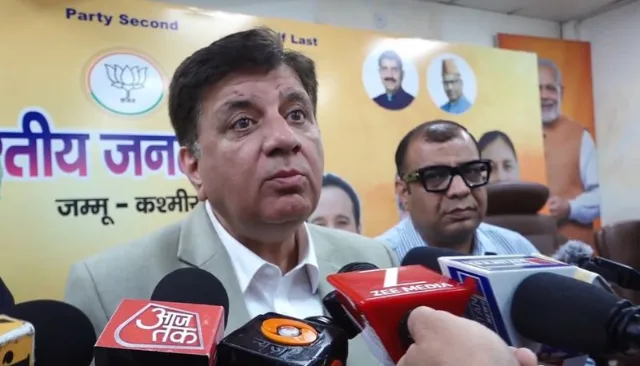
Discontent was also visible at the National Conference headquarters, Nawa-e-Subh, in Srinagar, where supporters of six-time legislator Mubarak Gul protested against his exclusion.
The demonstrators questioned why Gul, one of the party's senior leaders, had not been considered for a ministerial position or the post of Assembly Speaker.
Some supporters demanded that he resign from the National Conference, arguing that his long political career and electoral record deserved greater recognition.
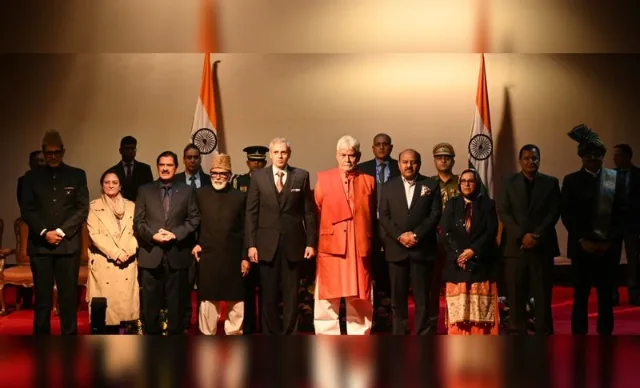
Gul himself expressed disappointment ahead of the swearing-in ceremony at Lok Bhavan, telling reporters that he had witnessed numerous oath-taking ceremonies during his political career but had repeatedly been overlooked.
In an apparent effort to address the situation, the National Conference appointed Gul as its general secretary, replacing Ali Muhammad Sagar, who was inducted into the Council of Ministers.
However, Gul had not immediately accepted the organisational position, leaving uncertainty over whether the appointment would resolve the dissatisfaction among his supporters.
National Conference spokesperson Imran Nabi Dar acknowledged the disappointment among party workers but expressed confidence that the matter would be settled.
Dar described Gul's appointment as an important organisational responsibility entrusted to him by party president Farooq Abdullah.
He said the party recognised Gul's seniority and political contributions and expected him to assume his new responsibilities after consultations with his supporters and family.
Another senior leader, Nazir Ahmad Khan, popularly known as Gurezi, stayed away from the Cabinet swearing-in ceremony after being excluded from the ministerial appointments.
Gurezi had been among the prominent contenders for a Cabinet berth.
Following the ceremony, newly inducted ministers Mir Saifullah and Altaf Kaloo visited Gurezi at his Tulsi Bagh residence in Srinagar, accompanied by other legislators.
The visit was understood to be an attempt to address his concerns and persuade him to accept the leadership's decision.
The Cabinet expansion has also generated criticism from legislators representing the Pir Panjal region, particularly Rajouri and Poonch districts.
Thanamandi MLA Muzaffar Iqbal said the exclusion of representatives from the region and the Pahari community had caused considerable resentment.
"People in Rajouri and Poonch are very angry. It has created lot of resentment among the people of Pir Panjal," Iqbal said.
He argued that the expansion had created additional political difficulties rather than resolving concerns over representation.
According to Iqbal, legislators from the region met following the Cabinet expansion to discuss the situation and consider their response.
He said any further decision would be taken after consulting constituents and party workers, emphasising that elected representatives remained accountable to the people who had supported them.
The concerns raised by Pir Panjal legislators have added a regional dimension to the dissatisfaction surrounding the Cabinet reshuffle.
While individual leaders have questioned their exclusion on grounds of seniority and experience, representatives from Rajouri and Poonch have focused on the absence of ministerial representation for their region and the Pahari community.
The developments present an organisational challenge for the National Conference as it seeks to accommodate competing expectations within its legislative ranks.
Cabinet positions are limited, and decisions on ministerial appointments frequently involve considerations of political experience, regional representation and party priorities.
However, the public protests and statements by senior leaders indicate that the latest expansion has not satisfied all sections of the party.
Deputy Chief Minister Surinder Kumar Choudhary sought to play down reports of internal resentment, describing the differences as a family matter.
He maintained that there was no serious discontent within the National Conference and urged that the newly inducted ministers be given time to perform their responsibilities.
Choudhary also accused sections of the media of exaggerating the situation.
The party leadership has so far sought to address the dissatisfaction through organisational appointments and direct engagement with leaders who were left out.
Larmi has publicly reaffirmed his loyalty to the National Conference, while efforts are underway to persuade Gurezi and Gul to accept the leadership's decisions.
Nevertheless, the reactions to the Cabinet expansion have exposed differences over seniority, political recognition and regional representation within the ruling party.
Whether these disagreements remain limited to expressions of disappointment or develop into a wider organisational dispute will depend on how the National Conference leadership responds to the concerns raised by its senior legislators and their supporters.