

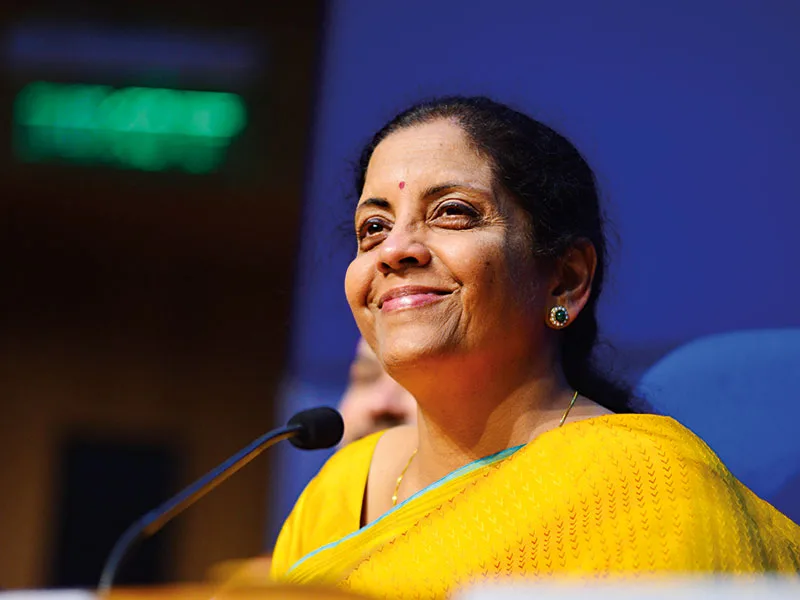
NEW DELHI, Oct. 28: Union Finance Minister Nirmala Sitharaman on Wednesday strongly criticised Congress leader Rahul Gandhi over his allegations concerning the ongoing leadership dispute within the Tata Group, accusing him of politicising a corporate disagreement and attempting to create distrust among India's business community.
The exchange followed Gandhi's claim that the Tata Group was being "criminally destroyed" amid an escalating boardroom dispute over the reappointment of N Chandrasekaran as chairman of Tata Sons, the holding company of the diversified conglomerate.
In a post on X, Gandhi accused Prime Minister Narendra Modi and Union Home Minister Amit Shah of treating Indian businesses as instruments of political influence. He also questioned why prominent business leaders had remained silent over the developments within the Tata Group.
The Leader of the Opposition alleged that business leaders were reluctant to speak out and warned that their silence could leave them vulnerable to similar pressures.
"Tata is being criminally destroyed, and no business leader dares say a word," Gandhi wrote, before accusing the country's political leadership of interfering in corporate affairs.
His remarks came as differences within the Tata Group's leadership intensified over the validity of a board resolution concerning Chandrasekaran's continuation as chairman.
Responding to Gandhi's allegations, Sitharaman rejected his characterisation of the dispute and questioned the basis for describing commercial and legal matters as criminal acts.
"Being the LoP @RahulGandhi, I suggest you refrain from politicising every issue," the Finance Minister wrote on X.
She said that casually labelling commercial disagreements as criminal was unacceptable and accused Gandhi of repeatedly criticising the achievements of Indian industry and entrepreneurs.
Sitharaman further alleged that the Congress leader was encouraging business executives to participate in a political campaign built around suspicion and distrust.
The Finance Minister also defended the Modi government's economic policies, arguing that the administration regarded private enterprise as an important source of investment, employment and economic growth.
She contrasted the government's approach with the economic policies followed during earlier Congress administrations, accusing the party of restricting entrepreneurship through the licence-quota system.
According to Sitharaman, successive Congress governments had constrained private enterprise through excessive controls and regulatory restrictions.
Her remarks formed part of a broader political response to Gandhi's allegations, rather than a direct explanation of the legal issues surrounding the Tata Sons board decision.
Sitharaman also invoked the constitutional role of the judiciary, arguing that disputes involving legal rights and allegations of wrongdoing should be addressed through established institutions.
"The Constitution of India ensures justice to all its citizens," she said, emphasising that courts were responsible for upholding legal protections.
She also accused Gandhi and the Congress of having previously undermined the judiciary, an allegation she did not substantiate in the exchange.
Concluding her response, the Finance Minister urged Gandhi to stop seeing "ghosts everywhere", dismissing his suggestion that the Tata dispute demonstrated wider political interference in Indian business.
The political confrontation follows a fresh disagreement within Tata Sons over a September 17 board resolution concerning Chandrasekaran's reappointment for another five-year term.
On Monday, Tata Trusts chairman Noel Tata challenged the resolution in a communication addressed to Tata Sons company secretary Suprakash Mukhopadhyay.
Noel Tata reportedly argued that the resolution was invalid because the proposed reappointment had not been included in the meeting's agenda and had been considered outside the appropriate procedure.
The disagreement centres on whether the board followed the required process when considering Chandrasekaran's continuation as chairman.
During the September meeting, Tata Trusts vice-chairman Venu Srinivasan and three other Tata Sons directors supported Chandrasekaran's reappointment, while Noel Tata opposed it.
The presiding chairman's casting vote was subsequently used to secure the decision, intensifying differences within the group's leadership.
The challenge has brought questions of corporate governance, board procedure and decision-making authority into public view.
Tata Sons occupies a central position within the Tata Group, overseeing a wide range of businesses operating in sectors including information technology, automobiles, steel, consumer products and aviation.
A dispute over the leadership of its holding company therefore carries significance for the group's governance and long-term management.
However, the existence of a disagreement over board procedures does not, by itself, establish criminal misconduct or political interference.
Gandhi has presented the controversy as evidence of a wider problem involving the relationship between political power and Indian business. Sitharaman has rejected that interpretation and characterised his intervention as an attempt to politicise a commercial dispute.
Neither position constitutes a judicial finding concerning the validity of the board resolution or the conduct of those involved.
The immediate corporate question remains whether Chandrasekaran's reappointment complied with the applicable governance procedures and whether Noel Tata's objections will result in further internal or legal proceedings.
The public exchange between Gandhi and Sitharaman has added a political dimension to that dispute, bringing the Tata Group's internal governance disagreements into a broader debate over corporate independence and the government's relationship with private industry.