LEH, Sept. 28
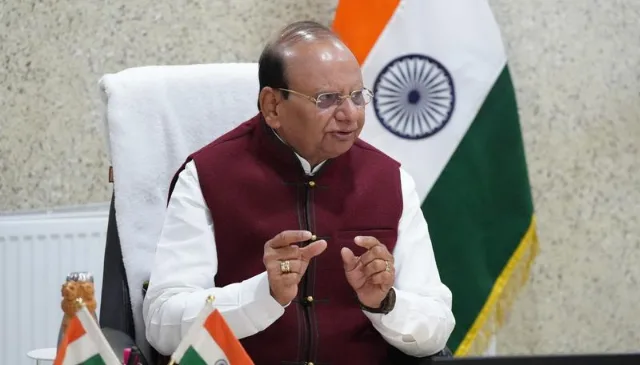
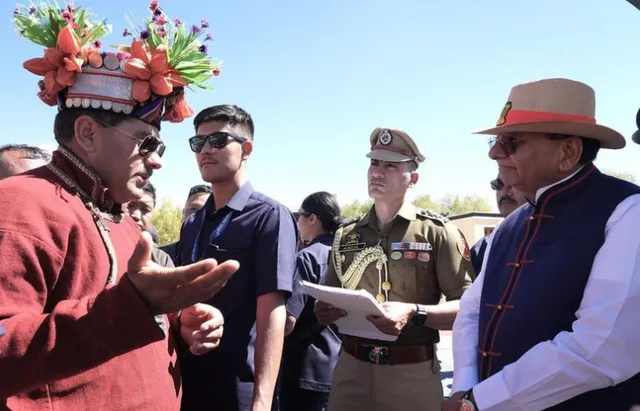
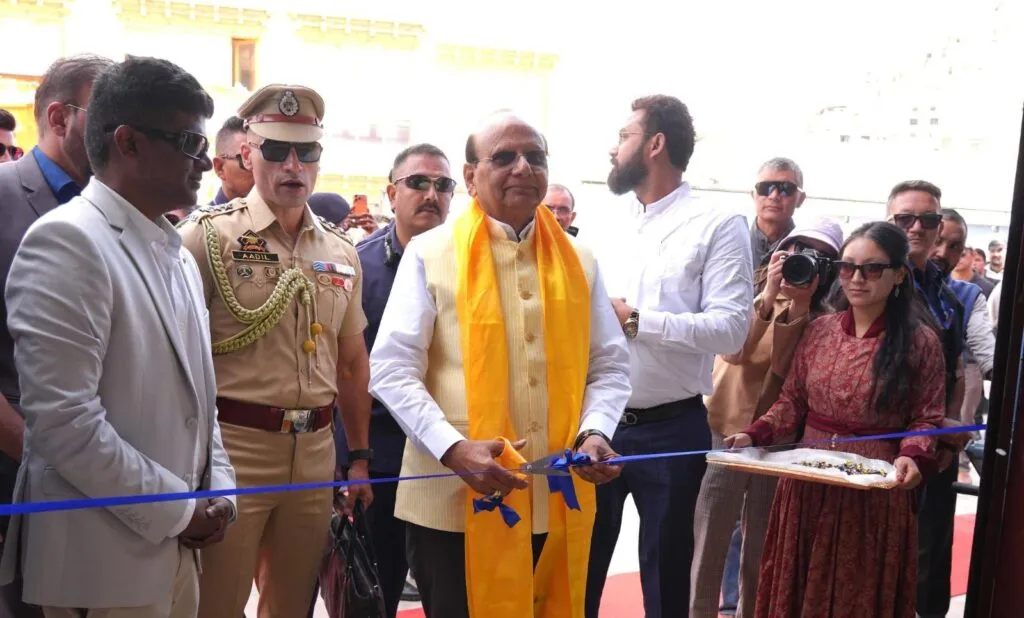
Ladakh Lieutenant Governor Vinai Kumar Saxena on Monday inaugurated the Union Territory’s first three-tier stacked parking facility in Leh and flagged off an electric vehicle demonstration rally, combining efforts to ease pressure on limited urban space with a broader push towards cleaner transport.
The multi-level facility at the District Motor Garage can accommodate 30 vehicles and has been designed to increase parking capacity without requiring a large urban footprint. The administration sees stacked parking as one possible response to growing vehicle numbers and tourist traffic in Leh, where available land is limited.
Saxena also distributed subsidy cheques to people who had purchased electric cars under the Ladakh Electric Vehicle and Allied Infrastructure Policy.
The policy provides incentives for EV adoption, including an Early Bird Incentive offering a subsidy of up to 20 per cent, subject to specified limits. Electric car buyers can receive assistance of up to ₹5 lakh under the scheme.
The inauguration brought together two issues that are becoming increasingly important for Leh: managing growing pressure on urban infrastructure and limiting the environmental effects of rising vehicular movement.
Ladakh’s tourism economy brings substantial seasonal traffic into Leh, adding to local demand for parking and road space. Conventional expansion of parking areas can be difficult in a high-altitude town where land is scarce and competing requirements for urban space are increasing.
The three-tier system seeks to address that constraint vertically. By stacking vehicles at different levels, the facility can accommodate more cars within the same ground area than a conventional surface parking lot.
Saxena said infrastructure planning in Ladakh needed to respond to the region’s particular geographic and environmental conditions rather than simply replicate solutions used elsewhere.
The Union Territory’s high altitude, difficult terrain, severe winters and fragile ecology create different requirements for transport and infrastructure, while growing tourism increases pressure on existing facilities.
“Ladakh’s development cannot mean simply creating more infrastructure. We have to create better infrastructure and adopt cleaner technologies that are suited to our geography and environment,” Saxena said.
The administration is applying a similar approach to electric mobility.
Alongside the parking inauguration, Saxena flagged off an Electric Vehicle Demonstration Rally intended to assess how electric cars perform under Ladakh’s high-altitude and challenging terrain.
JSW MG Motor India, Hyundai Motor India, Kia India and Mahindra & Mahindra are participating in the demonstration with electric vehicles.
The exercise is significant because operating conditions in Ladakh differ considerably from those in most Indian cities.
Altitude, low temperatures, steep gradients and long distances between settlements can affect vehicle performance and place different demands on batteries and charging infrastructure. The demonstration is intended to provide practical information about the suitability and performance of EVs under those conditions.
The administration did not present the rally as proof that all electric vehicles are already suited to every part of Ladakh. Instead, the exercise is designed to assess their performance in the region’s distinctive operating environment.
That evaluation is relevant as the administration seeks wider adoption under its EV policy.
Financial incentives can reduce the initial cost of purchasing an electric vehicle, but adoption in Ladakh will also depend on whether vehicles can perform reliably across its terrain and climate and whether adequate charging infrastructure is available.
The demonstration involving four major vehicle manufacturers provides an opportunity to test some of those questions under local conditions.
Cleaner transport has particular relevance for Ladakh because of the tension between tourism-led economic activity and environmental protection.
Road travel is central to both daily mobility and the tourism economy. As visitor numbers and vehicle movements increase, so do concerns over congestion, air pollution and carbon emissions.
Saxena said economic growth associated with tourism and increased mobility should not come at the expense of Ladakh’s environment.
The administration’s EV policy seeks to reduce some of those pressures by encouraging a gradual shift towards electric transport.
The subsidy programme is one part of that strategy. By offering financial assistance to early adopters, the administration is seeking to narrow the price difference between conventional and electric vehicles and encourage residents to consider cleaner alternatives.
The latest event also illustrates how Ladakh’s infrastructure requirements are increasingly being considered alongside environmental constraints.
Parking and electric mobility address different problems, but both are linked to the growth of vehicular traffic. Stacked parking attempts to reduce the amount of urban land required to accommodate vehicles, while EV adoption is intended to reduce the pollution associated with their operation.
Neither measure by itself resolves Leh’s wider transport challenges.
A 30-vehicle parking facility is limited in scale, while the transition to electric mobility will depend on infrastructure, vehicle availability, consumer acceptance and performance under Ladakh’s conditions.
The projects nevertheless provide practical tests of approaches that could be expanded if they prove suitable.
For the stacked parking system, the immediate question will be whether it can provide an efficient model for other congested locations where conventional parking space is difficult to create.
For electric vehicles, the demonstration rally will provide information on how available models respond to the altitude, terrain and climate that distinguish Ladakh from most other Indian markets.
The administration’s broader objective is to accommodate rising tourism and mobility without allowing infrastructure expansion to place unsustainable pressure on the region’s limited land and fragile ecology.
As Saxena put it, the challenge is not simply to build more, but to determine what kind of infrastructure and technology is appropriate for Ladakh.