By Bharat Nanda
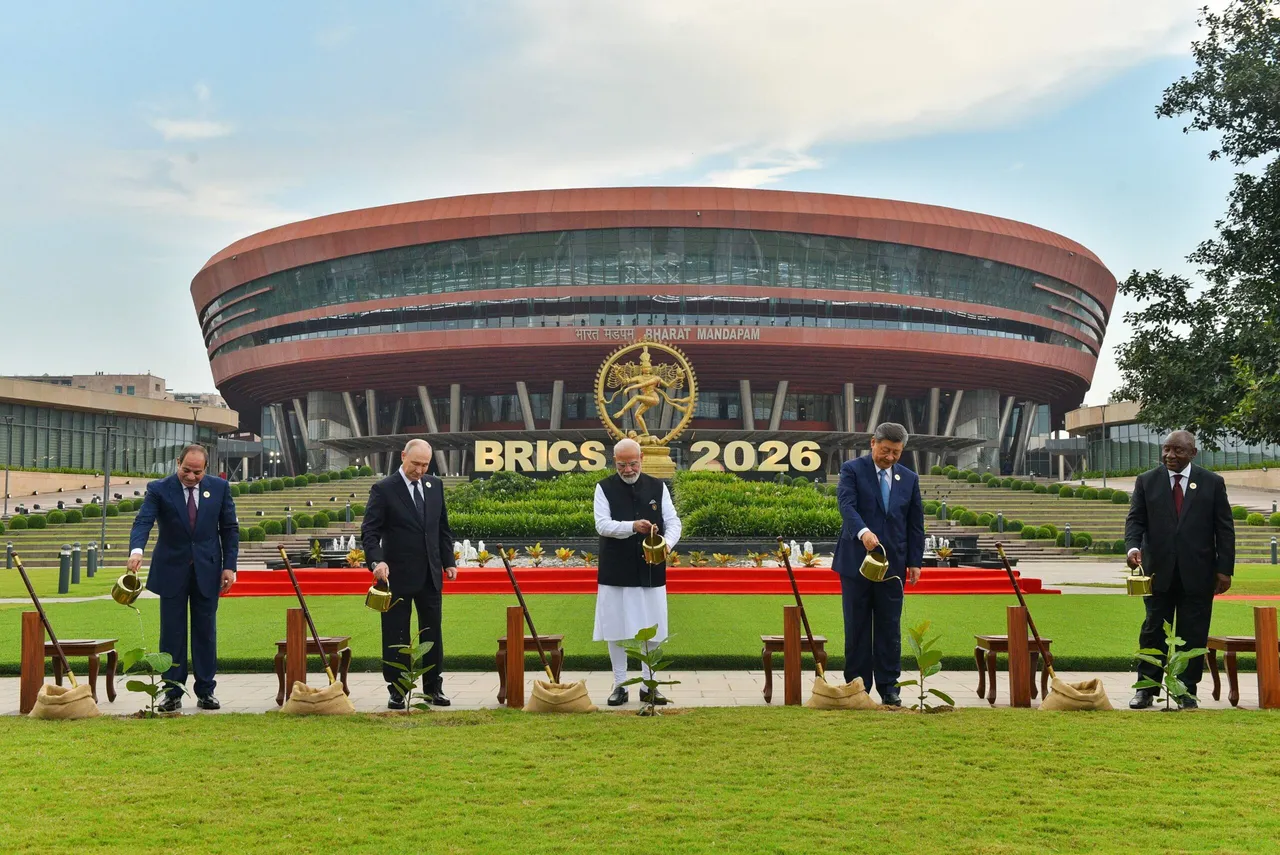
The BRICS Summit is over. President Xi Jinping has returned to Beijing, the photographs have been taken and the carefully worded statements from both sides have been issued.
This is perhaps a better time to ask whether India and China are really witnessing a thaw.
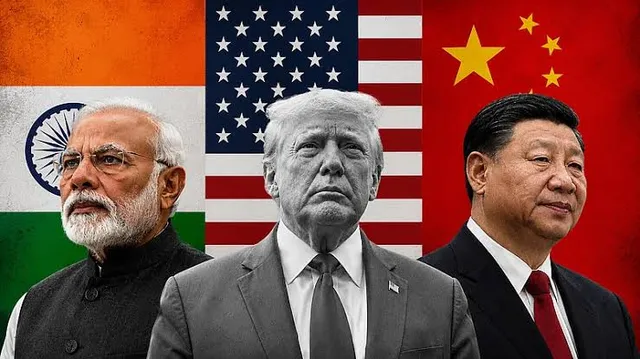
There is certainly a change in atmosphere. Xi came to India for the first time since 2019. Prime Minister Narendra Modi and Xi held bilateral talks. Both countries spoke about improving trade, transport links and people-to-people exchanges. China described India and China as partners rather than rivals. Military and diplomatic mechanisms that had slowed considerably after Galwan are working again.
All this is useful.
But we should not confuse renewed engagement with strategic change.
The more important question is not whether Xi came to Delhi or whether Modi and Xi shook hands. It is whether China’s behaviour on issues that matter to India has materially changed.
So far, the evidence is far less convincing.
- The Border Crisis Changed India-China Relations. The Summit Did Not Change the Border.
For nearly three decades, India and China lived with an arrangement that was uncomfortable but workable.
The boundary remained disputed while trade expanded. Political leaders met regularly. Both countries worked together in BRICS and other international forums. The assumption was that the border could be managed separately while the rest of the relationship developed.
Galwan ended that assumption.
The June 2020 clash killed 20 Indian soldiers and at least four Chinese soldiers. But its strategic effect went beyond the casualties.
Thousands of troops moved towards the LAC. Armour, artillery, air defence and supporting military systems followed. Political trust collapsed.
India subsequently took the correct position that normal relations could not be separated from peace along the border.
The October 2024 agreement on Depsang and Demchok was an important step. It allowed patrolling arrangements to resume and created the political space for wider engagement.
But India must remain clear about what has happened since.
There has been disengagement at friction points. That does not mean the military situation has returned to what existed before 2020.
The infrastructure on both sides has changed significantly.
China has continued building roads, bridges, airfields, logistics facilities and military infrastructure across Tibet and Xinjiang. India has accelerated construction on its side as well.
Both militaries can now move forces towards the frontier faster than they could before Galwan.
The border may therefore be calmer, but it is also more militarily prepared.
The events immediately before the BRICS Summit should reinforce this caution.
On September 6 and 7, senior Indian and Chinese military commanders met in the eastern sector following reports of tensions around Taksing in Arunachal Pradesh’s Upper Subansiri district.
There have been local claims of Chinese intrusion. These remain contested, and the Arunachal Pradesh Governor’s office has specifically clarified that it did not acknowledge any fresh intrusion.
That distinction is important. India should neither exaggerate what cannot be established nor ignore what the military dialogue tells us.
The fact that Corps Commander-level talks were required in Arunachal Pradesh days before Xi arrived in Delhi tells its own story.
The border problem has not gone away.
China continues to claim Arunachal Pradesh. India continues to claim Aksai Chin. The LAC remains undemarcated. Large military deployments remain. There has been no boundary settlement and no major Chinese concession on the territorial dispute.
This is why Xi’s visit should be seen for what it was: an important diplomatic engagement, not evidence that the strategic competition has ended.
Talking is useful.
But talking is not conceding.
And managing a dispute is not resolving it. - The Harder Reality Is Economic — and India Cannot Wait for China to Fix It
If the border shows the military imbalance India must manage, trade reveals another weakness that may prove just as important over the long term.
India’s trade deficit with China reached $112.16 billion in FY2025-26.
India exported $19.47 billion worth of goods to China while importing $131.63 billion.
The deficit was $99.21 billion only a year earlier.
These numbers should worry Delhi more than the warmth of any summit meeting should reassure it.
The problem is not simply that India buys too much from China.
It is what India buys.
Electronics. Machinery. Electrical equipment. Pharmaceutical ingredients. Solar components. Chemicals. Industrial equipment and intermediate goods.
Many Indian factories themselves depend upon Chinese inputs.
This creates a strategic contradiction.
India wants to emerge as an alternative manufacturing centre to China while important parts of Indian manufacturing continue to depend on Chinese industry.
This cannot continue indefinitely without consequences.
India is right to press China for better market access and fairer trading conditions. Modi raised the structural trade imbalance during his meeting with Xi.
But we should be realistic.
China is unlikely to restructure its economic relationship with India out of goodwill.
Nor should India’s industrial strategy depend on Beijing doing so.
China will protect Chinese interests.
India must build Indian strength.
That means manufacturing much more of what we currently import.
This cannot be achieved by slogans or import bans.
China’s manufacturing strength was built over decades. It rests on ports, power, roads, industrial clusters, skilled workers, supplier networks, engineering capacity, finance and enormous scale.
India needs to build the same depth.
Production-linked incentives have helped in some sectors, but incentives alone cannot create an industrial power.
India needs cheaper logistics, dependable power, faster ports, predictable regulation, deeper research and development, stronger technical education and a much larger ecosystem of small and medium component manufacturers.
We also need to choose our dependencies carefully.
Not every Chinese import is a strategic vulnerability.
If an affordable Chinese machine helps an Indian company manufacture more competitively, importing it may serve India’s interests.
But dependence on China for critical electronics, telecommunications systems, strategic minerals, defence components, energy technologies or other sensitive supply chains is different.
India therefore needs a far more disciplined approach.
Import where it makes us competitive.
Diversify where concentration creates risk.
Manufacture at home where we can build scale.
And build sovereign capability where national security demands it.
The government has already identified tens of billions of dollars in critical imports for localisation. That effort now needs urgency and continuity.
The China challenge will not be solved only at the LAC.
Part of it will be solved in factories in Gujarat, Tamil Nadu, Maharashtra, Karnataka, Uttar Pradesh and elsewhere.
A stronger Indian manufacturing base will ultimately give Delhi more leverage with Beijing than another decade of complaints about the trade deficit. - India Should Use the Thaw to Build Strength
India should not respond to China with permanent hostility.
That would be poor strategy.
China is our largest neighbour, a major economic power, a permanent member of the UN Security Council and an increasingly important military power across Asia. India and China will have to deal with each other regardless of whether the relationship is warm or cold.
The objective should therefore be stability without complacency.
Keep talking.
Keep military channels open.
Restore trade and travel where they benefit India.
Work with China in BRICS where Indian and Chinese interests overlap.
Seek a fair boundary settlement.
But do not build Indian strategy around the expectation that China will eventually become more accommodating.
Build it around Indian capability.
India needs time, and the present period of relative stability can give us that time.
Time to grow our economy.
Time to build industrial capacity.
Time to modernise our armed forces.
Time to strengthen the defence-industrial base.
Time to improve roads, tunnels, airfields and logistics along the northern frontier.
Time to develop greater capability in drones, electronic warfare, cyber, space, surveillance, missiles and air defence.
And time to strengthen India’s position in the Indian Ocean.
The maritime dimension deserves far greater attention.
China’s economic dependence on the Indian Ocean is enormous. Its energy routes cross these waters and the PLA Navy is gradually acquiring the ability to operate farther from the Chinese mainland.
India cannot stop that process by objecting to it.
We have to remain the strongest resident maritime power in our own strategic neighbourhood.
That means submarines, surface ships, maritime aircraft, drones, satellites, island infrastructure and partnerships with countries whose interests overlap with ours.
The Quad should continue for precisely this reason.
India should not treat the Quad as an anti-China alliance. Nor should it weaken the Quad simply because relations with Beijing improve.
The Quad serves Indian interests independently of the temperature of India-China relations.
The same logic should guide our relationship with the United States, Russia, France, Japan, Australia and the countries of Southeast Asia.
Strategic autonomy does not mean maintaining equal distance from everybody.
It means India deciding its relationships according to Indian interests.
There is also a deeper requirement.
India needs to understand China much better.
We need more Mandarin-speaking researchers, diplomats, military officers, economists and China specialists. Too much of what Indians know about China still reaches us through Western writing.
Indian institutions should be reading Chinese military journals, economic documents, provincial plans, political debates and strategic literature directly.
Understanding an adversary is not sympathy.
It is preparation.
The same applies to Pakistan.
China’s military relationship with Pakistan remains a serious concern. But India should avoid simplistic assumptions about an inevitable two-front war.
The challenge may be more complex.
During a future India-Pakistan crisis, Chinese support could take the form of intelligence, satellite information, weapons replenishment, cyber activity, diplomatic support or military signalling along the LAC without China formally entering the conflict.
India must prepare for that spectrum rather than only for the most dramatic scenario.
This is where the present improvement in relations can actually serve us.
It can reduce immediate pressure while India builds the capacity required for the next twenty years.
That, in my view, is how Delhi should judge the present thaw.
Not by the number of bilateral meetings.
Not by photographs from BRICS.
And not by phrases such as “partners, not rivals”.
Watch behaviour.
Do Chinese deployments along the LAC reduce?
Does the situation in Arunachal stabilise?
Does China stop using territorial claims as political pressure?
Does India’s trade deficit begin to narrow?
Does Indian dependence on critical Chinese imports decline?
How does Beijing behave during the next India-Pakistan crisis?
Does China’s military presence in the Indian Ocean continue to grow?
Those are harder indicators of change.
As of today, I see evidence of a diplomatic reset, but not enough evidence of a strategic Chinese recalibration towards India.
That distinction should guide Indian policy.
There is no harm in welcoming Xi Jinping to Delhi. There is considerable value in Modi and Xi speaking regularly. Stable relations between India and China are preferable to confrontation.
But India should not wait for Chinese kindness or concessions.
China has spent decades building national power. India must do the same.
If this thaw gives India ten relatively stable years in which to expand manufacturing, modernise the military, strengthen the Himalayas, dominate its maritime approaches and reduce strategic dependence on China, then it will have served an important Indian purpose.
Perhaps that is the real opportunity before us.
Do not mistake the thaw for the destination. Use it as time to build the India that China will have no choice but to take seriously.