SRINAGAR, Sept. 28
Four Kashmiri mountaineers have completed what they believe is the first recorded ascent of the 4,261-metre Kreplin Peak, opening a previously undocumented climbing route along its Northeast Face after a two-day expedition from the Pahalgam area.
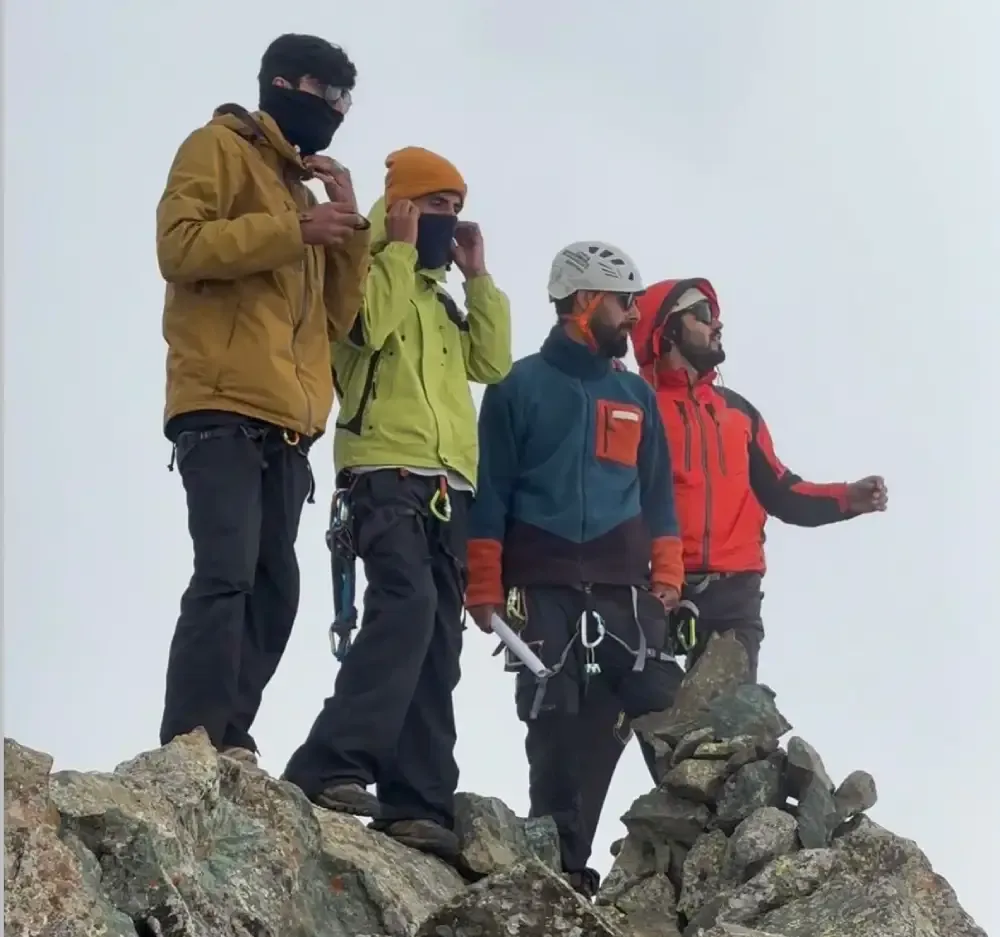
The team of Saqib Ayub, Aazib Manzoor, Muzamil Ahmad Wani and Vakeel Yousuf reached the summit at about 1:30 pm on September 13 after negotiating steep terrain, loose rock, exposed sections and repeated route-finding challenges. All four climbers are aged between 25 and 30.
Yousuf and Wani jointly led the expedition, with Furhan Bilal and Owais Ashraf Shah providing backup support.
The climbers describe their achievement as the first recorded ascent rather than an independently certified first ascent. Before attempting the mountain, they examined old mountaineering records, books, Himalayan journals and other available documentation but said they found no record of an earlier summit of Kreplin Peak or an established climbing route on its Northeast Face.
“Our research did not reveal any documented record of a previous ascent of Kreplin Peak or an established route on its Northeast Face,” the team said.
The expedition began on September 12 from Lalan, a small hamlet in Batkote near Pahalgam at an altitude of about 2,000 metres.
Setting out at around 11:30 am, the climbers travelled in alpine style, carrying between 25 and 30 kilograms of equipment each. They covered nearly 10 kilometres on their approach, passing through Puhir Pajan before reaching Kamalnar Base Camp at about 3,200 metres around 7 pm.
“The Alpine-style approach required us to rely heavily on teamwork while also maintaining individual independence during the ascent,” the climbers said.
The group had intended to establish an advanced camp closer to the mountain but abandoned the plan after failing to find a reliable water source at the proposed site.
Instead, they spent the night in a nomadic mud house, gathering wood nearby to keep themselves warm as cold conditions and strong winds moved through the area.
At about 5 am on September 13, the four climbers began their summit attempt.
Unlike established Himalayan routes where climbers can follow previously mapped lines, the team said it had no documented route to guide its ascent of the Northeast Face. That required the mountaineers to make continuous decisions about terrain and direction as they climbed.
The face presented a mixture of steep elevation gains, loose rock and exposed ground. Rockfall posed an additional hazard, requiring the group to repeatedly assess the mountain before choosing its next line.
Progress was not direct.
The climbers crossed at least two major massifs, at times gaining between 100 and 150 metres in elevation before having to descend and climb again towards the next section.
They also went off route several times before eventually identifying a way towards the final ridge.
After more than eight hours of climbing from their overnight shelter, Ayub, Manzoor, Wani and Yousuf reached the 4,261-metre summit at approximately 1:30 pm.
Beyond reaching the top, the climbers sought to document the mountain in greater detail. They recorded information about the approach, terrain, climbing conditions and the line followed across the Northeast Face, hoping to leave a usable account for mountaineers who may attempt the peak in the future.
That documentation is particularly relevant to their claim of a first recorded ascent. Without evidence of an earlier documented climb in the records they examined, the team hopes its account can establish a reference point for subsequent exploration of the mountain.
For two members of the expedition, the climb also had a longstanding personal connection.
Yousuf grew up seeing Kreplin Peak from his home and had wanted to climb it since childhood. He later discussed the mountain with Wani, turning an individual ambition into a shared mountaineering objective.
Wani said the peak can be seen from Anantnag, Awantipora and Pulwama. For years, the two had looked towards the mountain and considered how it might be climbed before eventually organising the September expedition.
Reaching the summit was therefore more than another entry in their climbing records. The mountaineers described the moment at the top as emotional, marked by tranquillity and the satisfaction of completing a goal they had pursued for years.
All four had previously climbed other peaks, but the team said Kreplin was particularly significant because of their personal connection with the mountain and the exploratory character of the route.
The expedition also forms part of a wider effort by the climbers to explore lesser-known mountains in Kashmir and build a stronger record of routes that have received relatively little attention from organised mountaineering.
The team hopes documenting such ascents will encourage more young Kashmiris to take up mountaineering, trekking and other outdoor activities while increasing interest in the region’s lesser-known mountain terrain.
Wani also pointed to the growing participation of Kashmiri women in mountaineering, citing Nahida Manzoor, the first woman from the Kashmir Valley to climb Mount Everest.
For the Kreplin team, the September ascent was as much an exercise in exploration as reaching a summit. With no established line to follow on the Northeast Face, the four climbers had to find their own way across the mountain and leave behind the first detailed account of the route they believe has been recorded.