WASHINGTON, Sept. 22
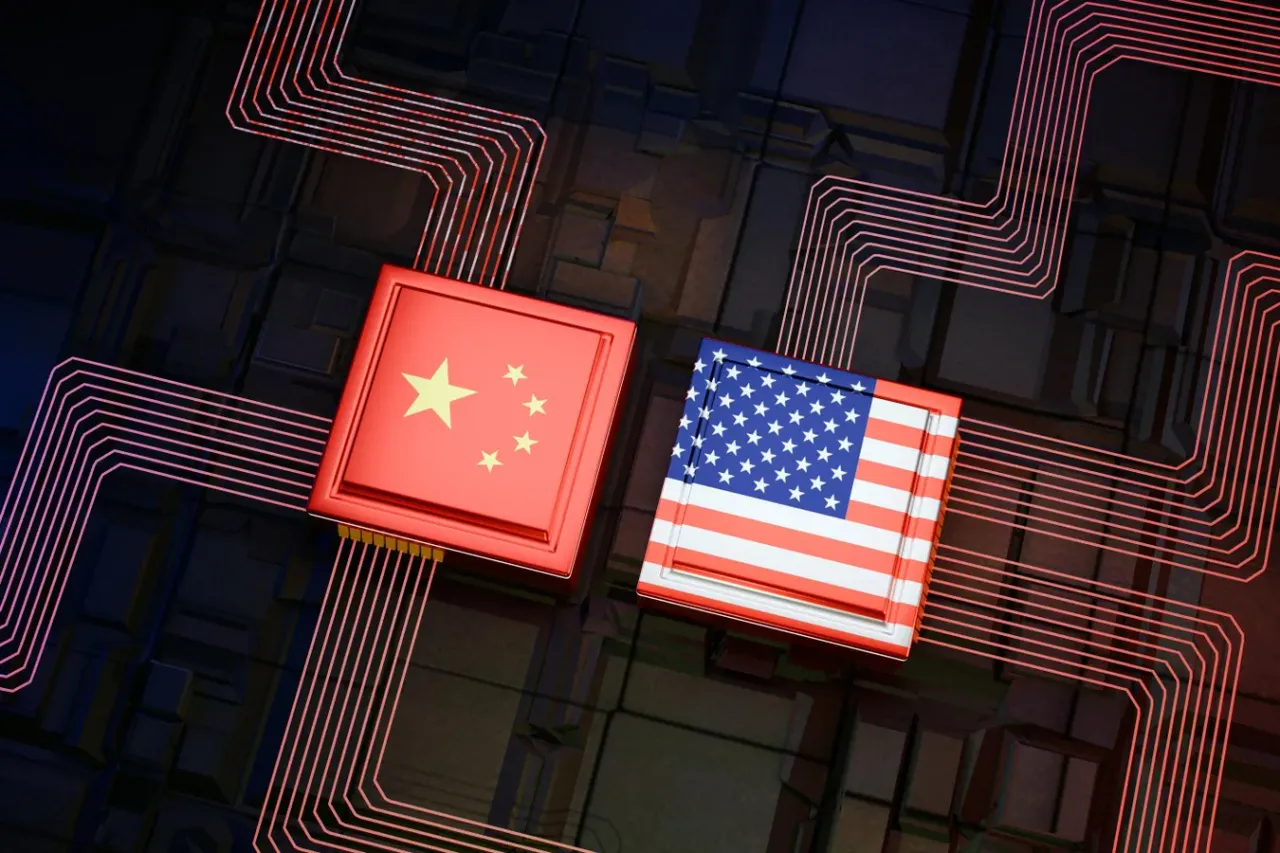
American and Chinese investors continue to put substantial sums into each other’s technology sectors even as Washington and Beijing build increasingly separate artificial intelligence supply chains, creating a financial interdependence that sits uneasily alongside their widening strategic rivalry.
The cross-border investment remains significant ahead of a meeting between US President Donald Trump and Chinese President Xi Jinping in Washington this week, where artificial intelligence is expected to figure in discussions between the two leaders.
Wall Street banks have served as bookrunners on 19 Chinese high-technology equity deals worth $17.2 billion so far this year, according to LSEG data cited by Reuters. Those transactions represent nearly 30 per cent of equity issuance in the sector.
Money is also moving in the opposite direction. US equities, particularly semiconductor stocks, remain a major destination for Chinese investment. The value of American shares held by investors in mainland China and Hong Kong has risen 23 per cent over the past year to more than $750 billion, according to US data.
The investment flows reveal a striking gap between government policy and financial behaviour. Washington has spent years tightening restrictions on China’s access to advanced semiconductors and chip-making technology while limiting US investment in sensitive Chinese AI-related sectors. Beijing, meanwhile, has made technological self-reliance a central objective as it seeks to reduce dependence on American technology.
Yet capital continues to cross the divide.
The restrictions on US investment contain exemptions for publicly traded securities, allowing Wall Street institutions to remain involved in China’s expanding technology listings. US banks have advised on more than a dozen AI and semiconductor listings and follow-on share sales this year, according to LSEG.
Among the largest was optical-component manufacturer Zhongji Innolight’s $6.8 billion Hong Kong listing, where Goldman Sachs, Morgan Stanley and Citigroup were joint global coordinators. Goldman Sachs and Morgan Stanley also worked on Hong Kong listings involving AI developer MiniMax and chipmakers Montage Technology and Shanghai Iluvatar CoreX Semiconductor.
JPMorgan, meanwhile, underwrote the roughly $2.6 billion Hong Kong share sale of Victory Giant Technology, a manufacturer of printed circuit boards used in AI servers. US financial institutions also appear in shareholder registers of semiconductor companies traded on Shanghai’s STAR Market, often reflecting investments they hold or manage for clients.
The relationship is not simply one of American money seeking opportunities in China.
US stocks account for nearly half of the one trillion yuan, about $150 billion, managed by China’s outbound mutual funds operating under quotas controlled by the country’s foreign-exchange regulator. Chinese holdings in US semiconductor companies including Micron Technology, AMD, Sandisk, Lam Research and Applied Materials have increased this year, according to data compiled by Sinolink Securities.
Investment linked to China and Hong Kong has also become more visible in US AI financing. The value of American AI funding rounds involving investors based in China or Hong Kong increased from about $436 million in 2023 to roughly $8.9 billion by mid-September this year, according to S&P Global Market Intelligence.
The scale of that exposure does not mean the financial relationship is insulated from the deterioration in wider US-China ties. Some investment is routed through offshore structures, making the true level of Chinese exposure to American technology companies difficult to determine.
Thilo Hanemann, a partner at research firm Rhodium Group, said wealthy Chinese investors continue to invest in US technology companies through offshore funds, but visibility into those structures remains limited.
Political pressure in Washington is also increasing. At least one US lawmaker has criticised JPMorgan Chase and Bank of America over their involvement in the Hong Kong listing of Chinese battery manufacturer Contemporary Amperex Technology Co, which Washington says has links to China’s military.
JPMorgan said it recognised the challenges created by geopolitics and operated within applicable legal, regulatory and risk-management frameworks as Chinese and global companies continued to compete and engage across markets.
Washington has also continued adding Chinese technology companies to lists of businesses it believes support China’s military. The restrictions form part of a wider effort to prevent advanced American technology from strengthening Chinese military and strategic capabilities.
At the same time, the Trump administration is pursuing what it calls the Pax Silica initiative to secure AI-related supply chains, while China is accelerating efforts to develop domestic alternatives to foreign chips and technology.
The two governments may nevertheless be looking for limited areas where the risks created by AI can be managed jointly. US Treasury Secretary Scott Bessent said he and Chinese Vice Premier He Lifeng discussed establishing a US-China dialogue on artificial intelligence this week, including a notification mechanism covering common goals and threats.
For investors, the emerging division of the technology world creates both risk and opportunity. US restrictions can increase pressure on Chinese companies, but they can also encourage Beijing to support domestic semiconductor and AI businesses, creating new investment opportunities inside China.
Fred Hu, founder and chairman of Primavera Capital Group, said US and Chinese companies and investors had continued investing in each other’s markets despite volatile geopolitical conditions. He said the Trump-Xi meeting could bring greater certainty to financial and economic relations.
That financial interdependence provides both countries with an economic interest in preventing their strategic competition from becoming an uncontrolled rupture. It also creates vulnerabilities should political relations deteriorate sharply.
The result is an unusual contradiction at the centre of the AI contest. Governments in Washington and Beijing are preparing for a technological environment in which supply chains, semiconductor ecosystems and strategic technologies are increasingly divided. Investors, for now, are behaving as though opportunities will continue to exist on both sides.
Xile He, the China-born co-founder and chief executive of San Francisco AI start-up BrentX, said investors faced considerable risk in committing themselves entirely to either market.
The political contest may increasingly divide the technology systems of the United States and China. The investment flows show that the financial separation is, at least for now, far less complete.