GUWAHATI, Sept. 30
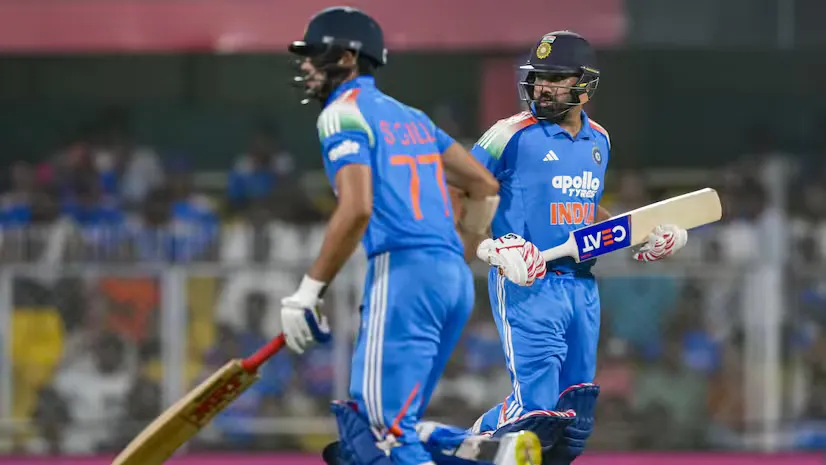
India were set a record target of 406 in the second One-Day International against West Indies in Guwahati on Wednesday after centuries from John Campbell, Shai Hope and Amir Jangoo powered the visitors to 405 for seven, their highest total in the format.
The target left India needing to produce their biggest successful ODI run chase, surpassing the 360 they chased against Australia in Jaipur in 2013.
West Indies made full use of the batting conditions at the Barsapara Cricket Stadium, with Campbell, Hope and Jangoo combining for 319 runs as the visitors crossed 400.
Campbell scored 101 from 68 deliveries, striking nine fours and five sixes. Captain Hope followed with 104 from 94 balls, including eight fours and three sixes.
Jangoo provided the late acceleration with the highest score of the innings, making 114 from 77 deliveries. His innings included 13 fours and three sixes.
The three centuries left India confronting a target substantially beyond anything they have previously chased successfully in ODI cricket.
India’s existing record dates back to October 2013, when Australia scored 359 for five in Jaipur. India responded with 362 for one in just 43.3 overs, winning by nine wickets.
That chase was built around Rohit Sharma’s unbeaten 141, Virat Kohli’s 52-ball century and Shikhar Dhawan’s 95.
A successful chase in Guwahati would require India to go 46 runs beyond that previous record target and complete their first winning pursuit of more than 400 in the format.
India’s next two highest successful ODI chases involved targets of 351.
Against England in Pune in January 2017, India recovered from 63 for four to reach 356 for seven in 48.1 overs. Kohli scored 122 and Kedar Jadhav made 120 as India won by three wickets.
India also successfully chased 351 against Australia in Nagpur in October 2013, reaching 351 for four with three balls remaining to complete a six-wicket victory.
The Guwahati target is also formidable when measured against the history of ODI cricket rather than India’s record alone.
Only a handful of teams have produced second-innings totals approaching or exceeding 400.
South Africa’s 438 for nine against Australia at Johannesburg in 2006 remains the highest successful chase in men’s ODI cricket. Australia had made 434 for four before South Africa reached the target with one wicket and one ball remaining.
Sri Lanka scored 411 for eight while chasing India’s 414 for seven at Rajkot in 2009 but lost by three runs.
West Indies themselves made 389 against England at St George’s in 2019 while batting second, but lost the match.
India’s previous highest second-innings score is 362 for one in the successful Jaipur chase against Australia. They also made 360 for seven against England at Lord’s in July this year, although that effort ended in defeat.
The scale of Wednesday’s challenge was created by an unusual West Indies batting performance in which three players reached three figures in the same innings.
Campbell set the tempo with a rapid hundred, scoring at close to 150 runs per 100 balls.
Hope provided greater stability while maintaining the scoring rate before Jangoo accelerated the innings further, taking West Indies beyond the 400-run mark.
Together, the three accounted for more than three-quarters of the visitors’ total.
India struggled to contain the scoring throughout the innings. Kuldeep Yadav emerged as their most successful bowler, taking two wickets for 65 runs.
West Indies eventually finished on 405 for seven, establishing a new ODI high for the Caribbean side and leaving India with a required scoring rate of 8.12 runs an over from the outset.
The target also changed the nature of the second ODI from a conventional chase into an attempt at a national batting record.
India have produced several successful pursuits above 300, but the difference between their existing record and Wednesday’s requirement is considerable.
Their 362 for one against Australia in Jaipur remains one of the most dominant large chases in ODI history. India reached the target with 39 balls remaining and lost only one wicket.
The circumstances in Guwahati are different. India need 406, requiring them to maintain a scoring rate above eight an over across the full innings unless they can accelerate substantially during particular phases.
No Indian team has previously completed a successful ODI chase at that level.
The match also gives West Indies a substantial opportunity after their three centurions collectively transformed the innings.
Campbell’s aggressive start, Hope’s hundred and Jangoo’s 77-ball 114 ensured India would need to rewrite their own ODI record book to win.
The benchmark is clear: India’s 360-run target against Australia in 2013 remains their highest successful chase. Anything beyond 405 in Guwahati would replace it by a considerable margin and put the innings among the largest successful pursuits in the history of men’s one-day international cricket.