NEW YORK, Sept. 23
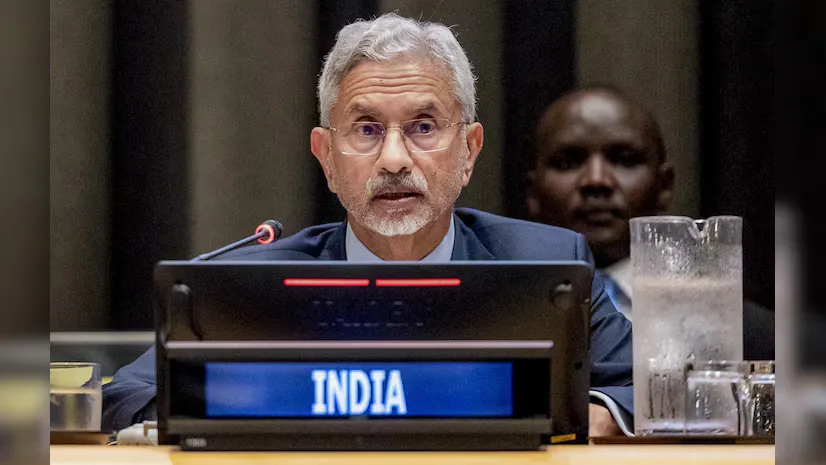
Indian External Affairs Minister S. Jaishankar raised New Delhi’s concerns over a new US sanctions law that gives President Donald Trump authority to impose tariffs of up to 100 per cent on major buyers of Russian oil and gas during talks with US Secretary of State Marco Rubio in New York on Wednesday.
The meeting, held on the sidelines of the 81st session of the United Nations General Assembly, covered the wider India-US relationship as well as the conflicts in Ukraine and the Gulf. Jaishankar is leading the Indian delegation at the UN gathering.
The discussion put the Lindsey O. Graham Sanctioning Russia and Iran Act of 2026 directly on the agenda between the two countries less than a week after Trump signed it into law.
The legislation gives the US president discretion to impose tariffs of up to 100 per cent on countries that purchase Russian oil and gas. India and China, among the largest buyers of Russian energy, could be affected if the powers contained in the law are exercised against them. The tariffs are authorised by the legislation but are not automatic.
“Good to meet @SecRubio of the US #UNHighLevelWeek. Reiterated India’s interests and concerns with regard to SRIA (Sanctioning Russia and Iran Act). Also discussed the Gulf and Ukraine situations,” Jaishankar said after the meeting.
India has already responded to the legislation by saying it will take necessary steps to protect its economic interests and ensure the country’s energy security. New Delhi has consistently framed its energy purchases around the requirements of a population of about 1.4 billion and the need for reliable and affordable supplies.
Rubio described the meeting in broader terms, emphasising cooperation between Washington and New Delhi.
“Together, we are building on the U.S.-India strategic partnership and coordinating on key regional priorities and upcoming multilateral efforts,” he said after meeting Jaishankar.
The exchange highlights a growing point of friction in a relationship that the two governments are simultaneously seeking to expand across trade, defence, technology, energy, critical minerals and artificial intelligence.
India substantially increased its purchases of discounted Russian crude after Moscow’s invasion of Ukraine in 2022. Washington and its allies have sought to restrict Russia’s energy revenues, while New Delhi has maintained that its purchases are driven by national energy requirements and market conditions.
The new US legislation potentially changes the economic calculation by giving Trump the option of imposing steep tariffs on goods from countries that continue buying Russian energy.
The actual consequences for India will depend on whether the US president invokes those powers, the tariff rate eventually selected, which products are covered and when any duties take effect. The law therefore creates a significant potential trade risk without, at this stage, establishing a blanket 100 per cent tariff on Indian exports.
That distinction is important. Indian industries have begun assessing the potential consequences of the legislation, but its maximum tariff provision should not be treated as a tariff already imposed.
The measure also arrives while India and the United States are working on their broader trade relationship.
Jaishankar and Rubio last met in Manila in July, when their discussions covered trade, tariffs, energy, defence, critical minerals and artificial intelligence. Following that meeting, the US State Department said the two sides agreed on the importance of finalising an interim India-US trade agreement.
The sanctions law could complicate those discussions if Washington decides to use tariffs against India over its Russian energy purchases.
New Delhi has also joined other BRICS countries in criticising unilateral trade and financial measures. At the BRICS summit in New Delhi earlier this month, members expressed concern about unilateral tariffs, non-tariff barriers and financial measures that they said could distort international trade.
India’s position, however, has to balance several interests simultaneously.
Russia remains an important energy supplier and longstanding strategic partner. The United States has become one of India’s most important economic and strategic relationships, with cooperation extending from defence and emerging technology to investment and Indo-Pacific security.
Energy has now become a more difficult element in that balancing act.
The situation in the Gulf adds another layer. Disruption to energy supplies from West Asia increases the importance of alternative sources at the same time Washington is seeking to increase pressure on countries buying Russian hydrocarbons.
Jaishankar’s decision to raise the sanctions legislation directly with Rubio indicates that New Delhi is treating the issue as part of the core bilateral agenda rather than solely as a commercial dispute.
The talks did not produce any publicly announced understanding on how Washington intends to apply the law to India.
Nor did either side indicate after Wednesday’s meeting that India planned to change its policy on Russian energy purchases. Rubio’s public statement instead concentrated on the wider strategic partnership and coordination on regional and multilateral issues.
The immediate question is therefore not whether India already faces a 100 per cent US tariff. It does not under the law simply by virtue of its passage. The more consequential issue is the discretion the legislation places in Trump’s hands and how Washington intends to use it.
For New Delhi, that uncertainty links three issues that have traditionally been managed on separate tracks: relations with Russia, India’s energy security and its expanding economic partnership with the United States.
Wednesday’s meeting made clear that the new sanctions law has now brought those tracks together.