NEW DELHI, Oct. 3
India’s next phase of economic growth will require a stronger push from private investment, substantially higher spending on research and development and deeper integration into global supply chains, Finance Minister Nirmala Sitharaman said on Saturday.
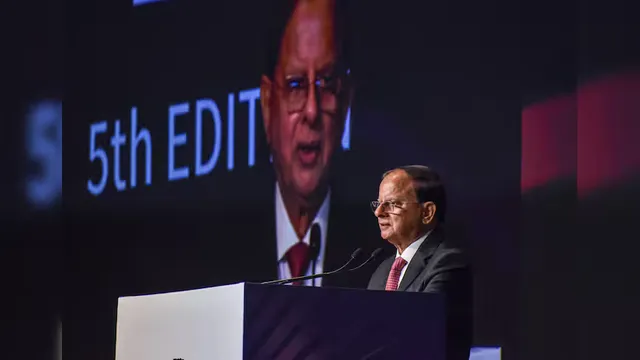
Speaking at the Kautilya Economic Conclave in New Delhi, Sitharaman said the government had laid the foundations for sustained growth through public capital expenditure, infrastructure creation and reforms, but private enterprise would have to play a larger role as India moves towards becoming a developed economy.
She said the country had demonstrated resilience despite repeated global disruptions, but maintaining high growth over the coming years would require businesses to invest more aggressively in productive capacity, innovation and technology.
Private capital expenditure has remained a closely watched component of India’s growth story.
The Centre has significantly increased public investment in infrastructure over recent years in an effort to improve logistics, create productive assets and encourage companies to make their own investments.
Sitharaman said the next stage would require the private sector to respond more strongly to those improvements.
Her comments come as economists assess whether India’s private capital expenditure cycle is becoming broad-based enough to sustain the country’s growth ambitions.
The Finance Minister also identified research and development as an area requiring considerably greater attention.
India’s R&D expenditure remains low relative to the size of its economy and compared with several major technology-driven economies.
Increasing investment in research would be essential for improving productivity, developing domestic technologies and strengthening India’s competitiveness in emerging industries.
The challenge extends beyond government spending.
Sitharaman called for greater participation from private companies in research and innovation, signalling that corporate India will have to assume a larger share of the country’s R&D effort.
That investment is becoming increasingly important as economic competition shifts towards areas such as artificial intelligence, semiconductors, advanced manufacturing, clean energy, biotechnology and other technology-intensive industries.
Developing domestic capabilities in these sectors could also reduce India’s dependence on imported technologies and strengthen economic resilience during periods of geopolitical disruption.
Sitharaman linked the investment challenge with India’s position in global supply chains.
Companies worldwide have been reassessing manufacturing and sourcing networks following the pandemic, geopolitical tensions and trade disputes.
That restructuring has created opportunities for India to attract manufacturing investment and become a larger part of international production networks.
But capturing those opportunities requires more than low-cost production.
Reliable infrastructure, skilled workers, technological capability, competitive logistics and predictable policies are increasingly important when multinational companies decide where to locate production.
India has sought to address some of those requirements through infrastructure investment, manufacturing incentives and policy reforms.
The next challenge is translating those measures into sustained private investment and greater participation in global value chains.
Sitharaman also emphasised the importance of maintaining macroeconomic stability while pursuing faster growth.
India has had to navigate a difficult international environment characterised by geopolitical conflicts, disruptions to energy markets, trade tensions and uncertainty surrounding global financial conditions.
These pressures can affect inflation, exchange rates, capital flows and the cost of financing investment.
The Finance Minister said India’s domestic economic fundamentals and policy framework had helped it withstand such external shocks.
The broader objective is now to ensure that resilience translates into sustained improvements in productivity and incomes.
Infrastructure will continue to play an important role.
Public capital expenditure has been one of the government’s principal tools for supporting economic activity and building the physical foundations needed for private investment.
Roads, railways, ports, logistics systems, power infrastructure and digital networks can lower business costs and improve the viability of new investments.
But government expenditure alone cannot provide the scale of investment required for India’s long-term economic ambitions.
That is why the shift towards greater private-sector participation has become increasingly important.
The Finance Minister’s emphasis on R&D adds another dimension to the investment debate.
Capital expenditure can expand India’s productive capacity, but research and innovation determine how efficiently that capacity operates and whether Indian companies can compete in higher-value segments of the global economy.
A sustained increase in private investment combined with greater R&D spending could therefore influence both the scale and quality of future growth.
India’s demographic profile adds urgency to the challenge.
A large working-age population can support faster economic expansion, but only if sufficient productive employment and entrepreneurial opportunities are created.
Manufacturing, technology, services and new industries will consequently need to absorb millions of workers while simultaneously improving productivity.
Sitharaman’s remarks suggest that the government’s expectations of corporate India are becoming clearer.
After years of substantial public infrastructure spending, the next stage of the investment cycle will depend increasingly on companies committing capital, expanding capacity, developing technology and investing in research.
The government will continue to have a role in infrastructure, regulation and creating conditions conducive to investment.
But achieving India’s longer-term growth ambitions will require private companies to move from benefiting from public investment to becoming a much stronger driver of investment themselves.
The combination of higher private capital expenditure, increased research spending and deeper integration with global supply chains, Sitharaman said, will be critical to determining the strength of India’s next phase of economic expansion.