
NEW DELHI, Oct. 3
Export restrictions, sanctions and tariffs are increasingly being used as instruments of economic policy and can sometimes be weaponised, Principal Secretary to the Prime Minister P K Mishra said on Saturday, as he called for India to build resilience against geopolitical and supply-chain disruptions without retreating from the global economy.
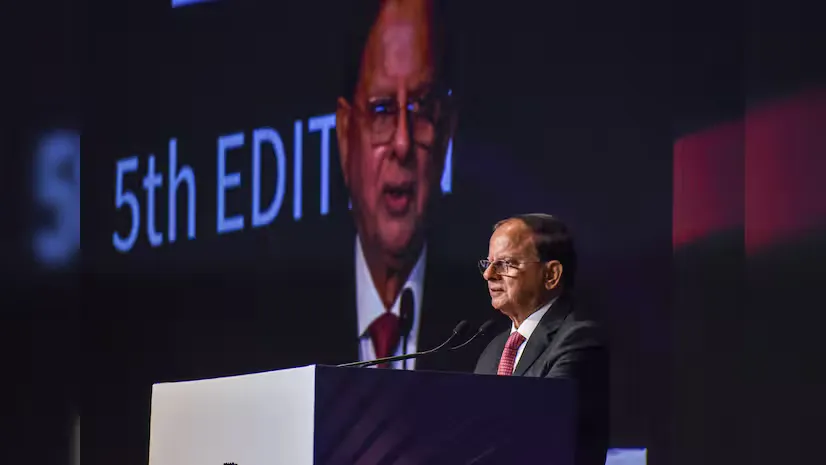
Speaking at the fifth Kautilya Economic Conclave in New Delhi on the theme “A World Priced for Risk”, Mishra said wars, disruptions to shipping routes and geographical choke points had become important sources of economic vulnerability.
For India, one of the clearest risks comes from energy security.
As a major energy importer, India remains vulnerable to prolonged disruptions affecting important maritime routes, particularly the Strait of Hormuz, through which a significant volume of global energy supplies moves.
Mishra said the disruption around the Strait of Hormuz had demonstrated how geography could quickly translate into economic risk.
A disruption affecting a major shipping route can influence crude oil prices thousands of kilometres away, making geography an increasingly important economic variable.
India has responded by building several layers of protection into its energy strategy.
These include maintaining substantial stocks, increasing domestic production where possible, diversifying sources of supply and ensuring access to alternative suppliers and routes.
The number of countries from which India imports crude oil has increased from 27 to 43, substantially broadening its supply base.
Mishra said the same principle applied to India’s transition towards cleaner energy.
Expanding domestic capabilities in renewable energy, nuclear power, energy storage and associated technologies should not be viewed only through the lens of sustainability. Such investments can also reduce India’s exposure to external shocks over time.
Energy is only one area where geopolitical risk has become increasingly important.
Critical minerals and strategic industrial inputs present another vulnerability because production and processing of several essential resources remain concentrated in a limited number of countries.
Lithium, cobalt and rare earth elements are essential for batteries, electronics, renewable-energy systems and advanced manufacturing, but their extraction, processing and refining remain geographically concentrated.
This creates a tension between efficiency and resilience.
For decades, globalisation encouraged companies and countries to specialise, produce where costs were lowest and move goods efficiently across borders.
Mishra said that economic logic remained relevant, but the pandemic, geopolitical conflicts and recent disruptions had exposed the potential cost of interruption.
A supply chain that appears highly efficient under normal conditions can become vulnerable if it depends heavily on a single supplier, location or transport corridor.
India has sought to reduce such vulnerabilities through the National Critical Mineral Mission, which focuses on domestic exploration, processing and recycling.
At the same time, New Delhi has expanded international partnerships involving critical minerals.
India is working with countries including the United States, France, Germany and the Netherlands on exploration, processing, recycling, technology and measures intended to strengthen supply-chain resilience.
Mishra said critical minerals, technology and even financial infrastructure were acquiring greater strategic importance as economic and geopolitical considerations increasingly overlap.
Trade policy has undergone a similar transformation.
Without naming individual countries, Mishra said export restrictions, sanctions and tariffs could become instruments of economic policy and were sometimes weaponised.
The observation comes amid a more fragmented global trading environment in which tariffs and sanctions are increasingly being deployed alongside traditional diplomatic and strategic instruments.
The United States has imposed tariffs on several countries, including India, for different reasons.
More recently, Washington enacted the Lindsey O. Graham Sanctioning Russia and Iran Act of 2026, authorising tariffs of up to 100 per cent on countries purchasing Russian oil and gas, including India and China.
For India, such developments reinforce the importance of maintaining room to respond to external economic shocks.
Mishra said this required more than diversified energy and commodity supplies.
Macroeconomic resilience was equally important.
A country confronted by an external shock needs sufficient fiscal space, adequate foreign-exchange reserves, a sound financial system and credible macroeconomic institutions to respond effectively.
India has consequently continued fiscal consolidation while maintaining public investment, he said.
The broader challenge is to build resilience without turning it into economic isolation.
Mishra argued that India should remain integrated with the global economy while reducing excessive dependence on individual countries, suppliers, technologies or transport corridors.
“Resilience cannot be insulation from the world,” he said. Instead, it should provide the ability to remain open internationally without becoming excessively vulnerable to external disruptions.
The distinction is becoming increasingly important as economic security and national security overlap.
Energy supplies, shipping lanes, critical minerals, technology, financial infrastructure and international trade rules can all become sources of strategic leverage during periods of geopolitical tension.
For India, that makes diversification and domestic capacity important not only for economic growth but also for strategic resilience.
Mishra said the world ahead would favour countries capable of remaining steady without becoming closed, careful without becoming fearful, and ambitious without becoming naive.
India, he said, intends to position itself as such a country.