

NEW DELHI/DUBAI, Sept. 23
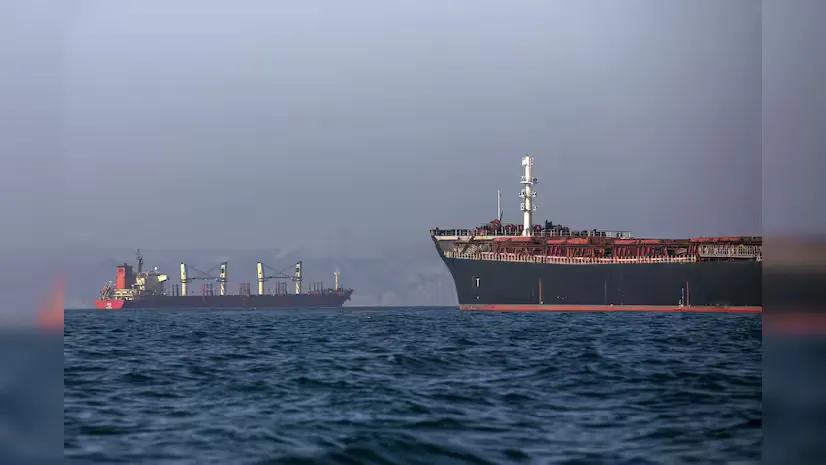
An Indian crew member was killed and several others injured after the bulk carrier MV Cape Dao was struck by projectiles while transiting the Strait of Hormuz on Wednesday, in another attack on commercial shipping along one of the world’s most important energy routes.
India’s Ministry of External Affairs confirmed the death and said its missions in the region were in contact with the relevant authorities and the vessel’s operators. The ship had 26 Indian nationals among its crew, according to the ministry.
“Deeply saddened by the death of an Indian national in the attack on MV Cape Dao in the Strait of Hormuz,” External Affairs Ministry spokesperson Randhir Jaiswal said in a post on X.
The Indian government said the injured crew members were receiving medical attention and that efforts were underway to assist those affected by the attack.
The incident occurred as the Cape Dao was sailing through the strait, the narrow waterway connecting the Persian Gulf with the Gulf of Oman. The vessel was hit by projectiles and subsequently caught fire, according to maritime security reports cited by Business Standard.
The United Kingdom Maritime Trade Operations, which monitors security incidents affecting commercial shipping, reported an attack in the Strait of Hormuz and said a vessel had been struck by projectiles. Casualties were reported among the crew.
The ship was later described as being on fire and adrift.
The circumstances of the attack, including who launched the projectiles, were not immediately established in the information available. No claim of responsibility cited in the report had been independently verified.
The killing of an Indian national brings the consequences of the continuing insecurity around the Strait of Hormuz directly into focus for India, which has a large seafaring workforce operating aboard international commercial vessels.
The incident also occurred against the backdrop of the continuing US-Iran conflict and heightened military activity around the Gulf, where commercial shipping has faced repeated security threats.
The Strait of Hormuz has been one of the principal areas of confrontation during the conflict. Before the war, about one-fifth of global oil and liquefied natural gas supplies passed through the waterway, making any sustained disruption there significant for international energy markets.
The strait is only about 21 miles wide at its narrowest point, with shipping lanes considerably narrower. Tankers carrying crude oil and LNG from Saudi Arabia, the United Arab Emirates, Kuwait, Qatar, Iraq and other Gulf producers depend heavily on the route to reach international markets.
India has a particular interest in maintaining secure navigation through the region because of its dependence on imported energy and the large number of Indian nationals employed aboard merchant vessels.
The Cape Dao incident follows a series of attacks and disruptions affecting shipping in and around the strait as hostilities between Washington and Tehran continue.
Iran has sought greater control over traffic through Hormuz and has argued that it should be able to collect fees from ships using the waterway. The United States has rejected Tehran’s position and has sought to maintain freedom of navigation through the strait.
Iranian President Masoud Pezeshkian addressed the issue at the United Nations General Assembly on Wednesday, saying Iran could not accept a situation in which other countries benefited from the waterway while Iranian shipping faced restrictions.
His comments came a day after US President Donald Trump threatened further military action against Iran while also speaking about renewed indirect diplomatic contacts between Washington and Tehran.
The attack on the Cape Dao illustrates the continuing gap between those diplomatic efforts and conditions at sea.
Shipping through Hormuz has begun recovering from the severe disruption caused by the conflict, but maritime traffic continues to operate under elevated security risks. Some Gulf producers have also sought alternative arrangements to move crude beyond the strait.
The United Arab Emirates has restored oil exports to pre-war levels, while Saudi Arabia has sold Gulf crude for delivery from locations beyond the strait off Oman. Despite those efforts, a substantial volume of Gulf oil remains absent from international markets.
Repeated attacks on merchant vessels can have effects extending beyond the ships directly involved. Higher security risks can increase insurance premiums, alter shipping routes and raise freight costs. Sustained disruption in Hormuz can also affect crude and LNG prices because of the volume of global energy trade concentrated in the waterway.
For India, the consequences are both economic and human.
The country imports the majority of the crude oil it consumes, making disruptions to Gulf shipping an immediate concern for energy security and import costs. Indian seafarers also form a substantial part of the international maritime workforce, putting them directly in the path of instability affecting major commercial shipping routes.
The government has not indicated that the remaining Indian crew aboard the Cape Dao face an immediate additional threat. Its priority is assisting the injured, coordinating with authorities and the ship’s operator and making arrangements following the death of the Indian seafarer.
Details about the identity of the deceased Indian national were not immediately available in the material reported.
The attack also adds urgency to international efforts to protect commercial navigation through Hormuz. Unlike military vessels, bulk carriers and tankers operating in the area often carry multinational civilian crews whose involvement in the wider conflict is limited to moving cargo through an essential international shipping route.
Wednesday’s incident leaves one Indian family facing the direct cost of that insecurity, while the Cape Dao joins a growing number of commercial vessels caught in the continuing confrontation around the Gulf.