

NEW DELHI, Oct. 7
The Reserve Bank of India raised its benchmark repo rate by 25 basis points to 5.5 per cent on Wednesday, responding to renewed inflation pressures while signalling that interest-rate cuts are unlikely in the near term.
The six-member Monetary Policy Committee unanimously voted to increase the repo rate from 5.25 per cent at its meeting held from October 5 to 7. It also shifted its policy stance from “neutral” to “calibrated tightening”, indicating a more cautious approach to inflation.
Following the decision, the Standing Deposit Facility rate has been raised to 5.25 per cent, while the Marginal Standing Facility rate and the Bank Rate have been increased to 5.75 per cent.
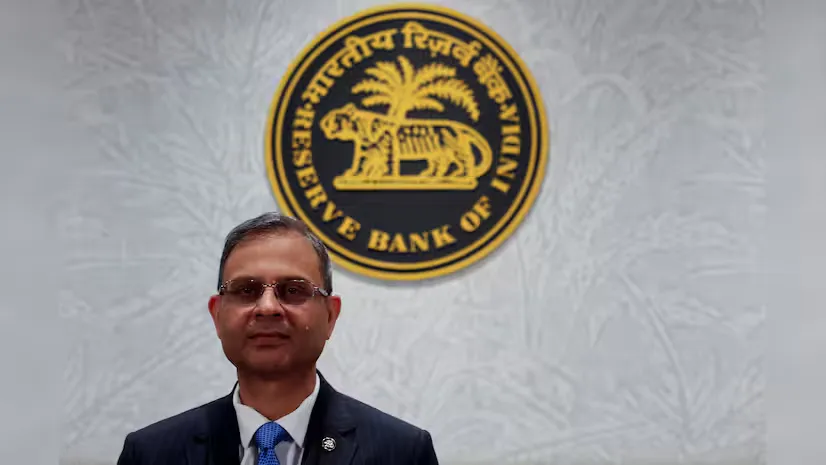
RBI Governor Sanjay Malhotra said prevailing economic conditions had made a rate cut unlikely in the near term. The central bank’s next move would therefore depend on incoming growth and inflation data, with either a further increase or a pause remaining possible.
The duration and scale of any tightening cycle will depend particularly on underlying inflation, whether price pressures become more widespread and the extent to which supply shocks feed through to the broader economy, Malhotra said.
The rate increase comes alongside a revision in the central bank’s inflation outlook. The RBI now expects Consumer Price Index inflation to average 5.2 per cent in the current financial year.
It has projected inflation at 4.9 per cent in the second quarter of FY27, before rising to 6 per cent in the third quarter and easing to 5.7 per cent in the fourth.
Despite the higher inflation forecast and tighter monetary policy, the RBI remains relatively confident about economic growth.
The central bank has projected real GDP growth of 7.1 per cent for FY27. It expects the economy to expand by 7.2 per cent in the second quarter, 6.9 per cent in the third and 6.8 per cent in the fourth.
The combination of stronger growth and higher inflation gives the RBI room to prioritise price stability without immediately confronting a sharp growth slowdown.
The change to “calibrated tightening” is particularly important for financial markets and borrowers because it signals that the central bank is no longer operating from a neutral position.
For households and businesses, the repo-rate increase could eventually translate into higher borrowing costs, depending on how banks adjust lending rates. Loans linked directly to external benchmarks can respond more quickly to changes in the policy rate, while the transmission to other lending and deposit rates may take longer.
The decision also changes expectations surrounding the direction of monetary policy over the coming months. With the RBI explicitly indicating that near-term cuts are unlikely, attention will now shift to inflation data and the extent to which price pressures persist.
The central bank will be watching whether inflation remains concentrated in particular categories or spreads more broadly through the economy. The impact of supply-side pressures will also be important in determining whether Wednesday’s increase is followed by another hike or a prolonged pause.
For now, the RBI is balancing an economy expected to grow above 7 per cent against inflation projected to remain above its 4 per cent target.
The October decision indicates that containing price pressures has moved higher on the central bank’s immediate agenda, while the strength of domestic growth provides it with greater room to keep monetary conditions tighter.