

SRINAGAR, Oct. 2
Jammu and Kashmir has introduced its Compressed Bio-Gas Policy 2026, offering capital support of up to ₹10 crore per project, concessional government land and tax and employment incentives to attract investment in converting organic waste into clean fuel and fertiliser.
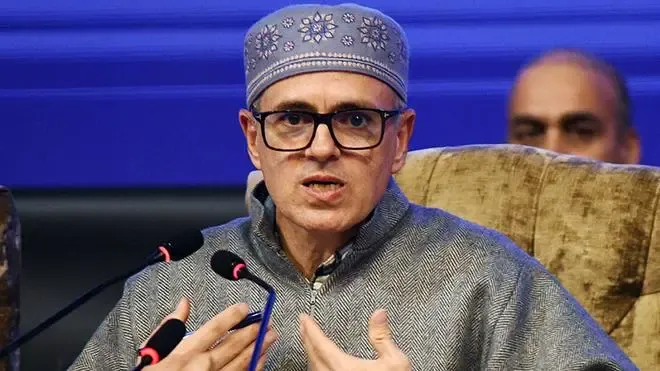
Chief Minister Omar Abdullah welcomed the policy on Friday, describing it as an important step towards clean energy, better waste management and the development of a circular economy in the Union Territory.
The policy was approved by the Council of Ministers chaired by Abdullah and creates a framework for converting locally available organic waste into compressed bio-gas, or CBG, for use as automotive fuel. The process will also produce organic fertiliser as a by-product.
The government intends to use waste streams that are widely available across Jammu and Kashmir, including cattle dung, apple pomace, municipal solid waste, pine needles and crop residues.
The choice of feedstock gives the policy a direct link with some of J&K’s existing environmental and agricultural challenges.
Apple pomace generated by the horticulture industry and crop residues can be converted into productive inputs rather than treated solely as waste. Cattle dung offers another readily available source, particularly in rural areas.
Pine needles are significant because their accumulation in forest areas can present a waste-management challenge while providing potential biomass for energy projects.
Municipal solid waste could similarly provide feedstock for decentralised waste-to-energy facilities.
The policy combines these environmental objectives with a package of financial incentives intended to make CBG projects commercially viable.
Eligible projects will receive capital expenditure assistance of ₹0.50 crore per tonne per day of production capacity, subject to a maximum government contribution of ₹10 crore for each project.
Government land required for eligible projects will be made available at a nominal lease rate of ₹1 per square metre.
Projects will also receive a 100 per cent exemption from stamp duty.
The government has sought to address another frequent concern for investors by setting timelines for administrative approvals.
Eligible non-statutory permissions will receive deemed approval within 60 days through the Single Window Portal, subject to applicable conditions.
The policy also provides a substantial tax incentive during the initial operating period of CBG facilities.
Eligible projects will receive 100 per cent reimbursement of State Goods and Services Tax for their first five years.
Employment incentives have been built into the framework to encourage companies to recruit locally.
Projects will be eligible for a manpower subsidy of ₹3,000 per month for each local unskilled worker employed, with the assistance available for two years.
Financing support will also be available through interest subvention of up to ₹2 crore on bank term loans.
Taken together, the incentives seek to reduce several of the costs associated with establishing new CBG facilities, including capital investment, land, financing, taxation and manpower.
The government will also intervene in areas where individual projects could otherwise struggle to develop viable supply chains.
It plans to facilitate aggregation of feedstock for CBG facilities and establish market linkages for the bio-manure generated during production.
The administration has set a target of supplying this organic fertiliser to 10,000 farmers.
That component creates a potential link between waste management, clean-energy production and agriculture.
Organic material collected from farms, orchards, municipalities and other sources can be processed into fuel, while the resulting bio-manure can return to the agricultural economy as fertiliser.
The government expects the policy to generate employment as the sector develops.
It has set a target of creating approximately 2,000 direct rural jobs by 2030, apart from additional livelihood opportunities expected across collection, transportation, feedstock aggregation, plant operations and the wider CBG supply chain.
The employment target also gives the policy a rural-development dimension, particularly if plants are established close to the areas where agricultural and livestock waste is generated.
CBG can substitute part of the demand for conventional fossil fuels while simultaneously addressing organic waste that might otherwise require disposal.
For Jammu and Kashmir, the potential benefits extend across several sectors. Horticulture and agriculture can provide feedstock, municipalities can use plants for organic waste management, farmers can receive bio-fertiliser, and new projects can generate rural employment.
The extent to which those benefits materialise will depend on investor participation, reliable availability and aggregation of feedstock, plant economics and the creation of stable markets for both CBG and bio-manure.
The policy will remain in force until 2032, giving investors a multi-year framework for establishing projects.
Abdullah congratulated Science and Technology Minister Satish Sharma and the Department of Science and Technology for notifying the policy.
The government sees the initiative as part of a broader shift towards decentralised waste-to-energy projects and more efficient use of locally available resources.
With capital assistance, inexpensive government land, tax reimbursement, financing support and employment incentives now built into the framework, the next test will be implementation.
The number and geographical spread of CBG plants that attract investment will ultimately determine whether the policy can turn J&K’s organic waste streams into a meaningful source of cleaner energy, rural employment and agricultural inputs.