SRINAGAR, Sept. 30
The Jammu and Kashmir Legislative Assembly has introduced the National e-Vidhan Application during its Autumn Session, bringing questions, replies and other legislative business onto a common digital platform as the House begins a broader transition towards paperless proceedings.
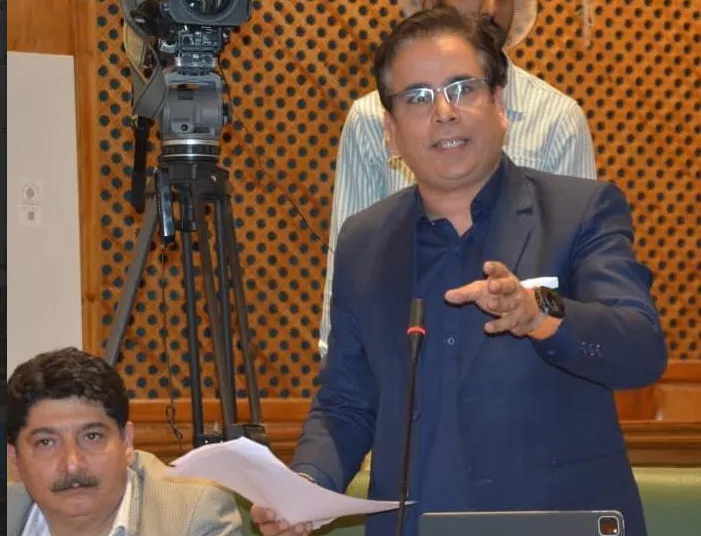
Zadibal MLA Tanvir Sadiq on Wednesday welcomed the rollout and congratulated Assembly Speaker Abdul Rahim Rather, the Legislative Assembly Secretariat and officials involved in implementing the project.
Speaking on the concluding day of the Autumn Session, Sadiq said the digital platform would make legislative information easier to access and help modernise the functioning of the House.
The National e-Vidhan Application, commonly known as NeVA, provides a digital platform through which members can access material connected with legislative proceedings.
Its introduction in Jammu and Kashmir means questions raised by legislators, government replies and other business of the House can be made available through a single system rather than being handled entirely through conventional paper-based processes.
Sadiq said bringing this material together would make it more convenient for legislators and other stakeholders to access relevant information.
He credited Rather with taking the initiative forward and thanked the Assembly Secretariat and officials responsible for putting the system into operation during the session.
The rollout represents a technological change in how legislative material is managed and accessed, although the source material does not provide details on the full range of NeVA functions activated during the Autumn Session.
Sadiq said the availability of questions, replies and other legislative business through the platform would improve accessibility and transparency.
He also linked the initiative to the longer-term objective of creating a paperless Assembly.
The transition has practical implications for legislators, who routinely deal with substantial volumes of documents during Assembly sessions. Digitising legislative material can place documents on a common platform and reduce dependence on physical copies.
The introduction during the Autumn Session provides an initial operational test of the system within the restored Jammu and Kashmir Legislative Assembly.
Sadiq’s remarks focused primarily on the successful implementation of the platform and the work undertaken by the Speaker and Assembly Secretariat rather than proposing further changes to legislative procedures.
He described the rollout as an important step towards making the House more technology-driven and its proceedings more accessible.
The initiative also comes as the Assembly handles an increasingly wide range of legislative and administrative business following the restoration of an elected government in Jammu and Kashmir.
During the current session, members have debated legislation, government policies and administrative matters, while reports and official documents have also been placed before the House. Moving such legislative business onto a digital system changes how members can receive and retrieve information during proceedings.
The immediate benefit identified by Sadiq is consolidation. Instead of questions, replies and other legislative records being available through separate processes, NeVA provides a common digital point of access.
The transition towards a fully paperless legislature, however, is a broader process than simply introducing the application. The report does not specify when the Jammu and Kashmir Assembly expects to eliminate paper-based legislative work entirely or whether a timetable has been set for doing so.
Nor does it provide details about training for legislators and staff, the number of members currently using the platform or the extent to which physical documentation has already been reduced.
What has been established during the Autumn Session is the operational introduction of NeVA into the Assembly’s legislative work.
Sadiq said the system would make proceedings more accessible and transparent while helping the House move progressively towards digital working.
His remarks on the final day of the session also placed particular emphasis on the institutional effort behind the transition. Rather, the Assembly Secretariat and officials involved in implementation were credited with bringing the platform into use.
For the Jammu and Kashmir Legislative Assembly, the rollout represents the beginning of a shift in how legislative information is handled rather than the completion of the transition.
The next measure of the initiative will be how extensively NeVA becomes integrated into the day-to-day work of legislators and the Assembly Secretariat, and how far that allows the House to reduce its dependence on paper-based proceedings.