




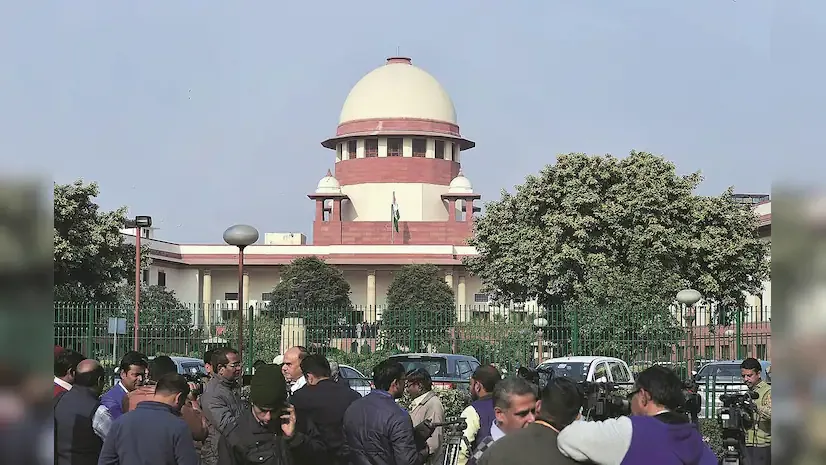
NEW DELHI, Oct. 28: Foreign nationality, by itself, is not sufficient grounds to deny bail to an accused person under India's Unlawful Activities (Prevention) Act (UAPA). Courts must examine the applicable statutory restrictions, the allegations and the evidence rather than treating citizenship as an automatic disqualification.
The distinction is significant because the UAPA contains stringent bail provisions for certain terrorism-related offences. These restrictions require courts to assess the prosecution's material before deciding whether an accused person can be released pending trial.
However, the legislation does not establish a blanket rule that every foreign national accused under the Act must remain in custody solely because of their citizenship.
The Supreme Court clarified the scope of this restriction while deciding Union of India v. Mohamed Rifas on October 27, 2026. The case involved a man alleged to be a Sri Lankan national who had entered India on a valid visa in 2009 but subsequently remained in the country beyond its permitted duration.
The central question was whether overstaying a visa could be treated as illegal entry for the purpose of Section 43D(7) of the UAPA.
The court held that the provision applies only when three conditions are satisfied: the accused faces an offence under the UAPA, is not an Indian citizen, and entered India illegally or without authorisation.
All three requirements must be established before the additional restriction on bail can operate.
The judges distinguished between entering the country without permission and remaining after a valid visa has expired. They held that a subsequent visa overstay does not retrospectively make an originally lawful entry illegal.
The distinction was decisive in Rifas's case because the prosecution's own account indicated that he had entered India with a valid visa.
The court's ruling does not mean that overstaying a visa is lawful. Such conduct may attract separate consequences under immigration legislation. However, it cannot automatically satisfy a UAPA provision that specifically concerns the circumstances in which a foreign national entered India.
Rifas had initially obtained default bail in July 2018 after investigators failed to file a chargesheet within the prescribed period.
Default bail is a statutory safeguard that becomes available when an investigating agency does not complete the required procedural steps within the legally permitted time, provided the accused fulfils the applicable conditions.
The government subsequently sought cancellation of his bail. A trial court cancelled it in 2022, but the Madras High Court reversed that decision.
The Union government challenged the High Court's ruling before the Supreme Court, which upheld the bail order.
In examining the matter, the Supreme Court also clarified the relationship between different provisions of Section 43D.
Section 43D(5) restricts bail for specified UAPA offences when the court, after examining the prosecution's material, finds reasonable grounds to believe that the accusations are prima facie true.
Section 43D(7) imposes an additional restriction on foreign nationals who entered India illegally or without authorisation. Even when its conditions are satisfied, the provision permits bail in very exceptional circumstances if the court records its reasons in writing.
The Supreme Court clarified that Section 43D(7) overrides the restrictions contained in Sections 43D(5) and 43D(6), but does not override Section 43D(2), which deals with the investigation period and the statutory framework relevant to default bail.
The judgment therefore preserves an important distinction between ordinary bail under the UAPA and default bail arising from procedural failures during an investigation.
The ruling also fits within the broader judicial framework governing bail in terrorism-related cases.
In National Investigation Agency v. Zahoor Ahmad Shah Watali (2019), the Supreme Court explained the stringent scrutiny required when courts consider bail under Section 43D(5).
In Union of India v. K A Najeeb (2021), the court recognised that prolonged incarceration and delays in trial proceedings could justify bail on constitutional grounds, notwithstanding statutory restrictions.
The latest judgment does not dilute the general provisions governing bail under the UAPA. Instead, it clarifies that an additional restriction cannot be imposed unless the prosecution establishes the specific legal conditions required for its application.
The decision is particularly relevant to cases involving foreign nationals who entered India lawfully but later violated immigration conditions.
Such individuals may still face prosecution for immigration violations or offences under other laws. They may also be denied bail under applicable UAPA provisions if the statutory requirements are met.
What the Supreme Court has rejected is the proposition that foreign citizenship, combined with a subsequent visa overstay, is sufficient to invoke the special restriction under Section 43D(7).
The judgment reinforces the requirement that courts apply stringent national security legislation according to its precise statutory language while preserving the legal safeguards available to accused persons.