NEW DELHI/MUMBAI, Sept. 24
The Indian government has finalised a turnaround plan for three financially stressed state-owned general insurers, making any fresh capital support conditional on sustained improvements in underwriting, operations and management rather than relying on another unconditional infusion of public funds.
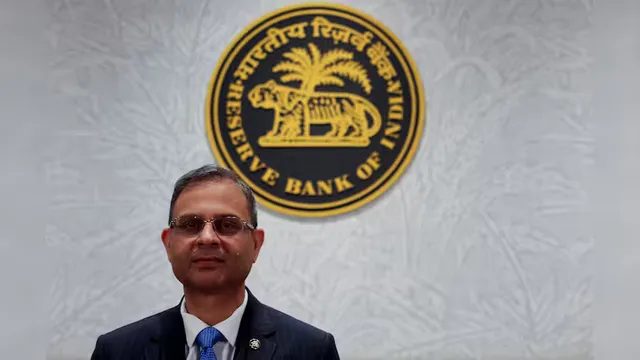
National Insurance Company, Oriental Insurance Company and United India Insurance Company are all loss-making and have negative solvency ratios. The Reserve Bank of India described the deterioration in their financial position as a “direct financial stability concern” in its June 2026 Financial Stability Report. New India Assurance, the fourth state-owned general insurer and the country’s largest, remains profitable.
The government’s approach represents an attempt to address the underlying weaknesses of the three insurers before committing further capital. The turnaround strategy calls for changes in underwriting, development of new products, greater use of technology and a performance-linked approach to talent management.
“Equity infusion alone cannot help them unless the underlying issues are fixed,” an official familiar with the plan told Business Standard, adding that the government wanted to see sustainable improvement before providing additional funds.
The Centre has already provided substantial financial support. Between 2019-20 and 2021-22, it injected a combined ₹17,450 crore into the three insurers. National Insurance received ₹9,275 crore, Oriental Insurance ₹4,420 crore and United India ₹3,755 crore.
Despite that support, their solvency positions subsequently deteriorated.
United India’s solvency ratio fell to minus 136 per cent at the end of 2025-26 from minus 65 per cent a year earlier. National Insurance’s ratio declined to minus 111 per cent from minus 67 per cent, while Oriental Insurance’s dropped to minus 163 per cent from minus 103 per cent.
The Insurance Regulatory and Development Authority of India requires insurers to maintain a solvency ratio of at least 150 per cent. The ratio measures an insurer’s financial ability to meet claims and other obligations.
The scale of the gap illustrates the challenge confronting the government. Rating agency Icra estimates that, based on current performance and solvency trends, the three companies could require around ₹39,000 crore by March 2027 to meet the regulatory solvency requirement. The government has not committed to providing that amount. Instead, officials said the insurers’ performance will be assessed over the next few quarters before decisions are taken on the timing and size of any equity infusion.
The deterioration extends beyond solvency.
Combined underwriting losses at public-sector multiline general insurers increased 58.3 per cent from a year earlier to ₹29,070.57 crore in 2025-26. United India’s underwriting loss more than doubled to ₹8,335.7 crore, while Oriental Insurance’s rose 84 per cent to ₹7,307.77 crore.
National Insurance recorded an underwriting loss of ₹4,625.16 crore, an increase of nearly 6 per cent. New India Assurance, although profitable overall, reported an underwriting loss of ₹8,801.9 crore, up 44 per cent.
Data from the General Insurance Council shows that National Insurance, Oriental Insurance and United India accumulated combined net losses of ₹31,200.86 crore over the past five years. Their losses reached ₹11,434.38 crore in FY26 after Oriental and United India had briefly returned to net profit in the previous year.
Their net incurred claims ratios have also remained close to or above 100 per cent, adding to pressure on their finances.
One potential source of capital is the proposed initial public offering of the National Stock Exchange. The three insurers collectively own 90 million NSE shares and have offered 14.96 million shares for sale at ₹1,785 each. They had earlier planned to sell 18 million shares.
Proceeds from the sale could help improve their solvency positions, though the wider financial gap remains substantial.
The government now plans quarterly monitoring of the turnaround effort, while the insurers will conduct their own internal quarterly reviews. Department of Financial Services Secretary Sanjay Lohiya reviewed their performance earlier this month and asked the companies to develop a standardised framework of key performance indicators.
Underwriting will be central to the exercise.
Officials want the insurers to improve how they assess the risk profiles of different customer segments and adjust their portfolios accordingly. Technology is expected to play a greater role in identifying risk and reducing losses.
The government is also encouraging the insurers to combine traditional actuarial methods with artificial intelligence. The objective is not to reduce the underlying insurance coverage but to identify ways of pricing and managing risks more accurately.
Government-backed insurance programmes could provide another area for technological intervention. In schemes such as the Pradhan Mantri Fasal Bima Yojana, for instance, internet-connected weather data and satellite imagery could be incorporated into underwriting and risk assessment.
Product development forms another part of the turnaround strategy. Amit Roy, partner and leader of insurance and allied business at PwC India, said the extensive reach of public-sector insurers could allow them to offer products to smaller markets at differentiated price points.
Cyber insurance is one area where officials and industry specialists see room for expansion. Such products have gained ground in India’s largest cities but remain less common in Tier 2, Tier 3 and Tier 4 markets despite the rapid spread of digital services.
The government is also focusing on staffing and retention as India’s insurance market becomes more competitive following the liberalisation of foreign direct investment.
Officials said the state-owned insurers face a difficult cycle: persistent losses limit their ability to improve remuneration, while inadequate compensation can contribute to the departure of skilled employees. Performance-linked incentives are being considered as one way of retaining talent, but the government wants financial performance to improve first.
“PLI and losses cannot go together,” one official said.
The government’s strategy therefore places the burden of demonstrating improvement on the insurers before another large injection of taxpayer capital is considered. After ₹17,450 crore of previous support failed to restore their solvency position, the emphasis has shifted from recapitalisation alone towards underwriting discipline, technology, product strategy and management reform.
How much additional public money the three companies eventually receive will depend on whether those changes produce measurable results over the coming quarters.