NEW YORK, Sept. 29
India’s relationship with China has improved from the tensions of the past few years as the border situation has stabilised and diplomatic contacts resumed, but the change should not be seen as a fundamental shift in ties between the two Asian powers, External Affairs Minister S. Jaishankar has said.
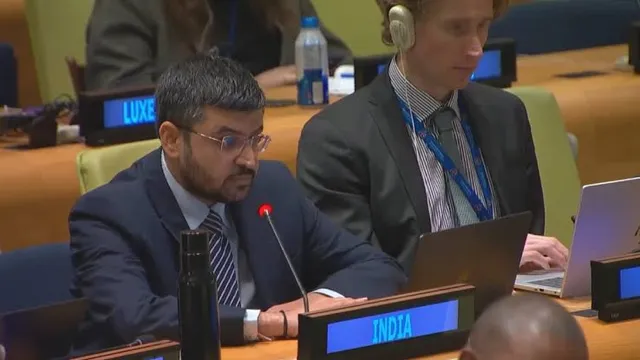
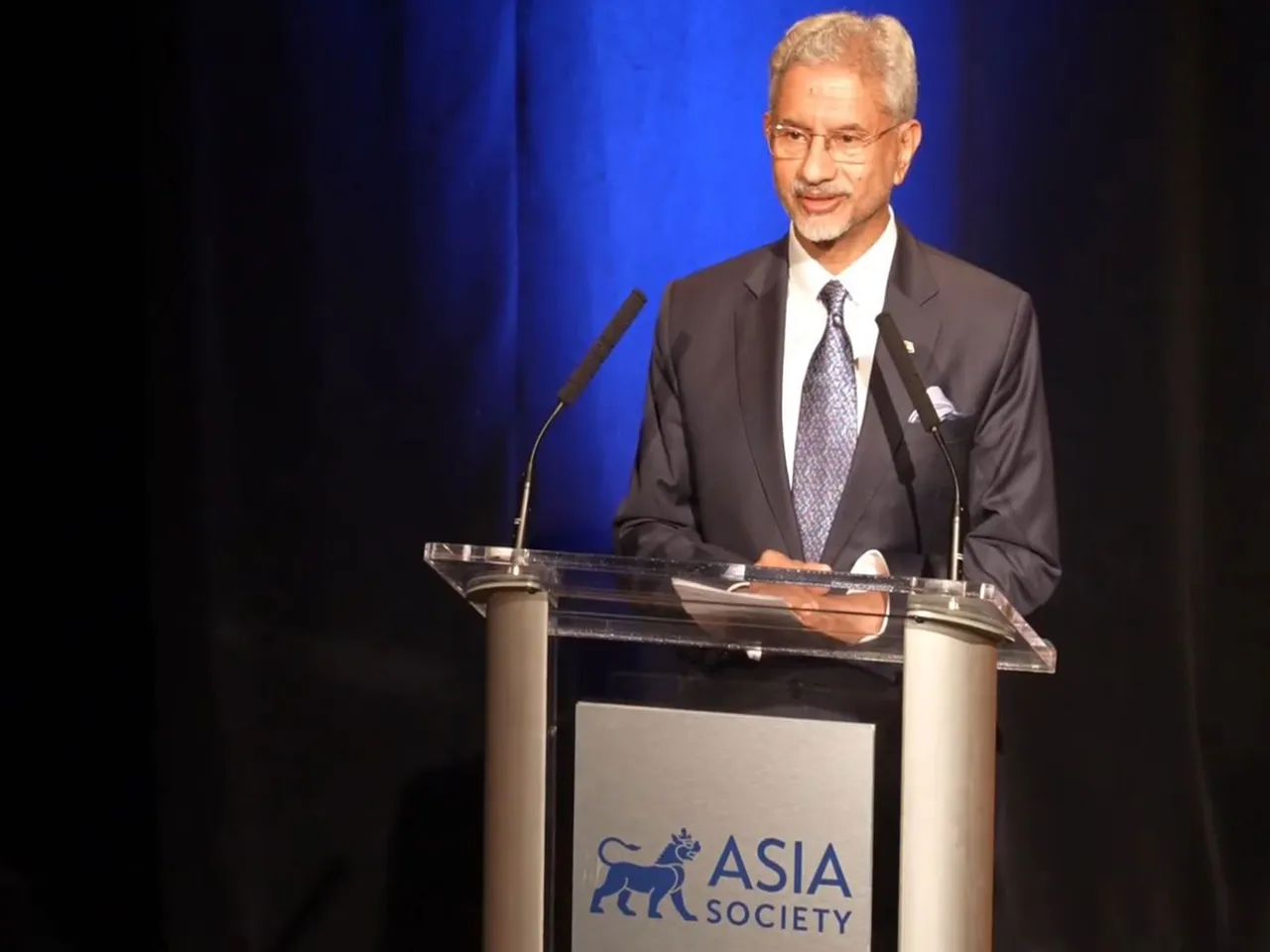
Speaking at an Asia Society event in New York on Monday, Jaishankar said relations were clearly better than they had been in 2024 or 2025, when the effects of the prolonged military standoff along the disputed border continued to weigh heavily on bilateral engagement.
“If you asked me, compared to where you were in 2025, is the relationship better today? I would say yes. Compared to 2024, even more so,” he said.
The improvement has gathered pace in recent months, including President Xi Jinping’s visit to India for the BRICS Leaders’ Summit hosted by New Delhi. But Jaishankar cautioned against interpreting the renewed engagement as evidence of a deeper structural transformation in India-China relations.
He said much of the improvement reflected a return from an unusually difficult period rather than the emergence of a fundamentally different relationship.
After the 2020 border confrontation and the prolonged military standoff that followed, normal contacts between the two countries had largely stopped. Trade continued, but official exchanges, visa issuance and flights were among the areas affected.
Once the border standoff was resolved, Jaishankar said, a broader improvement was a natural consequence.
The minister reiterated New Delhi’s position that stability along the disputed frontier is essential for normal bilateral relations.
“We came down to a very fundamental principle, which is that the state of the border determines the state of the relationship,” he said. “You can’t have tension…on the border and say the relationship should be normal.”
As conditions along the border move towards normalcy, he said, the wider relationship can also begin returning towards normalcy.
That formulation has been central to India’s approach since the military confrontation in eastern Ladakh in 2020. New Delhi resisted attempts to separate the border dispute from the wider relationship, maintaining that normal political and economic engagement could not proceed while troops remained locked in a prolonged confrontation.
Jaishankar also offered a strategic explanation for why both countries had an interest in preventing the dispute from indefinitely dominating their relationship.
India had repeatedly conveyed to Beijing that a prolonged deterioration in bilateral ties benefited neither side and could instead create opportunities for other countries, he said.
“We also maintained consistently a very elementary principle of statecraft – don’t get locked into a problem which benefits others,” Jaishankar said.
He said it had taken time for the Chinese side to come around to that view, but argued that the extended standoff had served neither country’s interests.
Improved relations with Beijing, he added, could strengthen India’s position not only in dealing with China but also in its engagement with the wider international system.
“I don’t want to get totally focused to my disadvantage on one particular relationship and issue,” Jaishankar said. “If I can find a solution which works for me, I would rather do that.”
His remarks placed the recent improvement in India-China ties within a broader shift in global politics, which he described as increasingly multipolar.
Jaishankar said changes in the behaviour of the United States, including what he described as an erosion of traditional alliances and a greater tendency to act independently, were affecting how other countries assessed their own strategic options.
He also referred to last week’s meeting in Washington between US President Donald Trump and Chinese President Xi Jinping.
The United States and China remain the world’s two most consequential economic powers and are fundamentally competitive, Jaishankar said, even where their interests overlap.
“There are limits to what the two of them can agree upon vis-a-vis the rest of the world,” he said.
The interaction between Washington and Beijing, combined with changes in America’s approach to its alliances and partnerships, is pushing other countries to reassess their relationships and reduce strategic vulnerabilities, according to the minister.
“Each one of us is looking for our optimal solutions. How do we de-risk? How do we diversify? Which are the new partners? Where do we get more value out of an existing partnership?” he said.
Countries were responding to a difficult international environment by recalculating their interests, seeking new partnerships and finding new accommodations, Jaishankar added.
His comments draw a distinction between the immediate improvement in India-China relations and the underlying strategic competition between the two countries.
The restoration of contacts, easing of the border confrontation and renewed high-level diplomacy have improved the atmosphere compared with the years immediately following the 2020 crisis. But Jaishankar stopped short of describing those developments as a strategic realignment.
Instead, he presented the change as a gradual normalisation made possible by progress on the border.
For New Delhi, the principle remains that the two tracks cannot be separated. A stable frontier creates room for political, diplomatic and economic engagement, while renewed tension along the border would again affect the broader relationship.
That leaves the trajectory of India-China ties closely connected to conditions on the frontier even as New Delhi and Beijing resume engagement in a more fluid international environment.
Jaishankar’s assessment was therefore measured: relations are better than they were a few years ago, but the improvement reflects stabilisation after an exceptionally difficult period rather than evidence that the fundamental character of the relationship has changed.