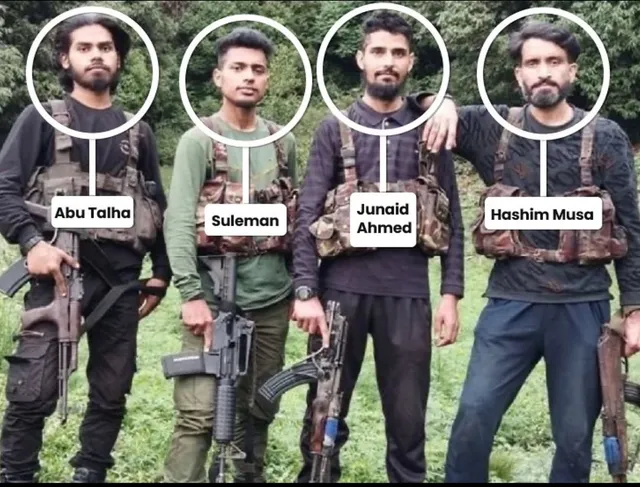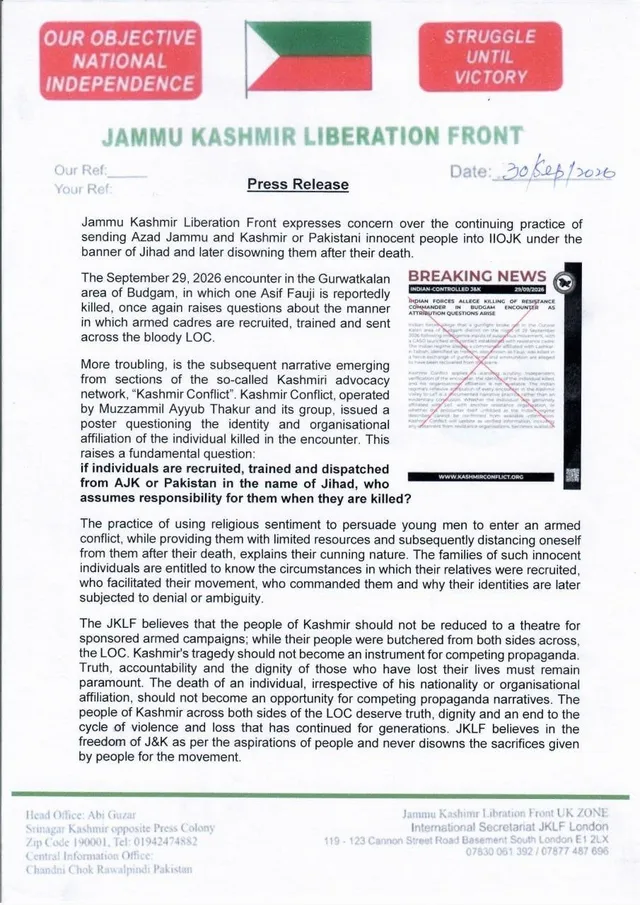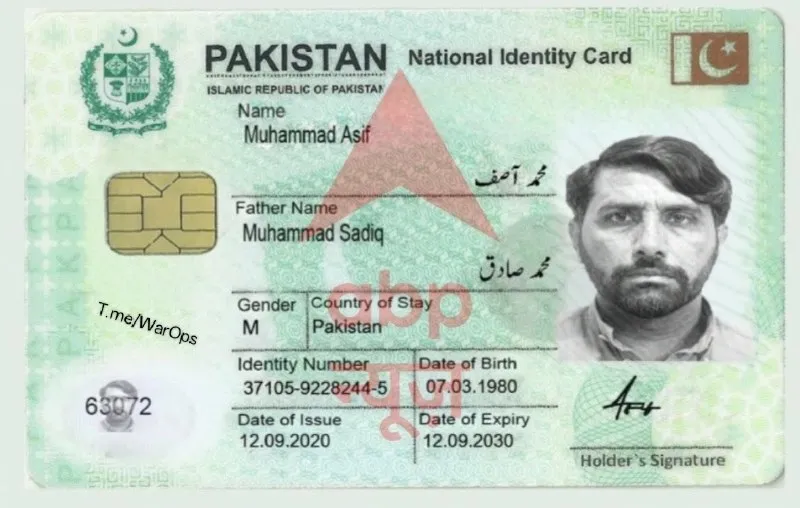
Documents circulating after Operation Korag identify slain LeT commander Hashim Moosa as Mohammad Asif, a retired Pakistan Army Special Service Group soldier. Security sources say he entered Jammu and Kashmir after retiring in 2023 and later emerged in investigations into attacks across the Pir Panjal and Kashmir Valley.
SRINAGAR, SEPTEMBER 30: Documents that surfaced following the killing of Lashkar-e-Taiba commander Mohammad Asif alias Hashim Moosa in Budgam have brought renewed attention to the military background of Pakistani terrorists operating in Jammu and Kashmir, with security sources identifying the slain militant as a former member of the Pakistan Army’s elite Special Service Group.
Moosa was killed during Operation Korag, an intelligence-led joint operation launched by the Indian Army, Jammu and Kashmir Police and CRPF in the Korag-Yousmarg area of Budgam late Tuesday.
The Army’s Chinar Corps said troops detected suspicious movement during the search and came under fire after challenging the terrorists. Moosa was killed in the exchange, and his body was recovered the following morning in the Palmaidan area along with what the Army described as war-like stores.
Security officials identified him as Pakistan-based LeT operative Mohammad Asif alias Hashim Moosa, who had been wanted for his alleged involvement in attacks across the Pir Panjal region and Kashmir Valley.
What distinguishes Moosa’s case is his reported background in Pakistan’s regular military.
Documents circulated by OSINT researchers after the encounter include what appears to be a Pakistani national identity card issued in the name of Muhammad Asif and a detailed résumé purporting to record a 23-year career in the Pakistan Army.
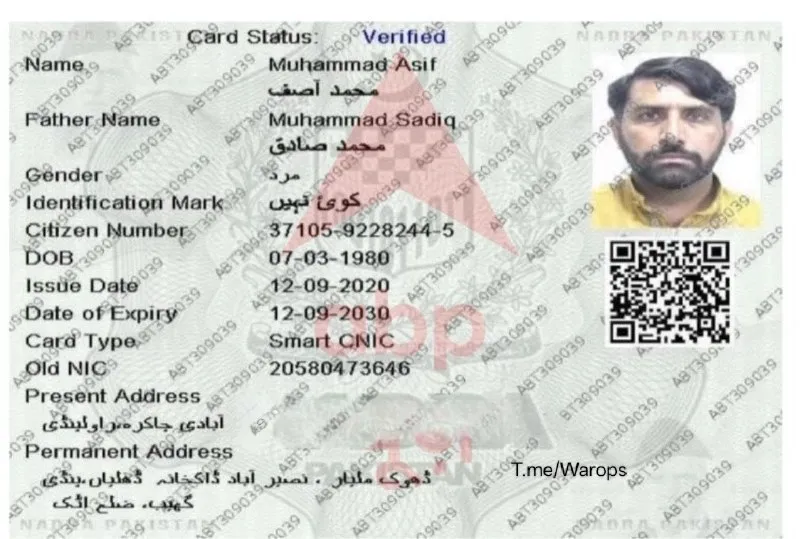
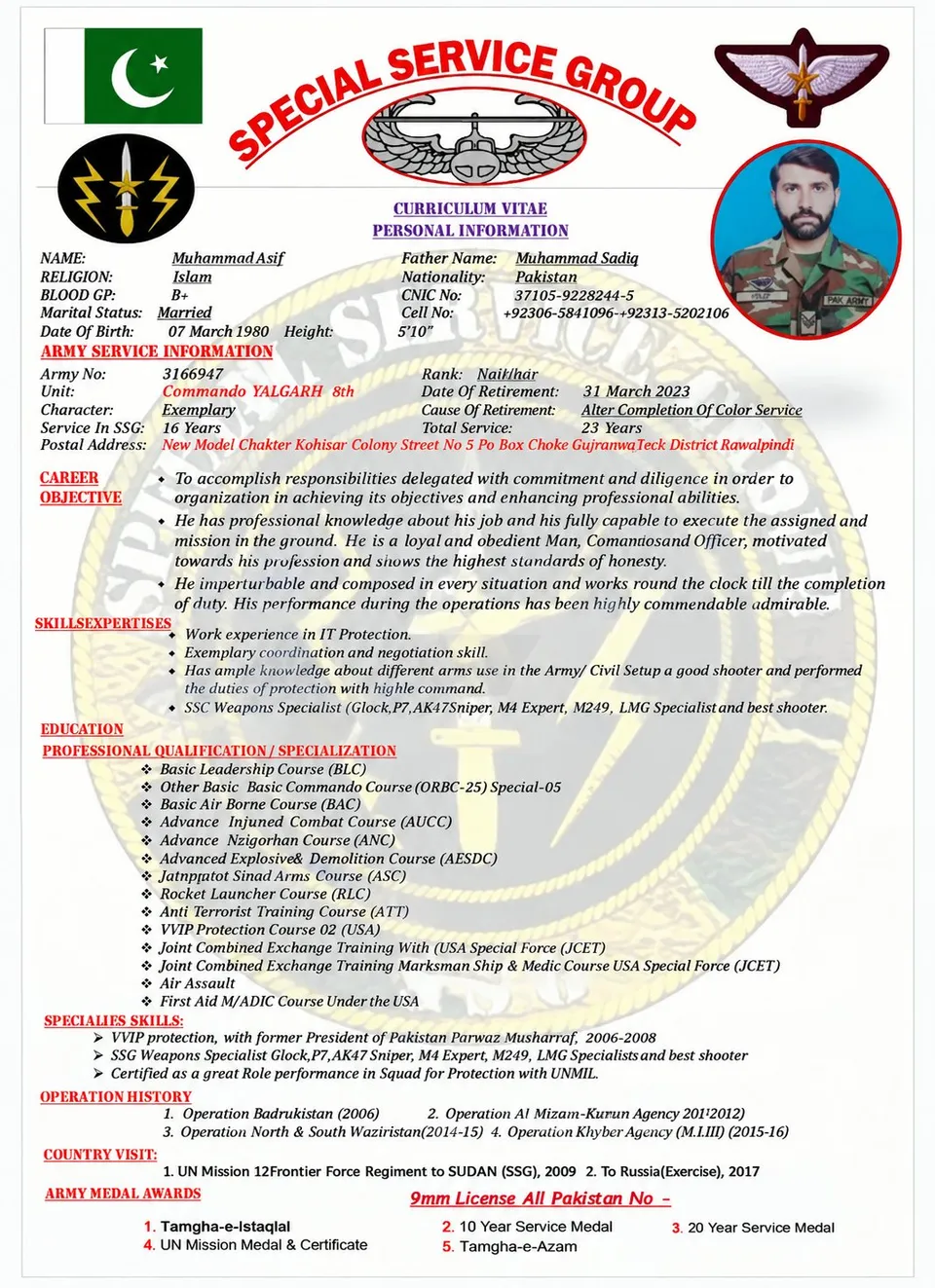
The identity material and résumé contain matching biographical information, including the name, father’s name and date of birth. The service record identifies Asif as a Naik/Havildar who spent 16 years with the Pakistan Army’s Special Service Group before retiring on March 31, 2023.
The résumé says Asif served with a Commando Yalgar formation, performed VVIP protection duties connected with former Pakistan president Pervez Musharraf between 2006 and 2008, and underwent specialised training in airborne operations, explosives, anti-terror operations, weapons and marksmanship.
It also lists operational deployments in Balochistan, North and South Waziristan and Khyber, as well as service with a United Nations mission in Sudan.
Those individual details have not been independently authenticated through Pakistan’s military or identity authorities and therefore remain claims contained in the circulated documents.
The central claim about his military background, however, does not rest solely on the documents. Indian security sources separately identified Moosa as a former Pakistan Army SSG para-commando who subsequently joined Lashkar-e-Taiba. Multiple reports citing security agencies have now carried that assessment.
View this post on X
His reported transition from soldier to terrorist appears to have occurred rapidly.
According to security assessments reported in Indian media, Asif left the Pakistan Army in 2023 and is believed to have infiltrated into Jammu and Kashmir in September that year. He subsequently operated across the Pir Panjal region before moving into the Kashmir Valley.
Investigators have associated Moosa with a series of terrorist attacks.
Security sources have linked him to attacks across the Poonch-Rajouri belt and Kashmir Valley, while his name also emerged in the investigation into the April 22, 2025 Pahalgam terrorist attack, in which 26 people were killed.
Jammu and Kashmir Police had announced a ₹20 lakh reward for information concerning Pakistan-based LeT terrorists, including Hashim Musa, in connection with the investigation. The National Investigation Agency’s subsequent chargesheet identified Pakistan-based Lashkar-e-Taiba and its proxy, The Resistance Front, in connection with the Pahalgam conspiracy.
Reports have additionally linked Asif to the December 2023 Dera Ki Gali ambush, the May 2024 attack on an Indian Air Force convoy in Poonch and the October 2024 Gulmarg attack. Responsibility for each incident, however, should remain attributed to the investigating and security agencies rather than inferred simply from his membership of LeT.
His military background is particularly relevant because of the nature of terrorist operations across the Pir Panjal.
A soldier with years of SSG experience would potentially bring advanced fieldcraft, weapons handling, survival, navigation and small-unit tactical skills to a terrorist group operating in mountainous and heavily forested terrain. That makes the reported movement of a veteran commando into LeT operational ranks more consequential than the recruitment of an ordinary cadre.
Moosa’s movements appear consistent with that operational profile. Officials say he operated across the Pir Panjal landscape before shifting into the forested Yousmarg-Budgam belt. He escaped an encounter in the same region on September 5 in which his associate Yasir was killed, prompting security forces to continue tracking him.
Operation Korag ended that pursuit on September 29.
His killing has therefore produced more than the elimination of a wanted LeT commander. The identity material and purported service record recovered or circulated after the operation raise a larger question about the relationship between Pakistan’s military ecosystem and terrorist groups operating against India.
If authenticated, the documents establish a striking sequence: a man who reportedly spent more than two decades in the Pakistan Army, including extensive service in its elite SSG, retired in March 2023, allegedly infiltrated into Jammu and Kashmir months later and emerged as a Lashkar-e-Taiba commander associated by Indian agencies with major terrorist attacks.
That sequence is significant evidence of how Pakistan-trained military expertise can migrate into terrorist networks operating in Jammu and Kashmir.
It also adds to India’s longstanding case that terrorism in Jammu and Kashmir is not simply an indigenous phenomenon. In Moosa’s case, Indian authorities identify the slain commander as a Pakistani national and Pakistan-based LeT operative; security sources identify him as a former SSG para-commando; and the newly circulated documents, if authenticated, would provide unusually detailed evidence of his Pakistan Army service. The Army has separately confirmed that he was a Pakistan-based LeT terrorist killed while operating inside Jammu and Kashmir.
But the evidence needs to be stated precisely.
The documents can establish Moosa’s personal Pakistan Army background if authenticated. They do not, on their own, prove that the Pakistan Army institutionally recruited, directed or deployed him on behalf of Lashkar-e-Taiba after his retirement. Establishing that higher level of state involvement would require evidence of tasking, command, financing, facilitation, communications or continuing links with serving Pakistani officials.
Even without making that additional leap, the documented pattern is consequential: a reported 23-year Pakistan Army veteran and SSG-trained commando appears to have moved from military retirement to infiltration and then into the operational structure of a Pakistan-based terrorist organisation fighting in Jammu and Kashmir within months.
For Indian investigators, the next question is therefore larger than who Mohammad Asif was.
It is how he crossed that institutional boundary so quickly, who facilitated his infiltration, what networks sustained him inside Jammu and Kashmir, and whether his transition from Pakistan’s elite military establishment to Lashkar-e-Taiba was an individual decision or part of a wider system.
The documents do not answer all of those questions. But if authenticated, they provide a potentially important evidentiary trail connecting Pakistani military training, a Pakistani national, a Pakistan-based terrorist organisation and terrorist activity inside Jammu and Kashmir. That is the part of the record that now warrants deeper investigation.