NEW DELHI, Oct. 2
The Election Commission of India has directed 20 states and Union Territories where the Special Intensive Revision of electoral rolls has been completed to launch a special enrolment drive for eligible voters who may have been left out, amid controversy over deletions during the nationwide exercise.
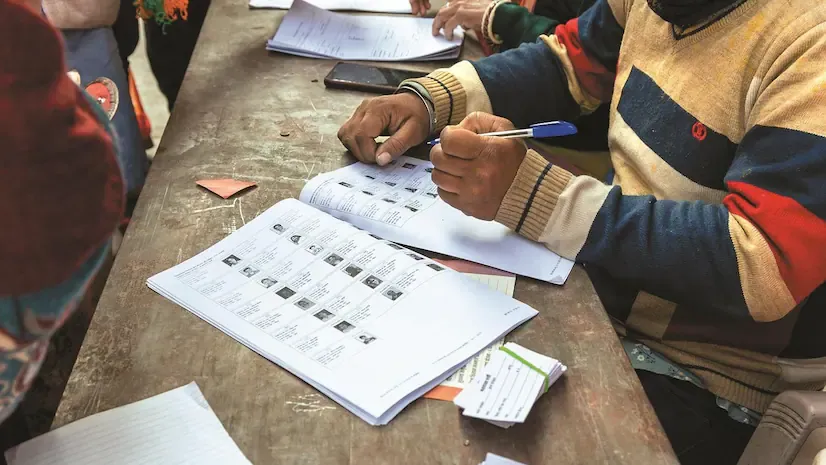
The Commission has asked election officials to compare electoral rolls prepared before and after the Special Intensive Revision, or SIR, identify voters whose names were deleted and determine whether any eligible electors were inadvertently excluded.
The directions were issued in writing on September 29 and reiterated during a video conference with Chief Electoral Officers on Thursday.
Chief Electoral Officers, District Election Officers and Electoral Registration Officers in the 20 states and Union Territories have been instructed to focus particularly on “left out and young/first time eligible electors”.
Those identified during the exercise will be able to seek enrolment through the continuous updation process using the statutory Form 6.
The move assumes significance because of the debate surrounding a declaration that had been introduced into the online version of Form 6 in July.
Applicants using the online form had been required to state whether they, or their parents, appeared on the electoral roll following the previous SIR. The system would not permit an applicant to submit the form without answering the question.
The September 29 communication has now restricted that declaration to the SIR phase.
As a result, voters applying for inclusion after completion of SIR in the 20 states and Union Territories will use the regular statutory Form 6 without the additional question.
The Commission has simultaneously ordered a comparison of the pre-SIR and post-SIR electoral rolls.
Election officials have been asked to prepare lists of voters whose names disappeared during the revision and examine whether eligible people were left out.
Political parties and their booth-level agents can also be involved in identifying such voters, providing another channel through which potential exclusions can be brought to the attention of election officials.
The special drive comes against the backdrop of political disputes over the number and nature of deletions made during the SIR process.
The Commission’s latest directions focus on identifying eligible electors who may have been excluded and providing them with an opportunity to return to the rolls through the existing enrolment mechanism.
The instructions are particularly relevant for first-time voters and other eligible citizens who were not included in the revised electoral rolls.
A separate development in Maharashtra, where the SIR process is still underway, has also placed greater emphasis on safeguards before a voter’s name is removed.
Following the Election Commission’s meeting with state Chief Electoral Officers, Maharashtra election authorities instructed Electoral Registration Officers not to exclude names in haste.
Officials handling electoral rolls in Mumbai City and Mumbai Suburban districts have been told that voters should be given sufficient opportunity to provide the necessary documents before any decision on exclusion is made.
The process should include scrutiny of the material submitted and, where required, a hearing before a final order is passed.
The instructions emphasise that eligible voters should not remain excluded from electoral rolls or face unnecessary obstacles in exercising their right to vote.
Additional safeguards have been introduced for voters who have received notices because they are categorised as “unmapped” or their records contain “logical discrepancies”.
Such voters will no longer necessarily have to appear personally before election officials.
Instead, Booth Level Officers will visit their homes, collect the required documents and upload them for consideration by the Electoral Registration Officer.
People who have already received notices requiring them to attend hearings will be informed by telephone or WhatsApp where personal appearance is no longer necessary.
Special camps are also scheduled during October to facilitate the process.
If questions concerning a voter’s eligibility remain unresolved after a Booth Level Officer’s visit, the voter will be provided another opportunity to submit documents. A hearing and formal order will follow before a final decision to remove the name can be taken.
The measures indicate a two-track approach as the SIR exercise progresses.
In the 20 states and Union Territories where the revision has already been completed, election authorities will look back at the changes between the old and new rolls to identify eligible voters who may have been left out.
In areas where revision remains underway, election officials are being asked to apply additional scrutiny and procedural safeguards before excluding voters.
The effectiveness of the special drive will ultimately depend on how comprehensively pre- and post-SIR rolls are compared, whether potentially excluded voters can be contacted, and how quickly valid applications for inclusion are processed.
For voters whose names are missing after completion of the revision, the Commission’s latest direction provides a route back onto the electoral roll through the regular Form 6 and continuous updation process.