NEW DELHI, Oct. 5
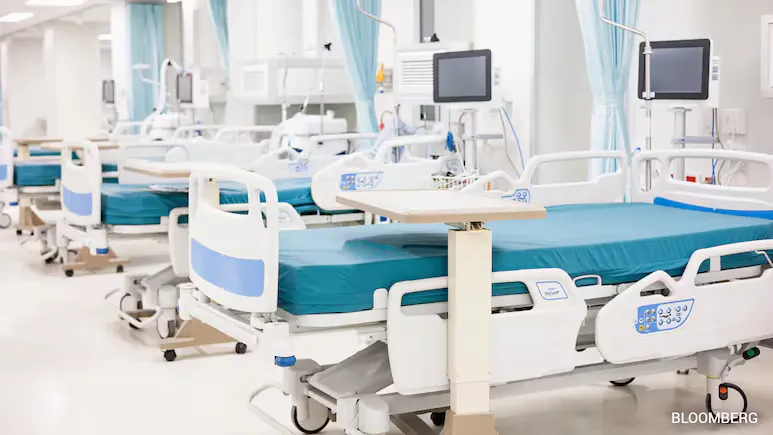
Global investors have poured about $10 billion into Indian hospital chains over the past five years, helping finance new facilities, advanced medical technology and acquisitions, but the investment boom is intensifying a debate over whether the rapid corporatisation of healthcare is pushing treatment beyond the reach of ordinary patients.
Private equity groups including Blackstone, KKR, TPG and General Atlantic have invested heavily in India’s hospital sector, attracted by rising demand for specialised treatment and the country’s chronic shortage of hospital infrastructure.
Data compiled by EY show global investors have spent around $10 billion acquiring stakes in Indian hospital chains over the five-year period.
Private equity-backed operators still account for less than 5 per cent of India’s hospital beds, but they have developed a significant presence in high-value specialties such as cancer treatment and cardiac surgery.
The expansion has helped hospitals add capacity and expensive medical technology while accelerating consolidation of what has historically been a fragmented healthcare market.
It has also generated substantial returns for investors.
India’s growing capital markets have made hospital investments particularly attractive because public listings and secondary share sales provide private equity funds with clearer routes to exit their investments.
KKR’s investment in Kerala-based Baby Memorial illustrates the scale of the expansion.
Before KKR invested in the company in July 2024, Baby Memorial operated roughly 1,000 beds. Within two years, the hospital group had exceeded its pre-tax earnings target, reaching ₹6 billion in fiscal 2026, driven largely by acquisitions.
KKR has continued expanding.
In August, it agreed to acquire the Indian operations of Swedish hospital operator Medicover for $1.4 billion. The transaction is expected to nearly double the number of hospital beds owned by KKR in southern India to around 10,000.
The firm had previously invested in Radiant Life Care and helped combine it with Max Healthcare before exiting Max in 2022.
Other investors have also recorded substantial returns.
Singapore’s Temasek generated roughly a tenfold return on its 2017 investment in Manipal Health Enterprises following a partial stake sale during the hospital operator’s initial public offering in July. The investment produced an internal rate of return of about 30 per cent.
The underlying investment case remains strong.
India has only around 1.3 hospital beds for every 1,000 people, leaving substantial unmet demand for healthcare infrastructure.
Policymakers identified about 600 hospital projects requiring roughly $32 billion in investment as early as 2021.
Demand for cancer treatment, cardiac care and other specialist services has also increased alongside rising incomes and longer life expectancy.
Private hospitals are consequently expected to continue growing rapidly.
Crisil estimates revenue at India’s private hospitals could increase by as much as 15 per cent in fiscal 2027, supported by higher patient volumes and an increase of up to 7 per cent in average revenue per occupied bed.
But the same financial performance attracting investors is generating increasing concern among policymakers and insurers.
A parliamentary committee warned in August that an unchecked inflow of foreign capital was facilitating the acquisition of relatively affordable midsize hospitals by larger corporate groups.
The committee recommended reconsidering foreign investment rules for healthcare, examining price controls and establishing a regulator for hospitals.
Affordability is at the centre of the concern.
Medical inflation has been running at as much as 13 per cent annually, according to a parliamentary report.
Treatment in private hospitals can cost an average of five to 10 times as much as in the public healthcare system, with some of the largest differences appearing in cancer treatment, cardiac procedures, kidney failure treatment and maternity services.
That widening gap has increasingly brought hospitals and health insurers into conflict.
Insurers argue that some private hospitals, including private equity-backed chains, are driving bills higher and encouraging patients towards expensive procedures.
Hospital operators counter that insurers frequently delay payments and provide reimbursement rates that do not adequately cover the cost of delivering treatment.
Advanced medical technology has become another point of disagreement.
Robotic surgery illustrates the problem.
Hospitals argue that newer surgical techniques and technologies can improve patient outcomes. Insurers increasingly want evidence demonstrating that the additional clinical benefit justifies the higher cost.
For patients, the disagreement can translate directly into unexpected out-of-pocket expenses.
In one case highlighted in the report, a 40-year-old Mumbai business consultant sought robot-assisted surgery believing her government-backed health insurance policy would cover the procedure.
She paid around ₹21,000 annually for insurance providing ₹1.5 million in base coverage, with provisions capable of substantially increasing the available benefit.
The insurer, however, declined to reimburse the robotic component of the procedure, leaving her to pay the difference herself.
Such disputes expose a fundamental tension in India’s rapidly changing healthcare market.
Hospitals increasingly control the treatment decision and patient relationship, while insurers are often brought into the process after a diagnosis and treatment plan have already been determined.
Insurers are therefore seeking stronger evidence-based treatment protocols and greater influence over which procedures should qualify for reimbursement.
The Insurance Regulatory and Development Authority of India has attempted to reduce friction through new rules governing cashless treatment and standardised authorisation procedures.
Whether regulation can restrain medical costs without discouraging investment remains an open question.
Private investors warn that aggressive price regulation could weaken India’s attractiveness as a destination for healthcare capital.
EQT Group Chair Jean Eric Salata has argued that greater price intervention would run against India’s broader trend towards deregulation and could discourage future foreign investment.
That leaves policymakers confronting a difficult balance.
India needs enormous amounts of capital to expand its healthcare infrastructure. Private investment can provide hospitals, specialist treatment, medical equipment and management expertise that the country urgently requires.
At the same time, healthcare differs from many other investment sectors because patients frequently have limited ability to postpone treatment, negotiate prices or choose cheaper alternatives once a medical emergency occurs.
The biggest risk may therefore fall on India’s middle-income population.
Poorer households can qualify for government healthcare programmes, while affluent families may be able to absorb higher medical costs or purchase extensive insurance coverage.
Between them is a large group that earns too much to qualify for substantial state support but may not have enough insurance or savings to absorb rapidly rising hospital bills.
The central question surrounding India’s $10 billion private-equity hospital boom is therefore no longer simply whether foreign capital can expand healthcare capacity.
It is whether India can attract the tens of billions of dollars needed to build hospitals while ensuring that the healthcare created by that investment remains affordable to the people who need it.