NEW DELHI, Sept. 22
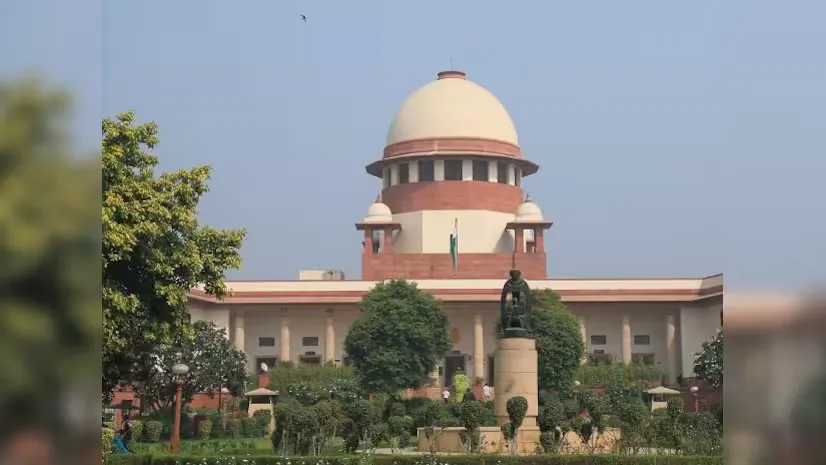
The Supreme Court on Tuesday sought responses to a challenge against a National Company Law Appellate Tribunal ruling that restricts when company tribunals can order an extraordinary general meeting, taking up a dispute that could clarify the relationship between two separate routes available to shareholders under the Companies Act.
A Bench of Justices K V Viswanathan and Arun Palli issued notice in the matter and scheduled the next hearing for November 6. The appeal challenges an August 17 order of the National Company Law Appellate Tribunal, or NCLAT, concerning the circumstances in which the National Company Law Tribunal can direct that an extraordinary general meeting, or EGM, be held.
At the centre of the case is Section 98 of the Companies Act, 2013, which gives the NCLT the power to order meetings of company members when calling or conducting such a meeting in the usual manner has become impracticable.
The NCLAT had held that this was an exceptional power and could be exercised only when the circumstances demonstrated that holding the meeting without the tribunal’s intervention had become impracticable. The dispute before the Supreme Court now concerns how high that threshold should be and whether shareholders must first pursue another remedy provided under Section 100(4) of the Act.
Senior Advocate C Aryama Sundaram, appearing for the appellant along with Advocate Atul Shankar Vinod, argued that the statutory test was one of impracticability rather than impossibility.
“It’s a question of impracticability, not impossibility,” Sundaram told the court.
His argument also focused on the relationship between Sections 98 and 100(4).
Section 100 provides the mechanism through which shareholders can requisition an EGM. Where the board does not proceed to call the meeting following a valid requisition, Section 100(4) allows the requisitionists to convene it themselves.
The appellant argued that Section 98 and Section 100(4) provide independent remedies. On that interpretation, shareholders seeking intervention from the NCLT under Section 98 should not first have to demonstrate that they attempted to convene the meeting themselves under Section 100(4).
“Section 98 has been recognised rightly so, not to be dependent on 100 at all. 100(4) and 98 are open,” Sundaram submitted.
The practical problem, according to the appellant, is that shareholders attempting to convene a meeting themselves may still depend on cooperation from the company. That can include access to corporate records and, crucially, the list of shareholders required to issue meeting notices.
Sundaram told the court that his clients needed such cooperation to exercise their rights under Section 100(4), arguing that the absence of access to company records made the alternative remedy difficult to use.
The dispute also involves an unusual balance of power within the company. The appellants told the court that their side held about 54 per cent of the company’s general body but remained in a minority on its five-member board, which was divided 3:2. They argued that this left them without control over the company’s records and infrastructure despite their majority shareholding position.
The respondents offered a different interpretation.
Advocate Thushara James argued that Section 100(4) already provides shareholders with a statutory mechanism for convening an EGM when the board does not act on their request.
“100(4) is a statutory mechanism, which provides for the requisitionists to call for the meeting themselves, irrespective of what the Board says or not,” she told the Bench.
Justice Viswanathan also pointed to the availability of that route during the hearing.
“If you’re refusing to convene a meeting under 100(2), then the route is clear. They can then go under 100(4),” he observed.
The case arose from a corporate dispute involving Pearl City Marine Products.
Two directors were removed from the company’s board at an EGM held in November 2025. A subsequent proposal to re-induct them was placed before the board but rejected by a 3:2 vote on February 9, 2026.
The dispute then reached the Kochi Bench of the NCLT, which allowed an application under Section 98 seeking an extraordinary general meeting.
The NCLAT overturned that decision. It held that neither the 3:2 division on the board nor the existence of about 110 other shareholders was sufficient to establish that convening an EGM had become impracticable. The appellate tribunal also noted that the requisitionists had not attempted to use the mechanism available under Section 100(4).
The Supreme Court proceedings could therefore clarify an important distinction in company law: whether Section 98 operates as an independent remedy whenever circumstances make the ordinary process of holding a meeting impracticable, or whether tribunal intervention should remain exceptional when shareholders still have the statutory option of convening an EGM themselves.
The distinction could matter in closely contested corporate disputes. A shareholder or group of shareholders may possess sufficient voting strength to influence the outcome of a general meeting while lacking control of the board or access to the company’s administrative machinery. In such circumstances, the ability to obtain shareholder records and issue notices can become as important as the legal right to requisition the meeting itself.
The Supreme Court has not ruled on those questions. Tuesday’s order only issued notice on the challenge, and the rival interpretations of Sections 98 and 100(4) remain to be decided.
When the case returns on November 6, the court will have before it a relatively narrow statutory dispute with potentially wider implications for shareholder rights: how far shareholders must go on their own before asking a company tribunal to step in and convene a meeting.