NEW DELHI, Sept. 22
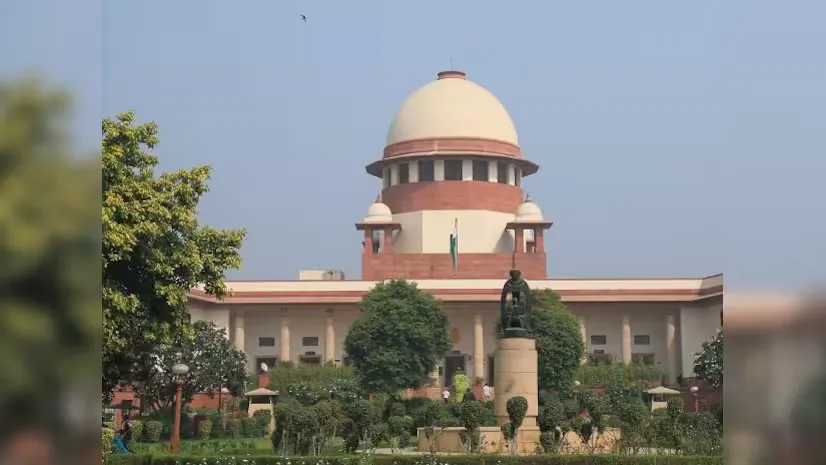
The Supreme Court has observed that a person who declines to sing some or all stanzas of Vande Mataram because of a genuine conscientious objection should not face criminal prosecution, drawing on an earlier landmark judgment protecting freedom of conscience in relation to the National Anthem.
The observations came during the hearing of a petition filed by Carnatic vocalist T M Krishna challenging provisions governing the National Song and government directions concerning the singing of its complete six-stanza version at specified official, ceremonial and cultural occasions.
A three-judge Bench comprising Chief Justice of India Surya Kant and Justices Joymalya Bagchi and V Mohana referred to the Supreme Court’s 1986 ruling in Bijoe Emmanuel v State of Kerala, a case that established important protections for individuals who respectfully decline to participate in the singing of the National Anthem because of sincerely held religious beliefs.
Justice Bagchi observed that the principle recognised in that judgment could apply to a conscientious objector who chooses not to recite one or all stanzas of Vande Mataram. The court indicated that merely declining to sing, when based on a genuine objection of conscience, should not by itself expose a person to criminal prosecution.
The Bench’s observations do not amount to a final ruling on Krishna’s challenge. The Supreme Court has asked the Centre to respond to his petition within two weeks, and the constitutional questions raised in the case remain before the court.
Krishna has challenged Section 3 of the Prevention of Insults to National Honour Act, 1971, following its amendment in 2026. The amended provision deals with intentionally preventing the singing of the National Anthem or National Song, or causing disturbance to an assembly engaged in singing either. A violation can attract imprisonment of up to three years, a fine, or both.
His petition also challenges directions issued by the Ministry of Home Affairs concerning the singing of the complete six-stanza version of Vande Mataram at specified government, ceremonial and cultural events.
The petition argues that requiring an individual to sing the complete version can amount to compelled participation because some of its stanzas contain references to Hindu deities. Krishna contends that while the State can require respect for national symbols, it cannot compel an individual to sing words that conflict with a sincerely held matter of conscience.
The challenge invokes several fundamental rights under the Constitution, including Article 14 on equality before the law, Article 15(1) on discrimination, Article 19(1)(a) protecting freedom of speech and expression, Article 21 protecting life and personal liberty, and Article 25(1), which guarantees freedom of conscience and the right freely to profess, practise and propagate religion. These are arguments advanced in the petition and have not yet been finally adjudicated by the court.
The reference to Bijoe Emmanuel is central to the present proceedings.
That case arose after three schoolchildren in Kerala belonging to the Jehovah’s Witnesses faith declined to sing the National Anthem because of their religious beliefs. The children stood respectfully while the anthem was played but did not join in the singing.
The Supreme Court held in 1986 that their conduct did not constitute disrespect and protected their freedom of conscience. The judgment established a distinction between showing disrespect towards a national symbol and respectfully declining active participation because of a genuine belief.
The present case asks the court to consider how far that principle extends to Vande Mataram under the amended legal framework.
The distinction could be important because the issue before the court is not simply whether Vande Mataram is entitled to respect. The constitutional question concerns whether respect can legally be converted into compulsory vocal participation and, if so, how such a requirement interacts with freedoms of conscience, religion and expression.
The court’s observations suggest that it is examining the difference between deliberately obstructing or disrupting the singing of a national symbol and an individual’s decision not to participate while otherwise behaving respectfully.
That distinction also follows from the language of the amended Section 3 described in the proceedings. The provision addresses intentional prevention of singing and disturbance of an assembly, while Krishna’s challenge raises the separate question of whether an individual can be penalised simply for declining to sing.
The Supreme Court has not yet decided the constitutional validity of the amended provision or the government’s directions on the complete version of Vande Mataram. Nor have the Bench’s oral observations settled how the law should apply in every circumstance.
Krishna has also sought interim protection against the operation of the provisions he has challenged while the petition remains pending. The Centre will now have an opportunity to place its position before the court.
The eventual judgment could provide greater clarity on the boundary between the State’s authority t