NEW DELHI, Sept. 30
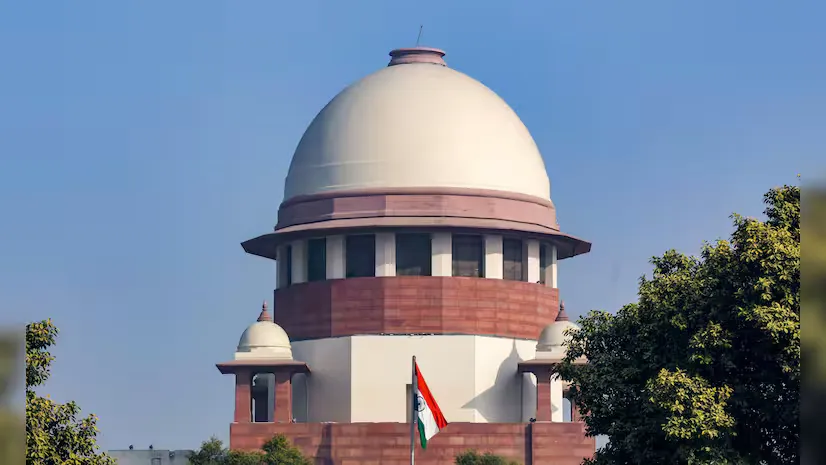
The Supreme Court on Wednesday reserved its judgment on whether a Committee of Creditors can withdraw a resolution plan after approving it and submitting it to the National Company Law Tribunal, a question that could have implications for the finality of decisions taken during corporate insolvency proceedings.
A bench of Justices J B Pardiwala and K Vinod Chandran heard arguments arising from Indian Bank’s challenge to an April 20, 2026 order of the National Company Law Appellate Tribunal in the insolvency proceedings of TD Toll Road Private Limited.
The dispute centres on whether creditors retain the power to reconsider an approved resolution plan when the financial circumstances of the insolvent company change materially before the NCLT formally sanctions the plan.
The NCLAT had overturned an earlier NCLT decision permitting withdrawal of the application seeking approval of the resolution plan. The appellate tribunal held that once the Committee of Creditors, or CoC, approves a plan and submits it to the adjudicating authority, it cannot subsequently withdraw that approval.
Indian Bank challenged that conclusion before the Supreme Court.
Appearing for the bank, Senior Advocate Gopal Sankaranarayanan argued that creditors should retain the ability to reconsider their decision when circumstances materially change between approval of a resolution plan and its consideration by the NCLT.
The plan involving TD Toll Road was approved during the Covid-19 period, when toll collections had been adversely affected. The company’s financial position subsequently improved significantly, the court was told.
Sankaranarayanan said the CoC held several meetings between its 14th and 22nd meetings and found a substantial improvement in the company’s solvency position.
The creditors consequently wanted to invite fresh resolution plans that reflected the changed financial circumstances rather than proceed with the earlier proposal.
The successful resolution applicant opposed that position.
Senior Advocate Nidhesh Gupta, representing the applicant, argued that a CoC-approved resolution plan could not be treated as an ordinary contract governed solely by principles of contract law during the period between creditors approving it and the NCLT granting formal sanction.
Gupta relied on the Supreme Court’s earlier ruling in Ebix Singapore, arguing that an approved resolution plan cannot remain open to withdrawal or modification until approval under Section 31 of the Insolvency and Bankruptcy Code.
The statutory insolvency framework, he submitted, gives an approved resolution plan consequences beyond those arising from an ordinary commercial agreement even before the adjudicating authority formally sanctions it.
Gupta also argued that the principle should apply equally to creditors and resolution applicants.
If a successful applicant cannot withdraw from a resolution plan simply because the corporate debtor’s financial condition deteriorates after the plan has been approved, creditors should not be allowed to abandon the same plan merely because the company’s finances subsequently improve, he submitted.
The competing arguments raise a broader question about certainty in the insolvency process.
The CoC is the principal commercial decision-making body during a corporate insolvency resolution process under the IBC. Creditors assess competing proposals and decide whether to approve a resolution plan, which is then placed before the NCLT for statutory approval.
The present dispute concerns the period between those two stages.
Indian Bank’s argument would preserve some room for creditors to reconsider their commercial decision when the underlying circumstances change substantially before the tribunal approves the plan.
The successful resolution applicant’s position would make the CoC’s approval effectively irreversible once the plan has been submitted to the adjudicating authority, preventing either side from seeking to reopen the commercial bargain because circumstances later become more favourable or less favourable.
During Wednesday’s hearing, the Supreme Court questioned what would happen to creditors’ recoveries if the existing plan were abandoned and a fresh resolution process initiated.
The bench also examined regulations issued by the Insolvency and Bankruptcy Board of India that permit CoC meetings to continue until a resolution plan receives approval under Section 31 of the IBC or the corporate debtor is ordered into liquidation under Section 33.
Another issue before the court was the position of a successful resolution applicant that has already acted on the basis of the creditors’ approval.
The bench noted that the successful applicant in the TD Toll Road proceedings had furnished a performance bank guarantee of about ₹8.62 crore after the CoC approved its proposal.
That circumstance adds another dimension to the question of finality. Allowing creditors to reverse an approved plan could affect a resolution applicant that has already committed resources and taken steps in reliance on the CoC’s decision.
At the same time, the creditors contend that requiring them to remain bound by a plan negotiated under substantially different financial circumstances could prevent them from seeking better recoveries for lenders.
The court has not yet accepted either position.
Its eventual judgment will determine whether a CoC’s commercial discretion continues after it has approved a resolution plan and sent it to the NCLT, or whether that approval marks a point beyond which creditors cannot reconsider their decision.
The issue goes to the balance between commercial flexibility and certainty under the Insolvency and Bankruptcy Code.
Allowing reconsideration could give creditors scope to respond when the value or financial condition of a corporate debtor changes significantly before final approval. Restricting withdrawal, however, could provide greater certainty to successful resolution applicants and prevent approved insolvency plans from being reopened as economic circumstances fluctuate.
After hearing arguments from the parties, the bench reserved its judgment.