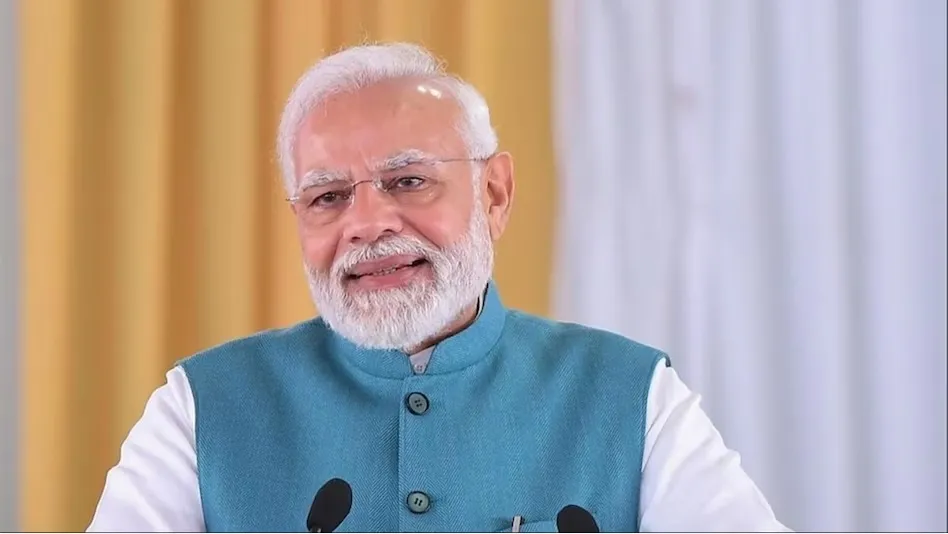
The “Chintan Shivir”, scheduled for September 23 and 24, will bring together the full Union Council of Ministers at Seva Teerth, which houses the Prime Minister’s Office.
The meeting comes as the government approaches the halfway point of its current term. Ministers are expected to review the progress of major schemes and policies and discuss ways to improve implementation and public service delivery.
Other issues on the agenda include time management, coordination between ministries and departments, and the use of technology in governance.
The meeting follows a series of discussions Modi has held with senior government secretaries in recent months. At a meeting on July 28 involving officials from the economy and finance, commerce and industry, and technology sectors, the prime minister said reforms should be treated as a continuing requirement for effective governance rather than as a one-time exercise.
The government has also been working on ways to improve coordination between ministries and reduce what Modi has described as horizontal and vertical silos within the administration. Ministries have been asked to maintain live dashboards of their work, review progress and seek feedback from staff.
The ministers are expected to submit self-assessments of their respective ministries at the two-day meeting. Some are also likely to make presentations on policies and measures undertaken in their sectors as part of the government’s broader reform agenda.
Six groups of eight ministers each had earlier been formed to discuss governance issues and the time-bound implementation of government programmes. Those groups have held several meetings ahead of the Chintan Shivir and discussed presentations expected to be made during the conclave.
The meeting is also taking place against a difficult external economic backdrop. The conflict in West Asia has raised concerns over India’s energy security and exports, while the possibility of further sanctions has added uncertainty for businesses and the wider economy.
The government has been seeking to diversify both export markets and energy supplies. India has also signed, or is working towards implementing, free trade agreements with countries and trading blocs including New Zealand, Canada and the European Union.
In his Independence Day address on August 15, Modi had called for a faster pace of reforms and outlined what he described as a seven-pronged strategy, or “Sapta Dhara”, focused on areas including manufacturing, food processing, technology and innovation, connectivity, defence production, the green and blue economies, and India’s traditional systems and soft power.
The prime minister has also called for reforms aimed at improving the ease of living, institutional efficiency and work culture across government.
The Chintan Shivir will be the second such high-level exercise under the current government. Modi chaired a similar meeting in October 2021, when ministers discussed governance and policymaking.
The meeting comes ahead of assembly elections in Uttar Pradesh, Punjab, Goa, Manipur and Uttarakhand. It also takes place amid speculation about a possible reshuffle of the Union Council of Ministers, although there has been no official announcement of such a move.
The immediate focus of the two-day discussions, however, is expected to remain on the functioning of ministries, implementation of existing programmes and the government’s reform agenda for the remainder of its term.