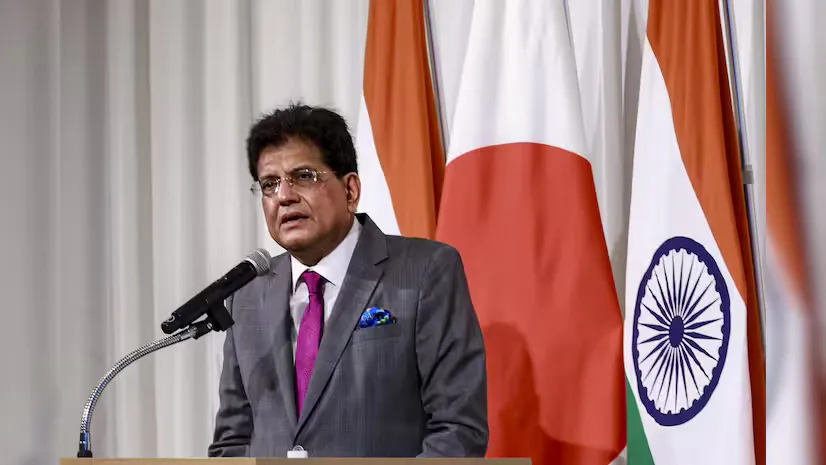
Goyal will attend the G20 Trade and Investment Ministerial Meeting in Washington and use the visit for bilateral discussions on the proposed trade pact, according to people familiar with the matter.
The visit follows a period of intensified engagement between the two governments over tariffs and market access. Both sides have been working towards an interim agreement that could address some of the immediate trade disputes while negotiations continue on a broader bilateral arrangement.
Goyal’s discussions will take place days after External Affairs Minister S. Jaishankar said a trade agreement could contribute to improving India-US relations. Jaishankar, speaking in New York, described trade as an important part of a much wider partnership but acknowledged that recent economic differences had affected ties.
The negotiations have become increasingly important as Washington’s trade policies create new uncertainty for Indian exporters.
India and the United States have been discussing an interim agreement for several months, but differences remain in politically sensitive areas. Agriculture and dairy have been among the most difficult sectors for New Delhi, which has sought to protect domestic producers while negotiating greater access for Indian goods in the US market.
Washington, in turn, has pushed for wider market access and reductions in Indian tariffs and non-tariff barriers.
Goyal’s visit provides another opportunity for negotiators to determine whether those differences can be narrowed sufficiently to produce an interim arrangement.
The talks are also taking place against a more complicated strategic backdrop. The United States has introduced measures linking trade policy with geopolitical issues, including India’s continued purchases of Russian energy.
New Delhi has maintained that its energy policy is guided by national requirements, affordability and security of supply. India has also raised concerns with Washington over US legislation that could expose countries buying Russian oil and gas to additional tariffs.
Those issues have added another layer to trade negotiations that were already dealing with difficult questions over market access.
Despite the disagreements, both governments have continued high-level engagement rather than allowing the trade dispute to halt the wider relationship.
India and the United States cooperate extensively in defence, critical and emerging technologies, artificial intelligence, semiconductors, energy and the Indo-Pacific. Bilateral trade and investment have also expanded substantially, giving both governments a commercial incentive to resolve outstanding disputes.
An interim agreement would not necessarily settle all of those issues.
Such an arrangement could instead provide an early package covering areas where compromises are possible, leaving more sensitive questions for subsequent negotiations. The scope of any agreement will depend on the concessions the two sides are prepared to make.
Goyal has previously held several rounds of discussions with US officials as the negotiations have progressed. Indian and American negotiating teams have also remained engaged at the official level.
The minister’s presence in Washington for the G20 meeting gives both sides another opportunity for political-level intervention in the talks.
The G20 Trade and Investment Ministerial Meeting will bring together ministers from the world’s largest economies to discuss international trade at a time of growing tariff barriers, geopolitical fragmentation and pressure on global supply chains.
For India, the meeting provides a multilateral setting to discuss broader trade concerns while simultaneously pursuing its bilateral negotiations with Washington.
New Delhi has repeatedly argued for predictable and non-discriminatory international trade rules and has expressed concern over unilateral tariffs and other measures that could disrupt established commercial relationships.
India must also balance those positions against its own domestic economic priorities.
Agriculture remains particularly sensitive because of the large number of Indians dependent on farming and related activities. Dairy is similarly protected, making significant concessions in either sector difficult for the government.
The United States, however, has long sought greater access to the Indian market for agricultural and other products.
The challenge for negotiators is therefore to find enough areas of agreement to produce a commercially meaningful package without requiring either government to make concessions it regards as unacceptable.
An interim pact could also help restore predictability for companies affected by uncertainty over tariffs.
Businesses on both sides have an interest in knowing the duties and market-access conditions they will face when making investment, sourcing and export decisions. Prolonged uncertainty can complicate those decisions even when the broader economic relationship remains strong.
Goyal’s visit does not by itself indicate that an agreement is imminent. Neither side has announced that the outstanding issues have been resolved or set a confirmed date for concluding the interim pact.
The Washington discussions will instead test how much ground has been covered since earlier negotiating rounds and whether political intervention can bridge the remaining differences.
The talks also carry significance beyond the immediate tariff dispute. India and the United States have spent more than two decades expanding a strategic partnership that increasingly rests on economic and technological cooperation alongside defence and diplomacy.
Recent trade tensions have tested that trajectory without reversing it.
A workable interim agreement could remove one of the most visible sources of friction and provide space for negotiations on the larger economic relationship. Failure to narrow the differences would leave tariffs and market access as continuing irritants at a time when both governments are trying to deepen cooperation elsewhere.
Goyal’s Washington meetings will therefore be watched less for the fact that negotiations are continuing than for whether they produce enough movement to bring an interim trade agreement within reach.