NEW DELHI, Sept. 22
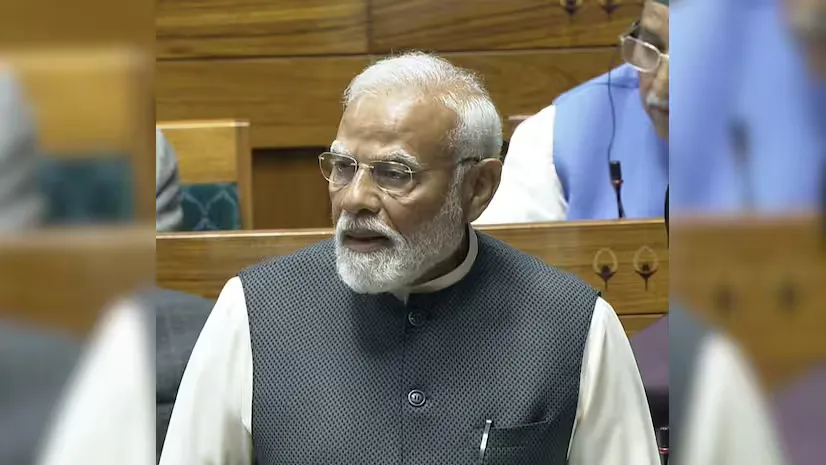
Prime Minister Narendra Modi will chair a two-day meeting of the Union Council of Ministers beginning Wednesday, with reforms, implementation of government programmes and coordination between ministries expected to dominate discussions as his government approaches the halfway point of its current term.
The “Chintan Shivir”, scheduled for September 23 and 24 at Seva Teerth, which houses the Prime Minister’s Office, will bring together the entire Union Council of Ministers. Ministers are expected to review the performance of their ministries and discuss measures the government could pursue during the remainder of its term.
The meeting follows Modi’s Independence Day address on August 15, when he called for a faster pace of reform, and a series of meetings with senior government officials in recent months.
At a July 28 meeting with secretaries handling the economy and finance, commerce and industry, and technology, Modi described reform as a continuing requirement for effective governance rather than a one-time exercise. He called for changes in government processes and work culture, improvements in ease of living and stronger institutional efficiency.
The discussions this week are expected to cover the progress of government schemes, implementation of policies, time management, public-service delivery and coordination between ministries.
Ministers will also be expected to submit assessments of the performance of their respective ministries, according to Business Standard. Some are likely to make presentations outlining policies and measures undertaken in their sectors.
Preparations for the conclave have been underway through six groups, each comprising eight ministers. The groups have held several meetings to examine time-bound implementation of government programmes and other governance issues and prepare presentations for the two-day session.
The meeting takes place at a time when the government is confronting a more difficult external economic environment. The conflict in West Asia has created challenges for India’s energy security and exports, while the possibility of further sanctions has added another element of uncertainty.
New Delhi has sought to reduce those risks by diversifying both export markets and sources of energy. It has also pursued new trade agreements and is working towards operationalising free trade agreements with several countries and trading blocs, including the European Union, Canada and New Zealand.
The external pressures give the government’s domestic reform programme greater importance. Measures that improve manufacturing competitiveness, reduce administrative delays and strengthen domestic capacity could become increasingly relevant if international trade and energy conditions remain difficult.
Modi has repeatedly pressed ministries to work more closely together. In meetings with senior officials, he has called for breaking what the government describes as horizontal and vertical silos, increasing the use of technology and developing a clearer agenda for the coming years.
Ministries have also been asked to maintain live dashboards of their activities, regularly review progress and interact with employees across different levels to collect ideas and feedback.
The broader direction was set out in Modi’s Independence Day speech through what he described as the government’s “Sapta Dhara”, or seven-pronged strategy, aimed at expanding employment and strengthening India’s economic capabilities.
The priorities include expanding manufacturing and food processing, strengthening technology and innovation, improving connectivity, increasing self-reliance in defence production and next-generation defence technologies, developing the green and blue economies and making greater use of India’s soft power, including yoga and traditional healthcare.
Modi also set an ambition for 50 Indian companies to enter the Fortune 500 over the next decade. Achieving that goal, he said, would require reforms not only from the central government but also from states and institutions of local government.
The conclave is also being held against a political backdrop. Assembly elections are due in Uttar Pradesh, Punjab, Goa, Manipur and Uttarakhand. The Bharatiya Janata Party and its allies currently govern four of those states, with Punjab the exception.
The timing has also generated speculation about a possible reshuffle of the Union Cabinet. The planned ministerial self-assessments are likely to add to that speculation, although the report does not establish that a reshuffle has been decided or directly link the conclave to such an exercise.
Modi has used similar closed-door brainstorming sessions before. He chaired a Chintan Shivir in October 2021 focused on governance and policymaking.
This week’s meeting, however, comes at a different stage of his government. With much of the current term still remaining, the discussions are expected to look beyond individual schemes towards how ministries work together, how quickly decisions translate into implementation and which reforms should receive priority during the next phase.
The immediate outcome may not necessarily be a list of new policies. The meeting is structured as an internal review and planning exercise rather than a formal policy announcement.
Its significance will become clearer in the measures that follow. The subjects identified for discussion, from manufacturing and technology to defence production, institutional efficiency and public-service delivery, indicate where the government is considering concentrating its reform effort during the remainder of the term.