NEW DELHI, Oct. 6
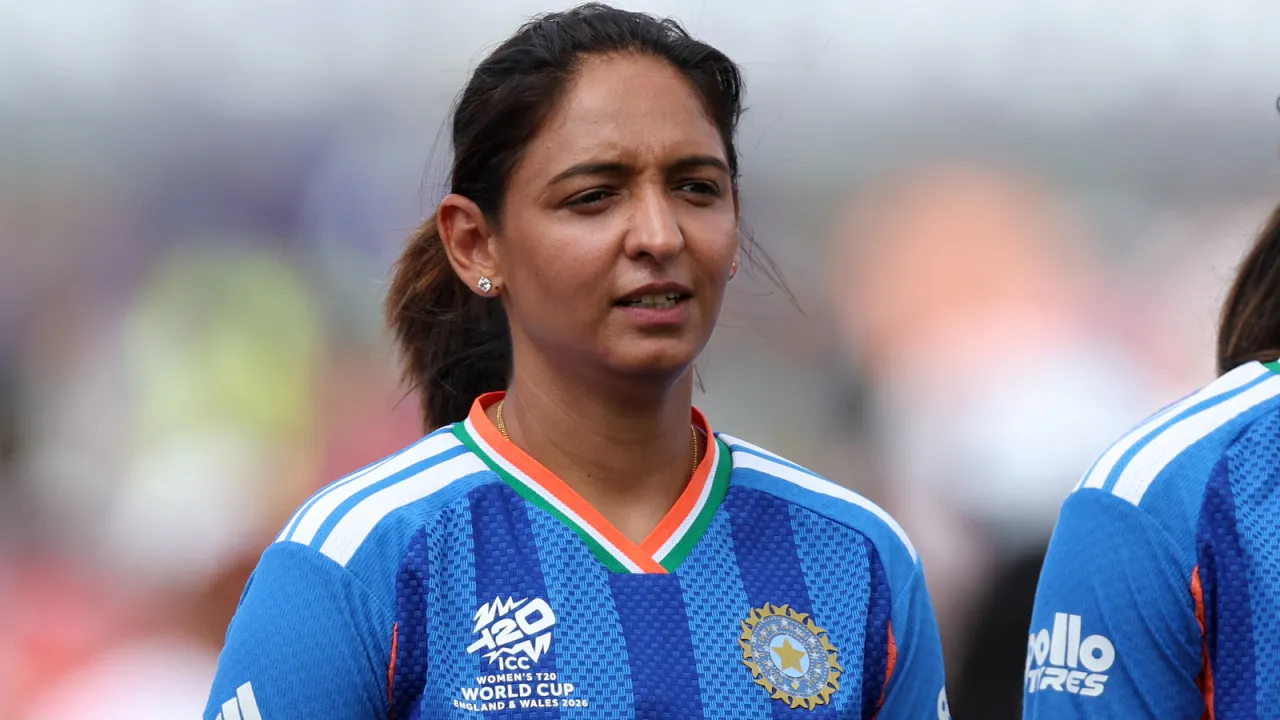
Harmanpreet Kaur has stepped down as captain of the Indian women’s cricket team across all formats, bringing an end to a decade-long leadership journey that included India’s ODI World Cup triumph and an Asian Games gold medal.
The 37-year-old announced her decision on social media following a Board of Control for Cricket in India review meeting in Guwahati that examined the team’s recent performances and its plans for the coming seasons.
Harmanpreet made clear that she is not retiring from international cricket and intends to continue playing for India.
The BCCI meeting was chaired by secretary Devajit Saikia and attended by Harmanpreet, vice-captain Smriti Mandhana and head coach Amol Muzumdar. It is not clear whether the discussions at the meeting played a role in Harmanpreet’s decision to relinquish the captaincy. NDTV Sports
In her announcement, Harmanpreet described stepping down as a difficult decision shaped by years of memories, sacrifice and responsibility.
She said she had repeatedly put the requirements of the team ahead of her individual performance and personal ambitions during her time as captain.
Harmanpreet also addressed the difficult decisions she had made while leading India, saying they were not always understood and sometimes came at a personal cost, but were taken with the objective of improving the team and allowing other players to develop. NDTV Sports
Her departure from the leadership role follows a period of increased scrutiny over both her captaincy and batting, particularly in the T20 format.
India’s failure to reach the semifinals of the T20 World Cup earlier this year increased questions over the direction of the team, while former players and commentators had increasingly argued that the time had come for a leadership transition.
Former India captain Diana Edulji was among those who had backed Mandhana to take over.
Harmanpreet, however, presented her decision as the conclusion of a personal leadership journey rather than an exit from the team.
She said she was leaving the captaincy convinced that India had a strong group of players with the talent, character and belief required for the future.
“Captaincy may end today, but my love for Indian cricket never will,” she wrote, adding that she was ready to return to playing primarily for the enjoyment of the game. NDTV Sports
The decision closes one of the most consequential captaincy periods in Indian women’s cricket.
Harmanpreet first took charge of India in 2016 after previously serving as a stand-in captain. Over the following decade, she became closely associated with the rise in visibility and competitiveness of the women’s national side.
Her tenure included major tournament breakthroughs, most notably India’s ODI World Cup victory and its Asian Games gold medal.
It was also a period in which expectations surrounding the Indian women’s team changed substantially. Strong performances in global tournaments, the growth of domestic women’s cricket and the arrival of the Women’s Premier League raised both the profile of the players and scrutiny of the national side.
Harmanpreet frequently carried much of that scrutiny as captain.
Her leadership decisions were questioned during difficult tournament campaigns, while her own batting performances were often examined alongside the tactical choices she made as skipper.
Stepping away from captaincy could allow her to concentrate on her batting without the additional responsibility of managing the national team.
The move also creates the most important leadership transition for India Women in years.
Mandhana, Harmanpreet’s long-time deputy and one of the most experienced members of the side, is widely expected to emerge as the leading candidate to succeed her, although an official announcement on the next captain was not cited in the report. NDTV Sports
Whoever takes charge will inherit a team that has achieved major success but is also entering a period of transition.
For Harmanpreet, the change allows her international career to continue without captaincy defining every performance.
She remains one of the most experienced players in the Indian side and can still have an important role as a senior batter while the next captain establishes a new leadership structure.
Her announcement was therefore less a farewell than a transfer of responsibility.
After years of leading India through some of the highest and lowest moments in the development of the women’s game, Harmanpreet has decided that the captaincy should pass to someone else.
Her playing career, however, continues.