


NEW DELHI, Sept. 23
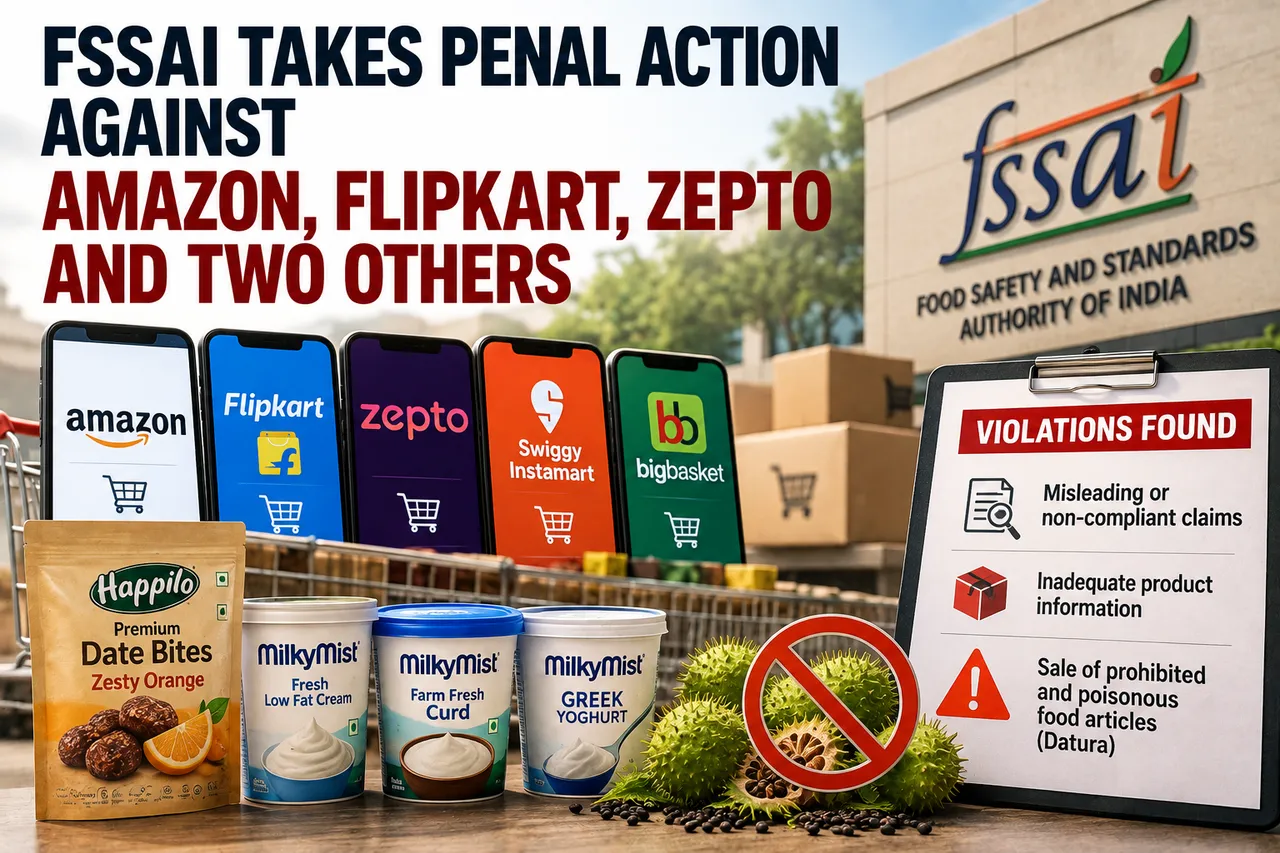
India’s food safety regulator has initiated penal action against five major e-commerce and quick-commerce platforms, including Amazon, Flipkart and Zepto, over alleged violations involving misleading product claims, inadequate information and the online listing of prohibited and poisonous food articles.
The Food Safety and Standards Authority of India (FSSAI) said the proceedings cover Amazon, Flipkart, Swiggy Instamart, BigBasket and Zepto. The action has been initiated under the Food Safety and Standards Act, 2006, and applicable FSSAI regulations.
The regulator disclosed the action through its official social media account on Wednesday, identifying specific products and the platforms on which they were being offered. The companies had not responded to queries from Business Standard at the time its report was published.
The action reflects increased regulatory attention on the rapidly expanding online grocery and quick-commerce market, where consumers increasingly rely on digital platforms for food products that were traditionally purchased from physical stores.
Among the products flagged by FSSAI was Hapilo Premium Date Bites – Zesty Orange. The regulator cited misleading or non-compliant claims associated with the product, which it said was listed across all five platforms facing action: Amazon, Flipkart, Swiggy Instamart, BigBasket and Zepto.
FSSAI separately raised concerns about information and claims associated with several Milky Mist products.
These included Milky Mist Fresh Low Fat Cream, Milky Mist Farm Fresh Curd and Milky Mist Greek Yoghurt listed on Swiggy Instamart and BigBasket. The regulator’s action relates to how information and claims concerning those products were presented on the platforms.
A potentially more serious issue identified by the authority involved the online sale of Datura, also known as Dhatura, fruits or seeds.
FSSAI said Datura fruits or seeds were being sold through BigBasket, Amazon and Swiggy Instamart and included them among the prohibited and poisonous food articles identified in its enforcement action.
The regulator’s announcement does not establish that every platform committed the same violation or that all the products identified were available across all five services. Its action relates to particular listings, claims and products found on individual platforms.
A person familiar with developments at one quick-commerce company told Business Standard that the platform took necessary measures to comply with the law and responded to notices issued by regulatory authorities within the stipulated period. The individual and the platform were not identified in the report.
The proceedings place renewed attention on the responsibilities of online marketplaces for products sold or displayed through their platforms.
Food sold online is subject to India’s food safety framework, but e-commerce creates a different enforcement environment from conventional retail. Consumers make purchasing decisions using photographs, product descriptions, nutritional information and other claims displayed digitally, making the accuracy of those listings an important part of regulatory compliance.
The issue has become more significant with the rapid growth of quick commerce. Food, groceries and household products can now reach customers within minutes, while platforms handle large and frequently changing inventories supplied by numerous brands and sellers.
That scale makes monitoring product descriptions and compliance more complicated, but it does not remove regulatory obligations.
The latest action also shows that FSSAI’s scrutiny is extending beyond the physical quality of food to the information consumers encounter before making a purchase. Misleading claims and inaccurate or inadequate product information can become regulatory issues even where the underlying product itself is not alleged to be unsafe.
The Datura listings raise a different concern because FSSAI has identified them in connection with prohibited and poisonous food articles rather than merely labelling or promotional claims.
The regulator has not, in the information made public so far, specified the penalties that could eventually be imposed on each company. The initiation of penal action is therefore the beginning of an enforcement process rather than a final finding determining the liability of individual platforms.
Nor does the action establish wrongdoing by the manufacturers of every product named. The regulator’s announcement concerns the manner in which specified products and information appeared on e-commerce services, and any eventual findings will depend on the proceedings under the food safety law.
For India’s online retail industry, however, the action sends a clear regulatory signal. Digital platforms are increasingly being scrutinised not simply as technology intermediaries but as important points through which food products are presented and sold to consumers.
The five companies involved include some of the country’s largest conventional e-commerce, online grocery and quick-commerce businesses. That gives the proceedings significance beyond the individual products identified.
As food shopping moves increasingly from supermarket shelves to mobile applications, the information appearing on a digital product page is becoming part of the food-safety enforcement chain itself. FSSAI’s latest action indicates that regulators intend to hold online listings to that framework alongside the products being delivered to consumers.