

NEW DELHI, Oct. 5
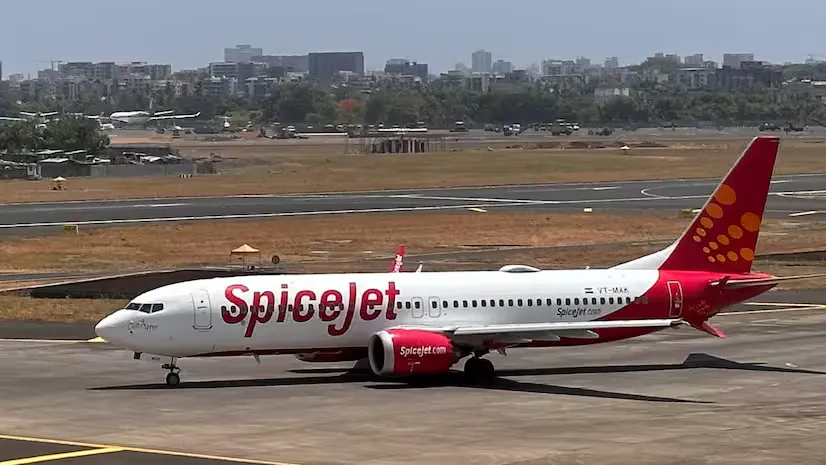
SpiceJet on Monday said the Directorate General of Civil Aviation’s ongoing monitoring of the airline should not be interpreted as a fresh finding of safety deficiencies, clarifying that the regulatory review also covers its broader operational and financial position.
The budget carrier issued the clarification in a filing to the BSE after the stock exchange sought an explanation following Civil Aviation Minister K Rammohan Naidu’s statement that SpiceJet was under scrutiny by the aviation regulator.
SpiceJet said it was aware of the DGCA’s regulatory monitoring and stressed that safety audits, surveillance exercises and spot checks were routine elements of the regulator’s oversight of airlines.
The airline said it had undergone several such regulatory exercises in the past and argued that the latest monitoring should not be presented as a new declaration of safety concerns against the company.
“The current regulatory monitoring/review relating to the company’s broader operational and financial position may not be equated with, or represented as, a fresh finding of safety deficiencies against the company,” SpiceJet said in its regulatory filing.
The clarification follows comments by Naidu that placed renewed attention on the airline’s operations.
The BSE had sought a response from SpiceJet on September 22 after the Civil Aviation Minister said the carrier was under DGCA scrutiny.
SpiceJet’s latest statement seeks to distinguish between regulatory monitoring and a formal finding that new safety deficiencies have been detected.
The DGCA routinely conducts surveillance, audits and inspections of airlines as part of its responsibility for maintaining aviation safety standards.
Such oversight can involve examination of aircraft operations, maintenance practices and compliance with regulatory requirements.
SpiceJet has faced financial and operational pressures in recent years, making developments concerning regulatory oversight particularly significant for passengers and investors.
The airline’s domestic market share declined further in August.
SpiceJet accounted for 1.2 per cent of India’s domestic aviation market in August, down from 1.6 per cent in July.
The decline indicates the competitive and operational challenges confronting the carrier in a domestic aviation market dominated by larger rivals.
Investor reaction was also negative on Monday.
SpiceJet shares fell more than 2 per cent to ₹9.10 apiece during late afternoon trading on the BSE.
The airline’s clarification does not dispute that it remains under DGCA monitoring. Instead, SpiceJet’s position is that the nature of the regulatory review should not be interpreted as evidence that the regulator has made a fresh adverse finding about its safety standards.
That distinction is important because heightened regulatory monitoring and the identification of specific safety deficiencies are not necessarily the same thing.
Airlines remain subject to continuing regulatory surveillance even in the absence of a newly identified safety problem.
The DGCA’s oversight framework allows the regulator to monitor compliance and intervene when required, while airlines are expected to respond to observations made during inspections and audits.
For SpiceJet, the immediate issue is therefore partly one of how the regulatory scrutiny is characterised.
The company maintains that the current exercise relates to its broader operational and financial situation and that it should not be portrayed as a fresh determination that the airline has safety deficiencies.
At the same time, the airline continues to face pressure on its market position, with its domestic share falling by 0.4 percentage points between July and August.
The DGCA’s continuing oversight, SpiceJet’s operational performance and its efforts to strengthen its financial position will consequently remain closely watched.
For now, the carrier’s message is specific: it acknowledges that regulatory monitoring is underway but rejects the suggestion that the monitoring itself amounts to a new finding of safety shortcomings.