LUCKNOW, Oct. 5
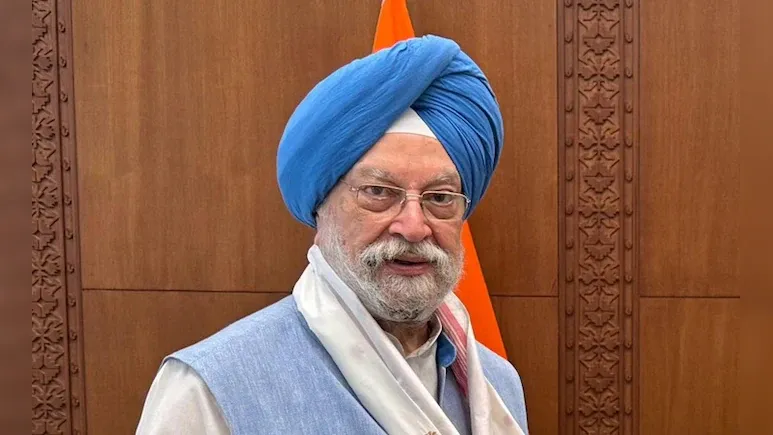
The Bharatiya Janata Party on Monday announced eight candidates for the upcoming Rajya Sabha elections from Uttar Pradesh, leaving Union Minister Hardeep Singh Puri and former Union minister Smriti Irani out of the list while seeking to balance caste and regional representation ahead of the state Assembly elections.
Ten Rajya Sabha seats from Uttar Pradesh will go to polls on October 16. Based on its strength in the state legislature, the BJP is assured of seven seats and has fielded an eighth candidate, setting the stage for a possible contest for the remaining seat.
The BJP’s eight candidates are state minister Dharampal Singh, lawyer Radhakant Ojha, Uttar Pradesh BJP OBC Morcha president Prakash Pal, former MP Vidyasagar Sonkar, Gopi Krishna Pandey, former MP Priyanka Singh Rawat, state general secretary Ram Pratap Singh Chauhan and Shruti Gangwar, daughter of Jharkhand Governor Santosh Gangwar. NDTV
All eight candidates are scheduled to file their nominations in Lucknow on Tuesday at 11.30 am in the presence of Chief Minister Yogi Adityanath and state BJP president Pankaj Chaudhary.
The omission of Hardeep Singh Puri is particularly significant. Puri, currently a Union minister, had been expected to figure among the nominees but was not included.
The exclusion has triggered speculation over his parliamentary future and the possibility of changes at the Centre, though the BJP has made no official announcement linking the candidate selection to a Union Cabinet reshuffle.
Smriti Irani and Union Minister of State B L Verma, whose names had also been discussed as possible candidates, did not make the final list. NDTV
The composition of the BJP’s list reflects a carefully calibrated attempt to accommodate important caste groups in Uttar Pradesh.
Three candidates come from Other Backward Classes, three from the general category and two from Scheduled Castes.
Dharampal Singh belongs to the Lodh community, while Prakash Pal heads the BJP’s OBC Morcha in Uttar Pradesh and Shruti Gangwar also represents an OBC background.
Vidyasagar Sonkar and Priyanka Singh Rawat come from Dalit communities.
Radhakant Ojha and Gopi Krishna Pandey represent the Brahmin community, while Ram Pratap Singh Chauhan is from the Thakur community. NDTV
The selections also reflect regional considerations.
Dharampal Singh and Ram Pratap Singh Chauhan represent western Uttar Pradesh and the Braj region, while Shruti Gangwar comes from Rohilkhand.
Gopi Krishna Pandey and Vidyasagar Sonkar are from Purvanchal, Prakash Pal represents the Kanpur-Bundelkhand region and Radhakant Ojha comes from the Prayagraj region.
The regional spread assumes additional political significance with the next Uttar Pradesh Assembly election approaching.
The BJP’s candidate selection suggests that the Rajya Sabha polls are being used not only to determine parliamentary representation but also to reinforce the party’s social and geographical coalition in India’s most populous state.
Chief Minister Yogi Adityanath congratulated the eight nominees and wished them a “historic victory”.
The Samajwadi Party has already announced Ram Gopal Yadav and Dhanraj Parimal Nathwani as its candidates.
Both are expected to be elected on the basis of the party’s legislative strength. The SP could field a third candidate, potentially forcing a contest depending on the final nominations and voting arithmetic.
The BJP’s decision to nominate eight candidates is therefore important.
Seven victories are comfortably within its numbers, while the eighth seat will test the wider legislative arithmetic and the ability of the competing alliances to consolidate their votes.
The Rajya Sabha election uses proportional representation through the single transferable vote, meaning the exact strength of parties and alliances in the Uttar Pradesh Assembly will determine how many candidates can cross the required threshold.
Beyond the immediate contest, however, attention is likely to remain on the prominent BJP leaders missing from the list.
Puri’s exclusion is especially consequential because of his position in the Union government. But without an official announcement from the party or government, any conclusion that his omission necessarily signals a Cabinet exit or reshuffle would remain speculative.
The candidate list itself sends a clearer political message.
By distributing nominations among OBC, Dalit, Brahmin and Thakur leaders while also covering major regions of Uttar Pradesh, the BJP appears to be looking beyond the October 16 Rajya Sabha vote towards the state’s next electoral contest.
The immediate focus now shifts to Tuesday’s nominations and whether the Samajwadi Party decides to field a third candidate.
If it does, the arithmetic surrounding the final Rajya Sabha seat could turn what might otherwise have been a largely predictable election into a closely watched political contest.